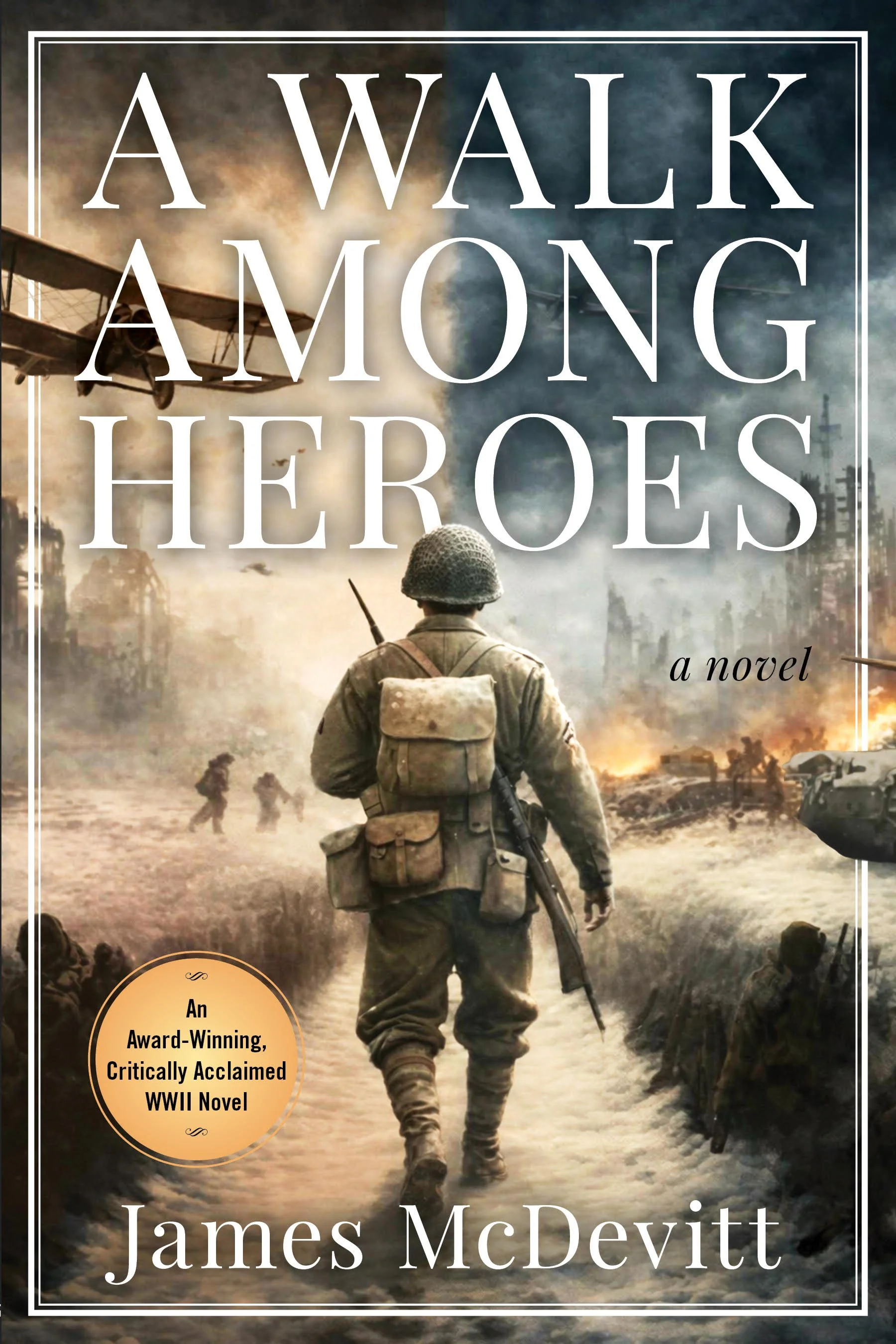
A Walk Among Heroes by James McDevitt

Click on cover image to purchase a copy

MWSA Review Pending


Author's Synopsis

Through TJ and Smitty — a World War I aviator scarred by his past — the novel weaves a sweeping story of two wars, two men, and one enduring love that binds generations. It is a deeply moving reflection on duty, sacrifice, and the price paid by those who return home forever changed.

An incredible story of two wars that seamlessly come together through the eyes of two veterans.

Format(s) for review: Paper or Kindle
Review genre: Fiction—Historical Fiction
Pages/Word count: 370 / 77,000

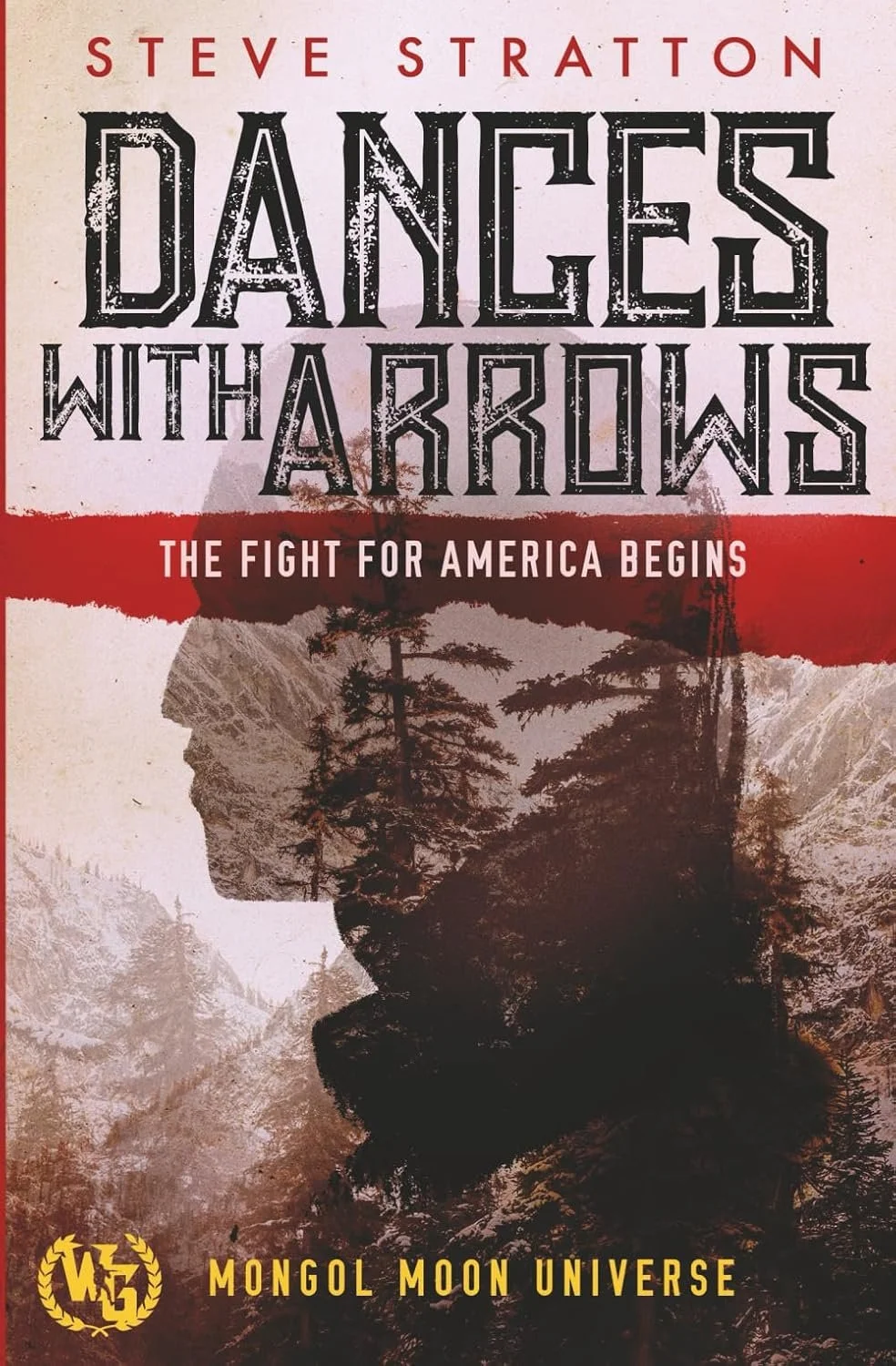
Dances with Arrows by Steve Stratton

Click on cover image to purchase a copy

MWSA Review Pending


Author's Synopsis

The Russians and Chinese need our crops. They believe America is broken and attack.

In Wyoming, they will find out what unbreakable means. Brigadier General Lance Bear Wolf and his team form the Wyoming Army of Resistance. The very survival of America is at stake… and Wolf will not let it die.

From the wind-swept plains with their ICBM silos to the blood-soaked snow of occupied Cheyenne, Wolf ignites a rebellion that spreads across the Rockies. Every strike risks annihilation. Every decision is a fight between his principles and a primeval need to avenge the staggering losses America has suffered.

Written in the Mark Sibley Mongol Moon universe—where World War III is not a nightmare but a brutal reality—Dances With Arrows is a raw, relentless story of sacrifice and resistance in America’s darkest hour.

Format(s) for review: Paper or Kindle
Review genre: Fiction—Mystery/Thriller/Crime
Pages/Word count: 328 / 91,000

Kick the Tires and Light the Fires: My Life as a Naval Aviator, FAA Test Pilot & Aviation Consultant by David Paul West with Ron Martz

Click on cover image to purchase a copy

MWSA Review Pending


Author's Synopsis

This memoir covers the author's life from his childhood in the 1940s and 1950s in Ironwood, Michigan; his education at the U.S. Naval Academy and subsequent training as a carrier pilot; tour of duty during the Vietnam War; attending the U.S. Air Force Test Pilot School; serving as a test pilot for Northrop Aviation and the Federal Aviation Administration, where he served on the team that developed the TCAS II; and completing his career in aviation as a Designated Engineering Representative and aviation consultant.

Format(s) for review: Paper Only
Review genre: Nonfiction—Memoir/Biography
Pages/Word count: 298 / 74,500

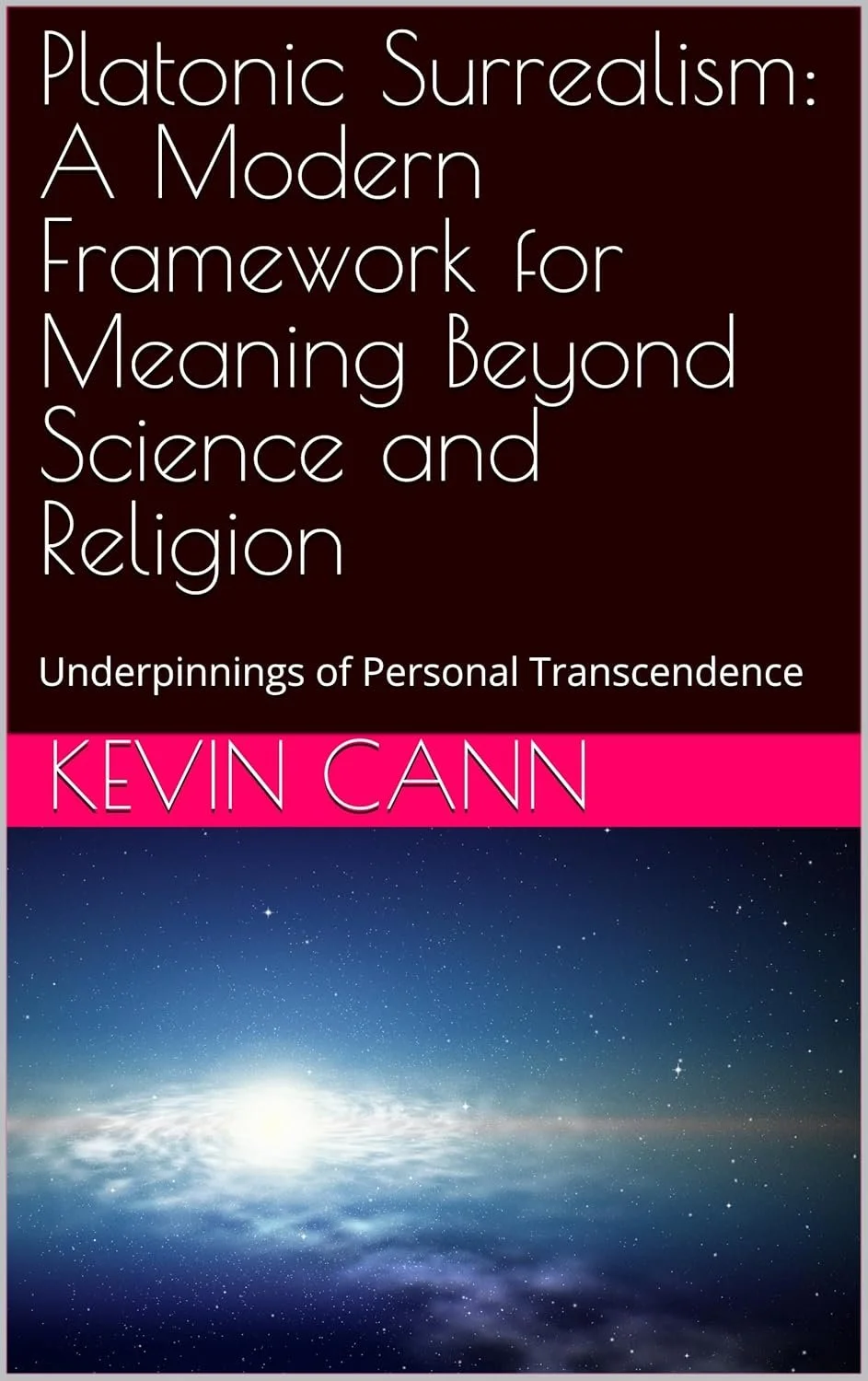
Platonic Surrealism: A Modern Framework for Meaning Beyond Science and Religion : Underpinnings of Personal Transcendence by Kevin Cann

Click on cover image to purchase a copy

Author's Synopsis

You’re not a soul on a journey. You’re the power that creates souls.

Featured in The National Law Review and taught at Esalen Institute, Platonic Surrealism is the modern metaphysical framework introduced by Kevin Cann and praised by leading scholars of consciousness and religion.

Dr. Jeffrey J. Kripal calls it “a treasure of a book… ontologically profound,” while Dr. Anya Foxen describes it as “simple in the way all truly transformative things must be.”

A modern framework for awakening, afterlife inquiry, and inner wholeness—without religion, dogma, or woo‑woo.

“You” exist at multiple layers at once.
Not as a single fragile soul, but as something vastly deeper:

POTENTIALITY — the boundless field beneath all existence
AWARENESS — the luminous mirror that makes experience possible
Primordial Consciousness — the first “I” before time
Fractured Consciousness — the human perspective, local but not lesser
The Monad — your enduring, creative spark
The Soul — a temporary interface woven for each world you enter
The Pain Self — the conditioned mask you can learn to outgrow
This is not a belief system — it is a clear, experiential map of what you are across life, death, and all the Movies of existence.

A Practical System for Becoming Whole

Platonic Surrealism teaches ten simple, non‑religious practices used by thousands of readers and workshop participants to:

calm the nervous system
reunite fractured layers of identity
integrate painful experiences into stability through shadow work and inner child healing.
activate deep nonverbal awareness
experience “ascend‑in‑place” states
build a stable inner interface capable of genuine transformation
These practices are neuroscience‑aligned, accessible to atheists and mystics alike, and safe for those recovering from religion.

For Seekers of the Afterlife, Awakening, Consciousness Studies, and High Strangeness

Whether you’ve had a near‑death experience, a moment of high strangeness, a profound synchronicity, or simply feel larger than your personality, Platonic Surrealism offers a grounded way to understand your experience without superstition or self‑delusion.

Readers who loved works by Jeffrey Kripal, Bernardo Kastrup, Michael Newton, or Rupert Spira will find here a fresh, practical, and non‑dogmatic framework.

Endorsements from Scholars, Thinkers, and Explorers

“A treasure of a book… Platonic Surrealism is profound and practical.”
—Jeffrey J. Kripal, Rice University

“Self‑aware, unpretentious, non‑dogmatic… deceptively simple and deeply transformative.”
—Dr. Anya Foxen, Cal Poly

“Revolutionarily insightful. Open your heart and you’ll find peace.”
—Joshua Cutchin, Ecology of Souls

“Bridges ancient tradition and modern spirituality… It’s time to fly, Neo.”
—Miguel Conner, Aeon Byte Gnostic Radio

“Kevin has innovated a metaphysical framework for the modern age.”
—Mike Fiorito, National Book Award Runner‑Up

A clear, contemporary path to wholeness, transcendence, and the deeper layers of what you truly are.
No dogma. No fear. No hierarchy. Just clarity.

Format: Soft cover, Kindle
Genre(s): Religious/Spiritual

Platonic Surrealism: The Front Porch Dialogues by Kevin Cann

Click on cover image to purchase a copy

MWSA Review Pending


Author's Synopsis

Learn to Feel Free and Content with Who You Really Are

Jeb is tired. Not just "long day at work" tired, but "soul-bruised and white-knuckling through life" tired. He’s spent years bracing for impact, scanning the horizon for catastrophes that never arrive, and losing the war with the "Internal Raccoons" in his head.

He isn’t broken—he’s just compressed by a world that feels too loud and a past that won't stop whispering.

Enter Kev.
A retired Navy nuclear engineer, Kev prefers his back porch to a pulpit and "emotional support pie" to spiritual clichés. What follows is not a series of mystical lectures, but a sequence of real, gritty, and often hilarious conversations over coffee and sunlit grass.

“Inspiration: 1/3 Douglas Adams' wit, 1/3 Richard Bach’s soul-searching, and 1/3 Plato’s timeless wisdom.”

Through the "Joyous Fiction" of Jeb and Kev, you will witness a functional demonstration of Platonic Surrealism (PS)—a framework that treats reality not as a cold machine, but as a symbolic, co-authored conversation.

Format(s) for review: Kindle or Paper
Review genre: Fiction—Literary Fiction
Pages/Word count: 140 / 24,586

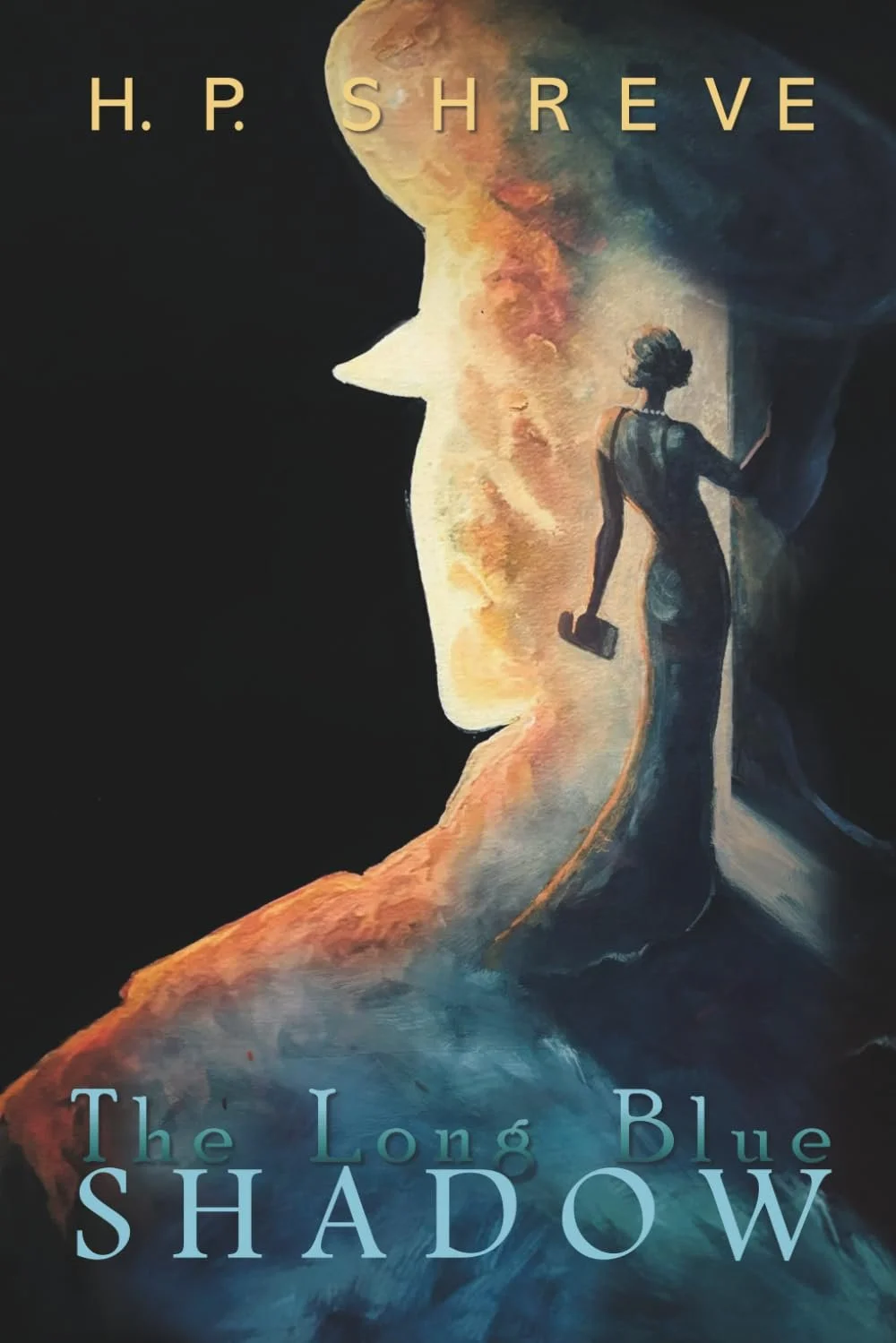
The Long Blue Shadow by Heather P. Shreve

Click on cover image to purchase a copy

MWSA Review Pending


Author's Synopsis

Three wars. Two hearts. One unforgettable couple.

A love forged in the army’s shadow…

he aspired to stardust; she fought to be steel. 

His service and her secret would take them to the edge of both.  

A breathtaking saga begins…when a young pilot, LT Arthur Lee Shreve, becomes torn between family and reenlisting after the Great War, he defaults to the army, convinced that good men serve conspicuously ‘in the sun’―a path that will lead to the exciting but complex love of his life.  

In Hawaii, he meets Julia who challenges all former beliefs about sex, service, and even love itself.  Cast in stardust, theirs is tested by the grit and glamour of the Interwar years which shakes and tests their romance as they move from pillar to post―from Hawaii to Fort Leavenworth―and beyond.

Where Arthur finds passion and purpose, compelled to rise with the iridescent era, his wife is fiercely driven by demons and a former female lover―secrets she conceals in the relentless shadow of the army. 

Through the challenges and paradoxes of military life, they battle between duty and identity To arrive and celebrate Arthur’s 20 years of service, leaving Julia wondering whether her contributions matter at all, or even if love itself is enough …and careens towards personal crisis. 

As the world drifts toward war, they enjoy the last halcyon days with supportive family and loyal officers Uncertain of what lies ahead and whether they will have to find their heroic impulse once again. 

Fans of the Nightingale and The Great Alone by Kristin Hanna will enjoy the emotional depth of The Long Blue Shadow―love tested by global conflict and history―while readers of The Paris Wife by Paula McClain will love the same atmospheric 1920s and tension between identity and partnership. Fans of Farewell to Arms by Ernest Hemingway will love the human cost of duty, love, and history–all a good preview for Book II that will ring true with fans of The Women, also by Hanna.  


Format(s) for review: Paper or Kindle
Review genre: Fiction—Historical Fiction
Pages/Word count: 315 / 88,000

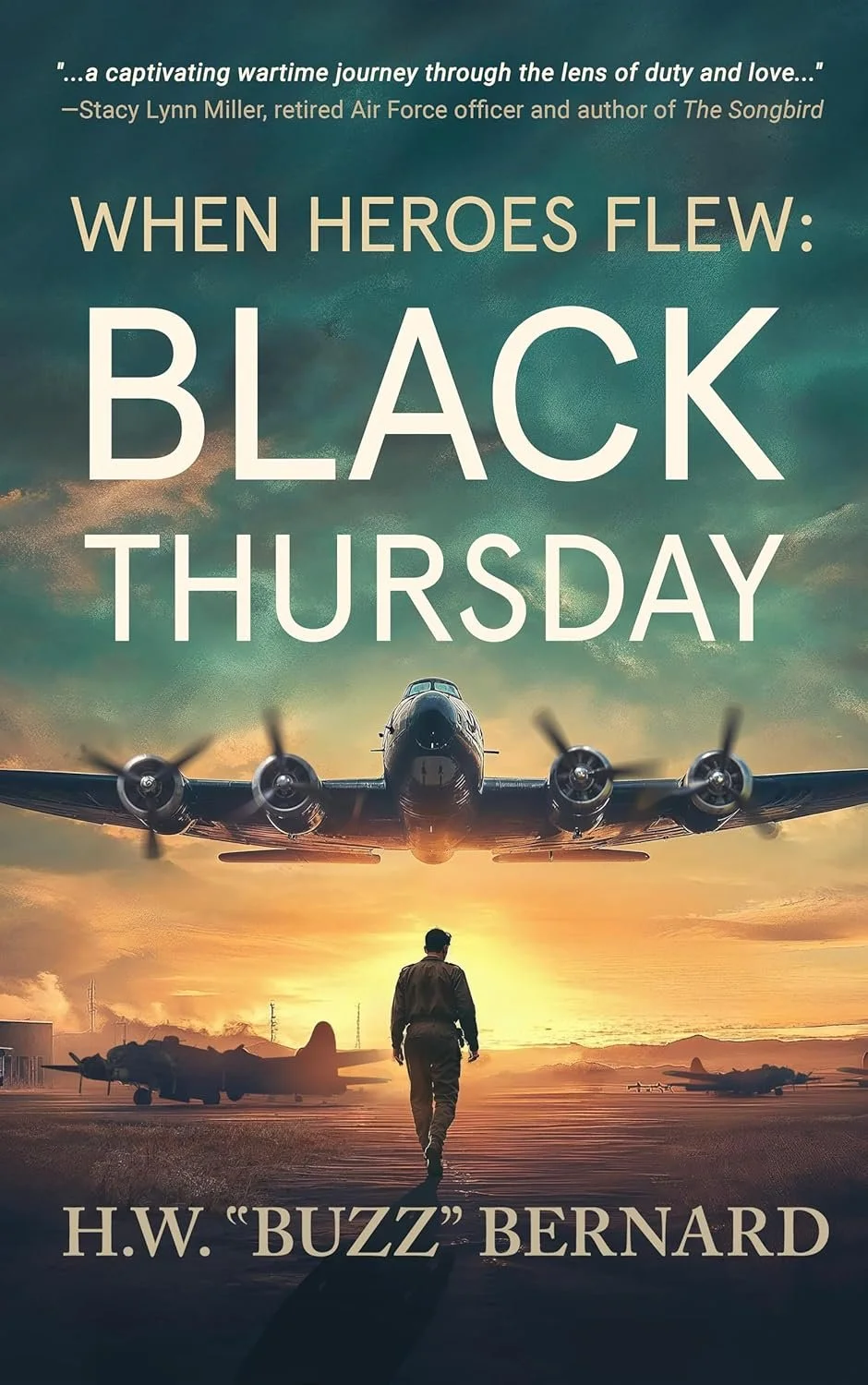
When Heroes Flew: Black Thursday by H. W. "Buzz" Bernard

Click on cover image to purchase a copy

MWSA Review

When Heroes Flew: Black Thursday by H.W. “Buzz” Bernard is a gripping novel set in Europe during World War II in 1943. The U.S. 8th Air Force is trying to stop Nazi aggression by hitting targets in Germany that will halt production of their machines of war.

Having flown missions and crash-landed twice, Colonel Matt Barrington is older and is now commanding a desk, planning bombing raids into Germany for other pilots. When many bombers—each with a crew of ten— are lost, Matt is deeply affected by the rising body count. Washington and the powers that be are discussing “acceptable and incidental loss” necessary to achieve a mission. Matt can’t sleep at night because he sees the faces of these men and their grieving families instead of numbers. He is plagued by headaches and occasional shortness of breath from the stress of sending men into battle, who he knows may not return.

Deciding to visit a base during a pre-raid briefing, Matt hopes his presence will show the bomber pilots and crews that they are supported by the planners. On his way to the base, Matt stops at a bakery shop for something to eat. He meets the owner Charlie, short for Charlotte, and sparks fly. A lovely romantic relationship begins. Matt finds peace and love in Charlie’s arms. Charlie, a war widow, is relieved that Matt is behind a desk and no longer flying. That is, until Matt decides to join a dangerous mission to show the men that he won’t ask them to do something that he won’t do himself.

I was drawn to each of these characters. Author Bernard uses all the richness of the five senses to draw a reader into the story. I was angry with the brass in the Pentagon, gasped at the horror of war, and cried at the loss of life. Bernard’s conversational writing is laced with a great sense of humor. Oh, yeah, the ending left me absolutely stunned.

Buzz Bernard creates a beautiful tapestry, weaving real history and people with fictional characters into a story featuring many unsung heroes of World War II.

Review by Nancy Panko
 

Author's Synopsis

Colonel Matt Barrington knows the cold calculus of WWII strategic bombing. As one of the masterminds behind the US 8th Air Force's daring raids into Nazi Germany, he's accustomed to making decisions that send men to their deaths. But when a mission goes terribly wrong, resulting in the loss of 60 bombers, the weight of command threatens to crush him.

Seeking solace from his guilt-ridden insomnia, Matt finds unexpected comfort in the arms of Charlotte, an English widow, who understands the true cost of the war. Their budding romance offers a glimmer of hope amidst the chaos of conflict. But as the casualties mount, Matt realizes he can no longer lead from behind a desk. Determined to share in the risks his men face, Matt volunteers for a dangerous bombing raid, returning to the skies alongside the soldiers he sends into battle. But surviving one mission only deepens the weight of his guilt.

Haunted by loss and driven by an unyielding sense of duty, Matt defies direct orders and enters the cockpit once more. In a heart-stopping raid high above occupied Europe, he faces not only the lethal forces of the Luftwaffe and their deadly new weapons but also the demons that have long plagued him—and his last chance at a future with Charlotte. As flak bursts around his B-17 and enemy fighters close in, Matt must confront the ultimate question: In the crucible of war, can one man's actions truly make a difference?

Format(s) for review: Paper or Kindle
Review genre: Fiction—Historical Fiction
Pages/Word count: 244 / 70,000

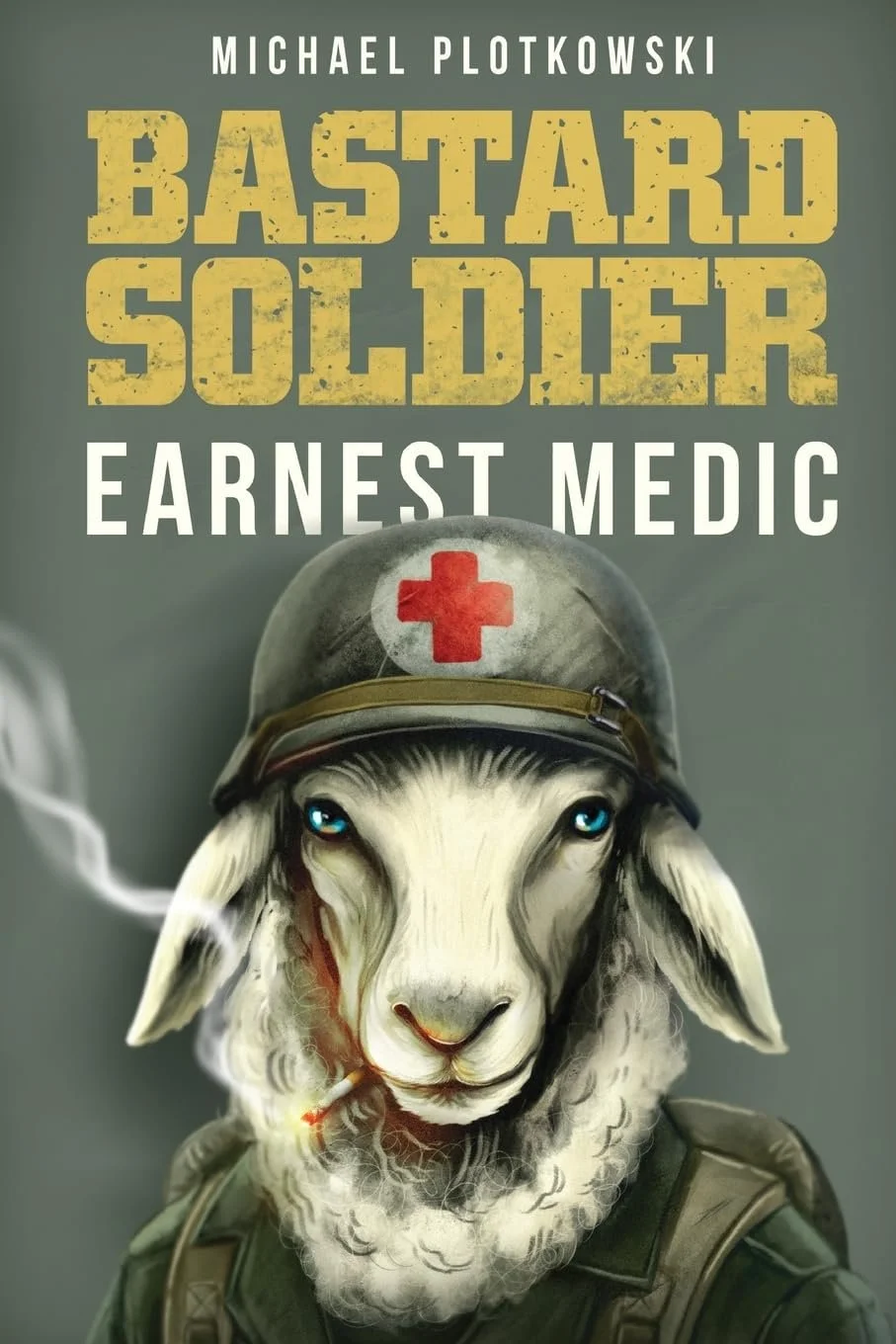
Bastard Soldier, Earnest Medic by Michael Plotkowski

Click on cover image to purchase a copy

MWSA Review Pending


Author's Synopsis

Bastard Soldier, Earnest Medic is a raw, darkly funny, and unflinchingly honest narrative that follows Joe's unlikely transformation from a wayward teenager into a soldier and army physician assistant forged in the chaos of three deployments.

What begins as a desperate courtroom gamble, spirals into a wild, unpredictable journey through the chaos and cruelty of basic training, the reckless escapades and misadventures of Fort Bliss, and the bizarre, often darkly comic theater of military life. Kosovo awakens Joe's curiosity for the world; medical training initiates him in the crude and intense; Iraq baptizes him in blood, trauma, and loss; and Afghanistan forces him to confront himself amid war's contradictions.

Through black humor, medical grit, and reckless choices, Joe stumbles toward purpose. He learns to laugh at the insanity and carry scars that don't fade. This isn't a flag-waving war story - it's a brutally human one: messy, vulgar, hilarious, and profound.

In the end, Joe doesn't find glory. He finds perspective. Bastard Soldier, Earnest Medic is the unforgettable story of a man who learns to own every absurd, appalling, and incredible piece of his past, findings unexpected purpose in the journey.

Raw, hilarious, and deeply human, Bastard Soldier, Earnest Medic will make you laugh, wince, and rethink everything you thought you knew about life in uniform.

Format(s) for review: Paper or Kindle
Review genre: Nonfiction—Creative Nonfiction
Pages/Word count: 202 / 82,000

Always On My Mind by Bob Every

Click on cover image to purchase a copy

MWSA Review

Always on My Mind by Bob Every tells the story of two souls crossing paths in the Navy, parting, and reuniting. I was hooked from the start. I rooted for Emmett MacDonald, enjoyed his best friend Cappy, and liked neighbor Bubba and his family.

Emmett joins a private yacht club so he can drink a beer on any given Sunday. A U.S. Navy veteran, he is best friends with another Navy vet, Cappy, the bartender in the club. Cappy lives on a boat docked behind the club — not really a boat — more of a floating house because there is no engine. The yacht club is Emmett’s favorite hangout. It’s also the favorite hangout of a tough guy called The King and his bodyguard Dom, both of whom are deeply involved with the Philadelphia mob.

Two battle-hardened vets colliding with two low-down dirty rats. What could go wrong?

Enter Janice Wilson, a retired Navy nurse who served with Emmett. She remembers their dates and how he treated her with kindness and love, yet he never said the words. When Emmett retired and returned to Port Clinton, Pennsylvania, Janice also retired and decided to hike the Appalachian Trail with her eye on one particular respite stop, Port Clinton.

Emmett buys a farm along the shores of the Susquehanna River and goes into business with Cappy as his partner. When Bubba and his family are threatened by the mob, the two vets go on the offensive.

Having made enemies of The King and Dom, Emmett and Cappy are always on alert for trouble.

The author crafts a kaleidoscope of action that made me turn each page. The characters lingered with me even after the final sentence—this is a story that stays with you long after the reading is done.

Review by Nancy Panko
 

Author's Synopsis

Emmett McDonald never planned to start a war. He just wanted a beer on a Sunday in Port Clinton, Pennsylvania.

Janice Wilson never planned a five-million-step quest through the wilderness—the Appalachian Trail. But it's not Mount Katahdin she's aiming for. It's Port Clinton, Pennsylvania, an insignificant town of under three hundred people.

Brace yourself—Emmett McDonald, a battle-hardened veteran of three wars, is now in a struggle a lot bigger than a closed bar on a Sunday. It's about who makes the rules - and who has the grit to stand up to them.

Can an irascible Irishman with street smarts, scars, and an inconvenient conscience take on the people who run everything? And what happens when Janice finally reaches Port Clinton?

Do you believe street smarts can win over organized power? Does the quest of Don Quixote of La Mancha inspire you? Am I a good enough writer to pull it off?

Clicking the sample bar suffices. The decision is yours.

Format(s) for review: Kindle & paper
Review genre: Fiction—Literary Fiction
Pages/Word count: 273 / 70,000

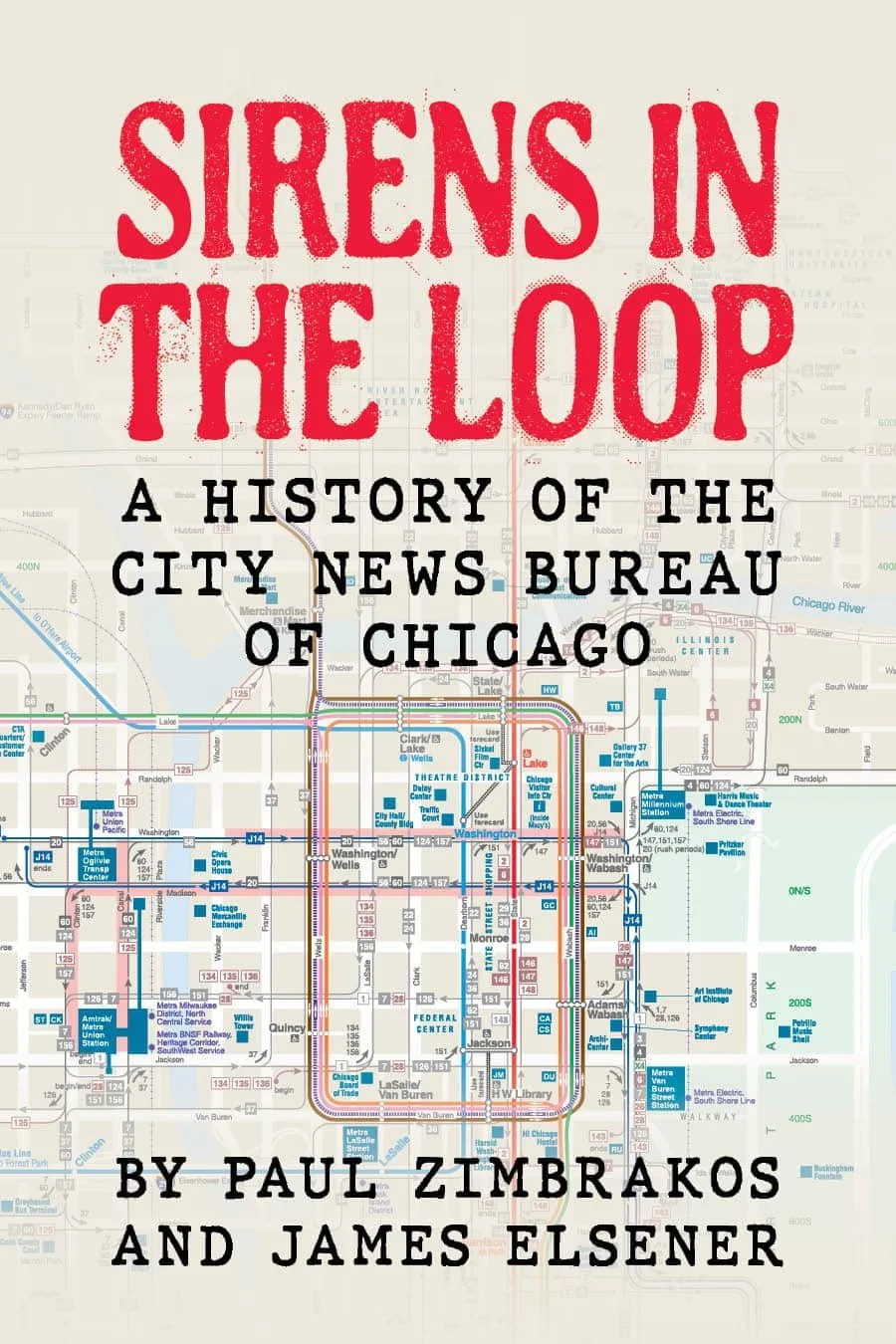
Sirens in the Loop - A History of the City News Bureau of Chicago by Paul Zimbrakos / James Elsener

Click on cover image to purchase a copy

MWSA Review

Sirens in the Loop is a narrative history of the legendary Chicago City News Bureau framed as a collective memoir from the perspectives of many of the news service’s alumni. The title is taken from the traditional alert that went out when squad cars, ambulances, or fire engines took to the streets of the inner city, sending Bureau reporters out in pursuit of the all-important “scoop.”

Founded in the late 19th Century, the CNB was the central hub for local “hard” news coverage in the rapidly growing “City of the Big Shoulders”—an era of sensational scandals, tragedies, and disasters. The bureau was set up by a consortium of the city’s major newspapers as an independent joint enterprise that focused on local “hard” news, allowing its shareholders to concentrate on national and international events. Chicago in the early decades of the 20th century was served by as many as ten daily English-language newspapers, some issuing multiple editions each day.

In its 115-year history, the CNB earned a reputation as the city’s training ground for budding reporters, many of whom moved on to senior positions in print journalism, radio, and television.
Newly hired news writers were quickly thrown into a demanding 24/7 hard-news environment covering police beats, city hall, the Cook county offices, criminal courts, and the coroner’s office. Their work was characterized by long hours, low pay, and relentless pursuit of “the facts”—Who? What? Where? When? How? Why? Hard-nosed Bureau editors were known for sending cub reporters back to a crime scene or a grieving family to confirm the smallest missing detail. The CNB mantra was: “If your mother says she loves you, check it out.”

The details of the City News legacy in this account are primarily the product of decades of research and archiving by long-term Bureau chief Paul Zimbrakos, who led the organization for more than forty years from 1958 until its closing in 2005. Zimbrakos started his journalism career as a copy boy at the Chicago Daily News before joining City News Bureau as a cub reporter. After a tour in the US Army, he returned to the Bureau and worked his way up the newsroom hierarchy from morgue reporter to the police beat and ultimately long service as its Managing Editor. In the course of his career, Zimbrakos mentored generations of journalists, including Kurt Vonnegut and Mike Royko. His is leadership style was characterized by tough love and an unrelenting demand for accuracy. He was renowned for riding his street reporters on the phone to “get it right, get it fast.”

Zimbrakos augmented his personal recollections with dozens of first-person anecdotes from Bureau veterans who covered some of the major stories of their eras. Unfortunately, he passed away before he could compile and organize his work for publication. That task fell to his long-time friend (and CNB alumnus) James Elsener.

Following his service as a US Marine in Vietnam, co-author James Elsener was hired as a green reporter by Bureau Chief Paul Zimbrakos in 1970. Elsener was immediately thrown into the CNB crucible. In his two-year stint at the Bureau, under Zimbrakos’s tough encouragement, he honed his skills as a news correspondent. As with many CNB veterans, Elsener went on to work with prominent area newspapers, including the Chicago Tribune, The Business Ledger, and the Daily Herald before retiring in 2017. He is the author of two novels, The Last Road Trip and Reflections of Valour.

Sirens in the Loop records a unique chapter in American journalism history—and thereby the history of one of our country’s most dynamic and noteworthy cities. Readers with an interest in the roots of modern-day news coverage and the standards of professional journalism will be rewarded by the first-hand accounts of the many men and women who earned their spurs in the demanding environment of the Chicago City News Bureau. Others with a more general interest in the newsworthy events and milestones of 20th-Century Chicago—ranging from the gangland St. Valentine’s Day Massacre to the horrors of serial killer John Wayne Gacy--will be treated to new perspectives into how they were reported to the public.

Review by Peter Adams Young
 

Author's Synopsis

“Sirens in the Loop” traces the rise and legacy of the City News Bureau of Chicago, the legendary news wire service that shaped generations of reporters and defined the city’s gritty journalistic identity.
Through vivid storytelling, the book explores its founding, its relentless “If your mother says she loves you, check it out” ethos, and the countless scoops, scandals, and characters forged in its chaotic newsroom. From crime scenes to city hall, it chronicles how the bureau’s demanding culture sharpened young reporters’ instincts and left an enduring imprint on American journalism.
“Co-authored by veteran editors Paul Zimbrakos and James Elsener, the narrative traces the agency’s evolution from its founding in 1890 to its “final” closure 115 years later. It offers a front-row seat to Chicago’s most harrowing headlines, including the St. Valentine's Day Massacre, the Our Lady of the Angels fire, and the Tylenol murders. Beyond the hard news, the book captures the "Chicago style" of reporting through hundreds of anecdotes from alumni luminaries like Mike Royko, Kurt Vonnegut, and Seymour Hersh.
The title refers to the "Sirens in the Loop" BULLETINS that signaled immediate breaking news to the city’s media outlets. From the clatter of manual typewriters and pneumatic delivery tubes to the digital age, this book stands as a testament to a bygone era of street-smart, high-stakes reporting that shaped the landscape of American journalism.

Format(s) for review: Paper Only
Review genre: Nonfiction—History
Pages/Word count: 272 / 75,000

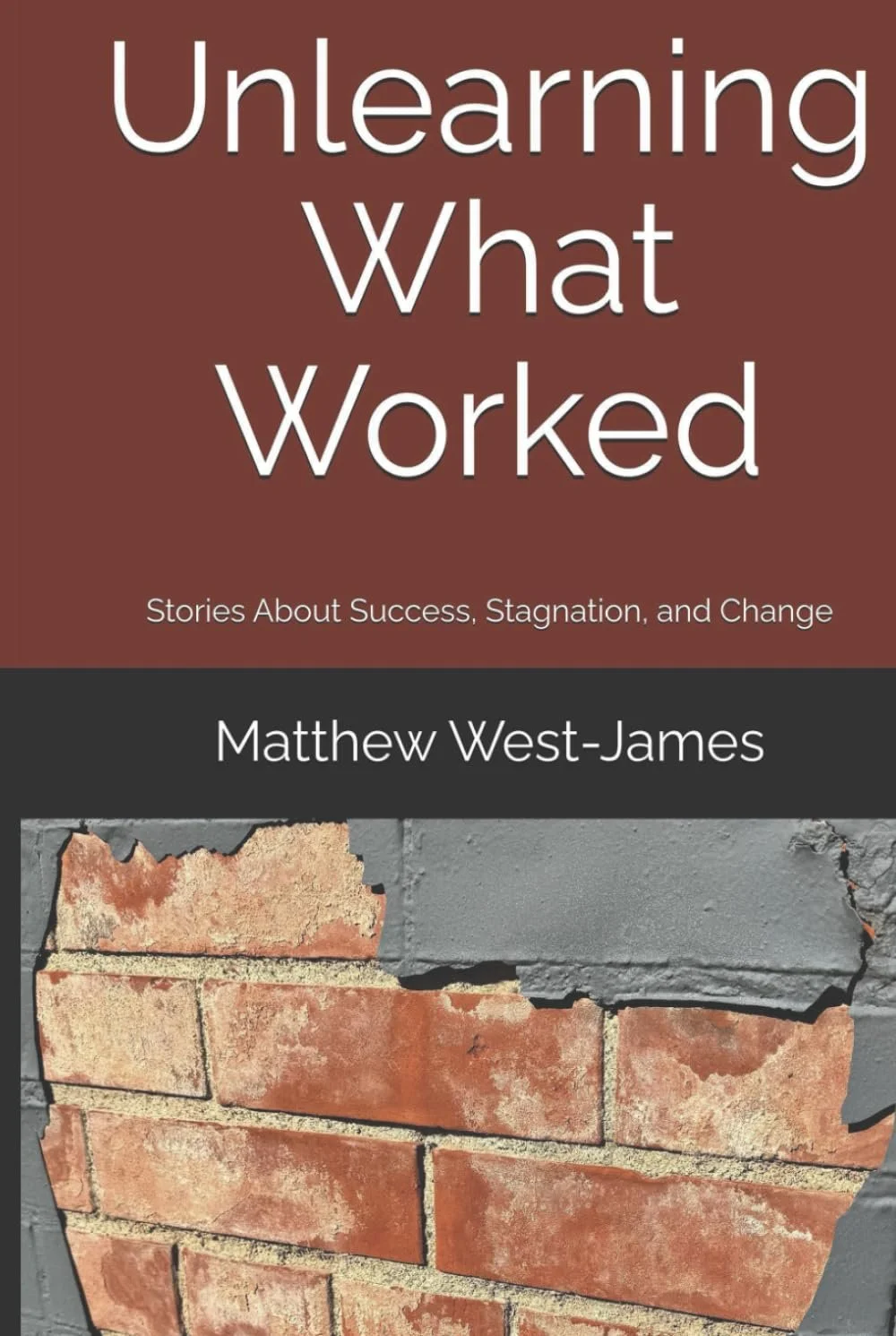
Unlearning What Worked by Matthew West-James

Click on cover image to purchase a copy

MWSA Review Pending


Author's Synopsis

Unlearning What Worked is a collection of lived stories about trying to be a successful human in a world that keeps changing the rules.

For much of my life, I relied on the tools that once kept me safe: staying invisible, avoiding risk, following the rules, and doing what was expected. On paper, those strategies worked. The career progressed. The responsibilities grew. From the outside, things looked successful.

But over time, those same tools stopped working. Growth slowed. Satisfaction faded. The paths that once felt reliable began to feel constraining instead of protective.

These essays trace moments from my life where progress required letting go of what had previously worked, and learning to adapt without a clear playbook. They are stories about leadership, failure, stagnation, and change. About discovering that success does not always come with fulfillment. And about becoming more intentional, honest, and present in the life I was building.

This is not a guidebook or a set of prescriptions. It is a reflective collection for readers who find themselves between versions of who they were and who they are becoming, and who are learning that growth sometimes begins by unlearning.

Format(s) for review: Paper or Kindle
Review genre: Nonfiction—Memoir/Biography
Pages/Word count: 81 / 14,980

Wooftastic and Mr. Wonderful by Circe Olson Woessner

Click on cover image to purchase a copy

MWSA Review

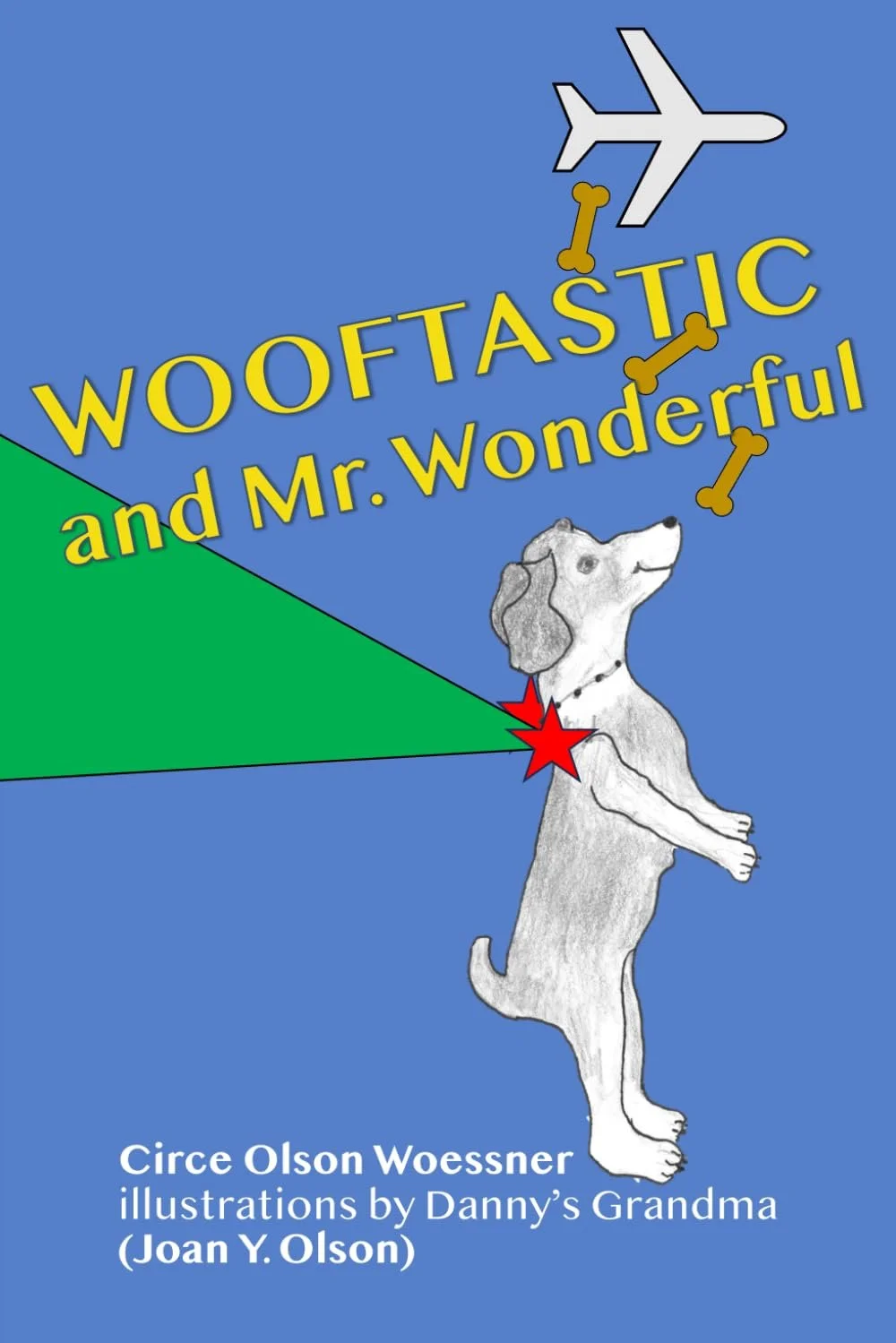
Circe Olson Woessner’s Wooftastic and Mr. Wonderful is a delightful chapter book written from the family pup Wooftastic’s perspective. It is humorous from the start—for example, “My humans call themselves ‘Mommy’ and ‘Daddy,’ which is ridiculous because I’m older than they are in dog years and I’m not a human.” I greatly appreciated the voice and playful personality of Wooftastic, also known as Danny.

The book tells a series of vignettes displaying Wooftastic’s sense of adventure, lack of understanding dangerous scenarios, and his repeated heroic acts. He saves the day more than once due to his canine sense of smell and the use of his imagination. Wooftastic describes situations oftentimes in comical phrases where he is repeating what he has heard, such as when he calls cats “Leave It Cats,” since this is what he was being told.

Black and white sketches drawn by Danny’s human grandmother accompany the story and add a fun visual element to the book. Stories about military moves and adjustments that families and their pets have to make were relatable to servicemembers and their families. Children, their parents, and especially dog lovers will enjoy the escapades of one small dog and his personal take on life as an adventurous four-legged military family member.

Review by Valerie Ormond


Author's Synopsis

This easy-to-read chapter book tells the story of Danny, also known as WOOFTASTIC, in his own words. Danny is part of a service family that goes wherever Uncle Sam sends them. Danny is loyal, opinionated, and imaginative. He loves his family and keeps them organized and safe. His main jobs are to guard his family from stress and very big monsters, and to keep them from getting lost in the woods. He loves Daddy first, and then it's a hard choice between Grandma and Mommy. Grandma cooks better, so that makes it a little easier to pick her.

Danny is a real dog, and his real 95-year-old grandma drew the pictures in this book to accompany his real and made-up adventures. Young readers will appreciate the stories as told in dog speak, and adults can imagine how their dogs would react if they were dropped into Danny’s/WOOFTASTIC’s adventures.

Format(s) for review: Paper Only
Review genre: Children & Young Adult—Children's Chapter Book
Pages/Word count: 102 / 20,161

The Gotland Deception by James Rosone

Click on cover image to purchase a copy

MWSA Review Pending


Author's Synopsis

The world was on fire.
It didn’t matter who started it…
…only who ended it.

In the 2030s, the era of Putin and Xi ended, not with a bang, but in a poisoned whisper. In their place, new leaders emerged—charismatic, technocratic, and unflinchingly bold. As Russia and China purged their past, crushing the oligarchy, an alliance for future control emerged.

Format(s) for review: Paper or Kindle
Review genre: Fiction—Mystery/Thriller/Crime
Pages/Word count: 357 / 102,000

Commanding the Stars: War, Strategy, and Power in Science Fiction by Michael A. VanPutte

Click on cover image to purchase a copy

Author's Synopsis

From Sun Tzu and Clausewitz to Heinlein and Orwell, Commanding the Stars explores how writers and strategists alike grapple with the essence of conflict, its logic, its instruments, and its human cost. Whether examining cyber warfare, autonomous systems, or the manipulation of perception and information, VanPutte demonstrates that fictional futures often forecast the next evolution of command and combat.

Organized into five comprehensive parts — Foundations, Means, Military Concepts, Ways, and End Game — the book dissects the anatomy of war across real and imagined battlefields. Readers encounter the full spectrum of strategic thought, from mobilization and logistics to deception, subversion, and the ethical reckoning that follows every campaign.

Drawing vivid lessons from Star Wars, The Expanse, Star Trek, and beyond, VanPutte shows how speculative narratives challenge assumptions and compel flexible, creative thinking, the very traits upon which survival and victory depend. As Eileen Gunn once observed, “Science fiction, at its best, engenders the sort of flexible thinking that not only inspires us but compels us to consider the myriad potential consequences of our actions.”

At once scholarly and visionary, Commanding the Stars bridges the worlds of the strategist and the storyteller. It invites military professionals, students, and writers alike to test their theories within the boundless theater of imagination, before confronting the unforgiving terrain of reality.2026

Soft cover, Kindle, ePub/iBook

Nonfiction

Last Gunship Dial M for Mullinnix by Frank A. Wood

Click on cover image to purchase a copy

MWSA Review

In his third book, Last Gunship: Dial M for Mullinnix, author Frank Wood departs from his normal non-fiction style and creates a murder thriller at sea. USS Mullinnix has a job to do on the gunline of Vietnam, killing the enemy. But a member of the crew is killing civilians in port and the crew underway, and the ship's company is more scared of this faceless killer than it is of the enemy. Will the killer be brought to justice, or will the ship tear itself apart faster than a main boiler explosion?

Frank Wood knows the life of a "tin-can sailor," and it brings it vividly to the pages of this book. He weaves an intricate story while capturing the sometimes terrifying but usually mundane life of a ship on the gunline in Vietnam. Those who have sailed aboard small Navy ships will feel nostalgic about this book, and those who enjoy murder mysteries will find something to enjoy as well.

Review by Rob Ballister
 

Author's Synopsis

War kills everything! What could be worse? A boiler room explosion and fire, a putrefied body in the bilges, a reefer dedicated to body bags, and the unimaginable – a possible murderer aboard ship!
Wood captures the psychological & emotional reality of serving during Vietnam with unflinching detail and authenticity. Raw. Real. Vivid. Disillusionment. Its humanity laid bare. A powerful account of the camaraderie and haunting aftermath of sailors that served on the Vietnam Gunline in the mid-1960s.

Format(s) for review: Paper or Kindle
Review genre: Fiction—Mystery/Thriller/Crime
Pages/Word count: 313 / 56,346

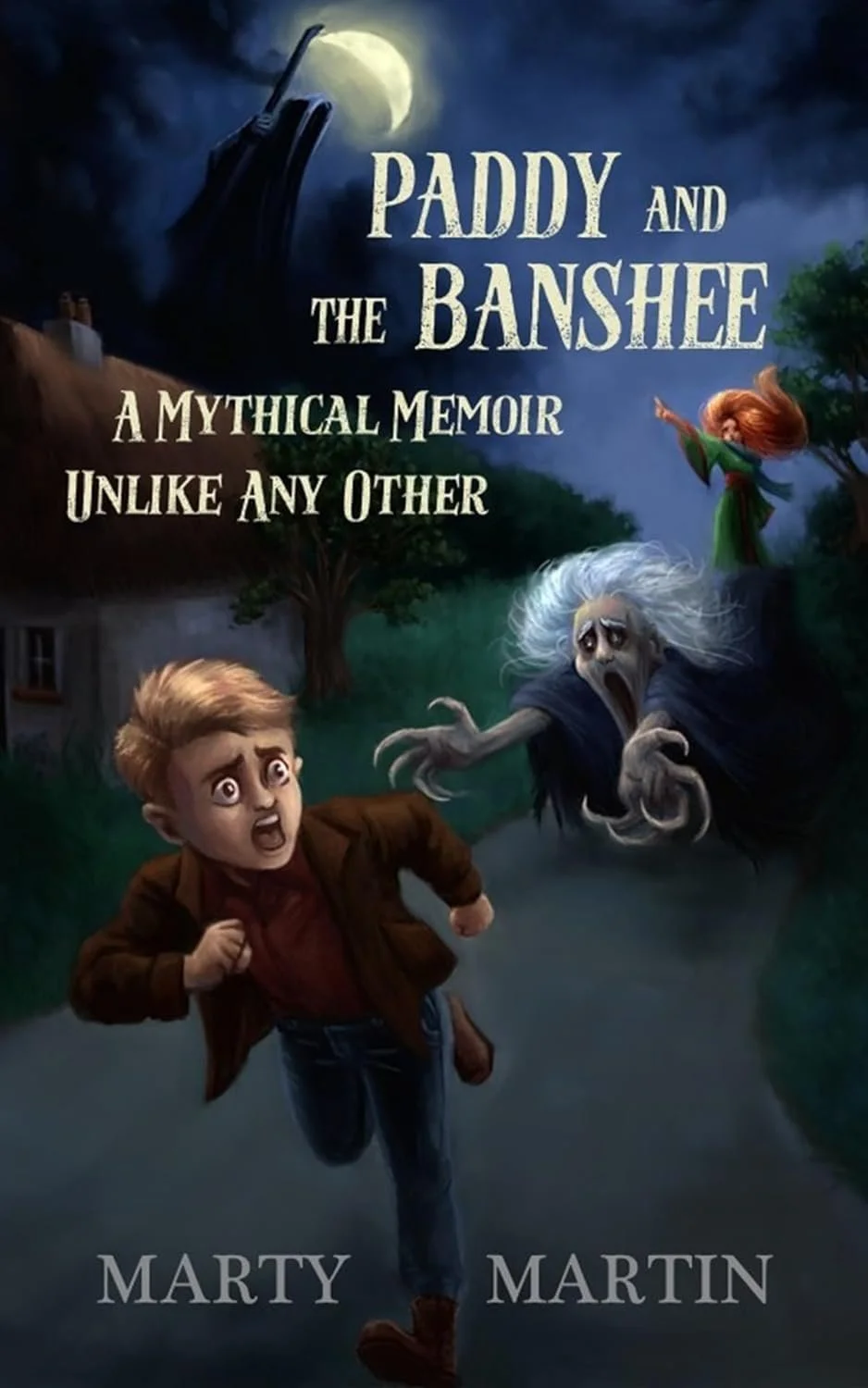
Paddy and the Banshee: A Mythical Memoir Unlike Any Other by Marty Martin

Click on cover image to purchase a copy

MWSA Review Pending


Author's Synopsis

The story began as a fantasy based on a childhood memory about a Banshee in Ireland. As repressed memories surfaced, the story evolved into a memoir unlike any other. The story blends imagination with the true story about six-year-old Paddy in the 1960s and his life in New York City, to rural Kilkenny County in Ireland, and back to New York, and how he learned that Banshees are real while also managing to navigate and survive a broken home and a variety of other early-life challenges. The boy’s name may not really be Paddy, but to tell this story, a hint of Irishness and anonymity may be necessary.

Format(s) for review: Paper or Kindle
Review genre: Nonfiction—Memoir/Biography
Pages/Word count: 196 / 35,992

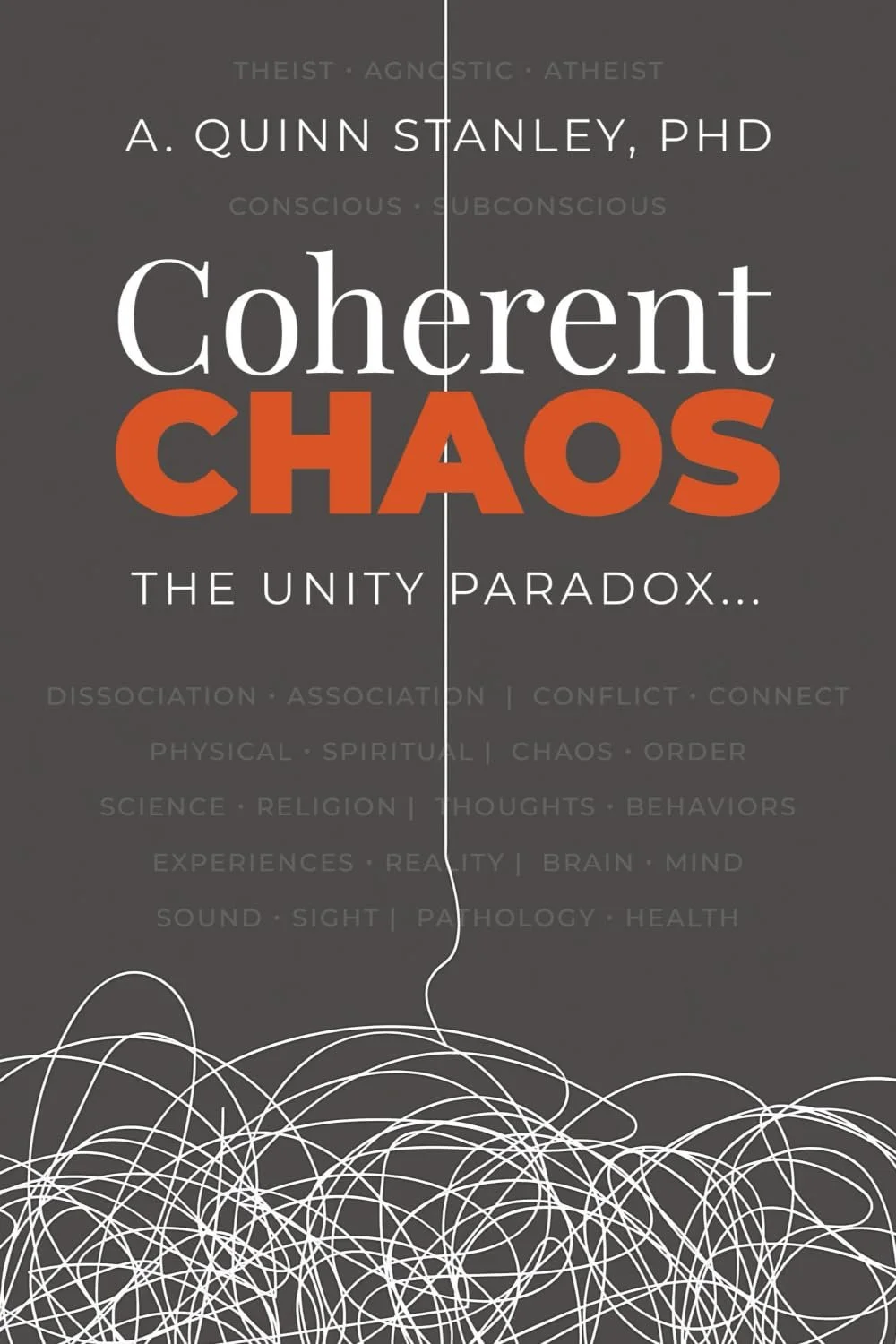
Coherent Chaos: The Unity Paradox... by A. Quinn Stanley, Ph.D.

Click on cover image to purchase a copy

MWSA Review Pending


Author's Synopsis

What if conflict could be your greatest teacher-and your pathway to peace? In Coherent Chaos, educator, veteran, and "blue-collar philosopher" A. Quinn Stanley draws from a lifetime of paradoxes—military and ministry, science and faith, rebellion and redemption—to explore one unifying question: How do we connect through the very chaos that divides us? Blending riveting personal narratives with deep neurological, psychological, and theological insight, Stanley proposes a daring thesis: conflict, when handled with wisdom, can actually foster healing, clarity, and unity. Whether it's reconciling science and religion, understanding the subconscious triggers behind our behavior, or simply learning to listen across differences, Coherent Chaos is both a memoir and a manual for turning turmoil into transformation. This intellectual journey defies genre—part auto ethnography, part spiritual reflection, part social science. Ultimately, it is a hope-filled invitation to find harmony within the dissonance of modern life.

Format(s) for review: Paper or Kindle
Review genre: Other—Religious/Spiritual
Pages/Word count: 316 / 117,015

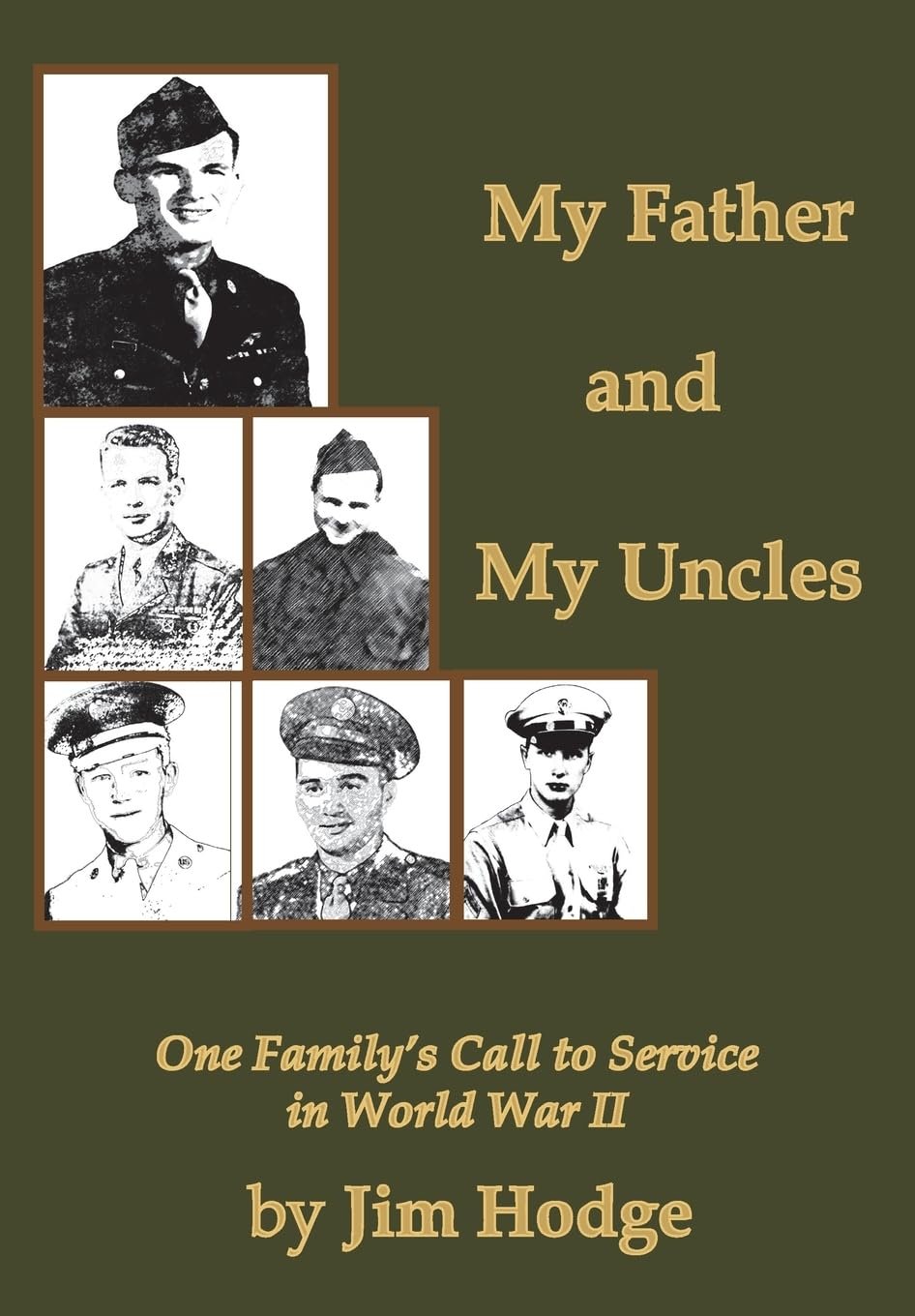
My Father and My Uncles by Jim Hodge

Click on cover image to purchase a copy

MWSA Review

In My Father and My Uncles, author Jim Hodge successfully weaves together the diverse stories of six young men who served in World War II and relates how their lives converged. While setting out to chronicle the war experiences of family members may seem challenging, Hodge has succeeded admirably. He provides detailed historical context for each war experience as well as personal information about each man, allowing readers to get to know them and understand how their service fits into the larger strategic picture of the war. While recounting their war experiences, the author weaves together threads that eventually unite them into a family in peacetime. Hodge’s inclusion of his father’s B-17 bombing mission diary is excellent historical material, and its last sentence is truly timeless: “I am thankful to finish safe. I just wish all the boys could have done the same.” A heartfelt and insightful book, and an admirable tribute to American veterans. Highly recommended.

Review by Zita Ballinger Fletcher


Author's Synopsis

From the building of the Ledo Road into China, to the battlefields of Guadalcanal, New Guinea, the Philippines, and the air and ground war on continental Europe, the author's father and uncles relate their World War II timelines and experiences.
Through interviews and correspondence with each of these six men before their passings, the pattern of young men being transitioned from the Depression into a wartime footing is not only a precious family history, but a chronology that reflects on all those who served in those years. In total, these young men were spread out across six of the earth's seven continents. Included is a recently discovered handwritten journal of one of the men's bombing missions over Eastern Europe.
Praise God that they each came home to create the extended family that the author has been privileged to be part of.

Format(s) for review: Paper Only
Review genre: Nonfiction—Memoir/Biography
Pages/Word count: 217 / 22,427

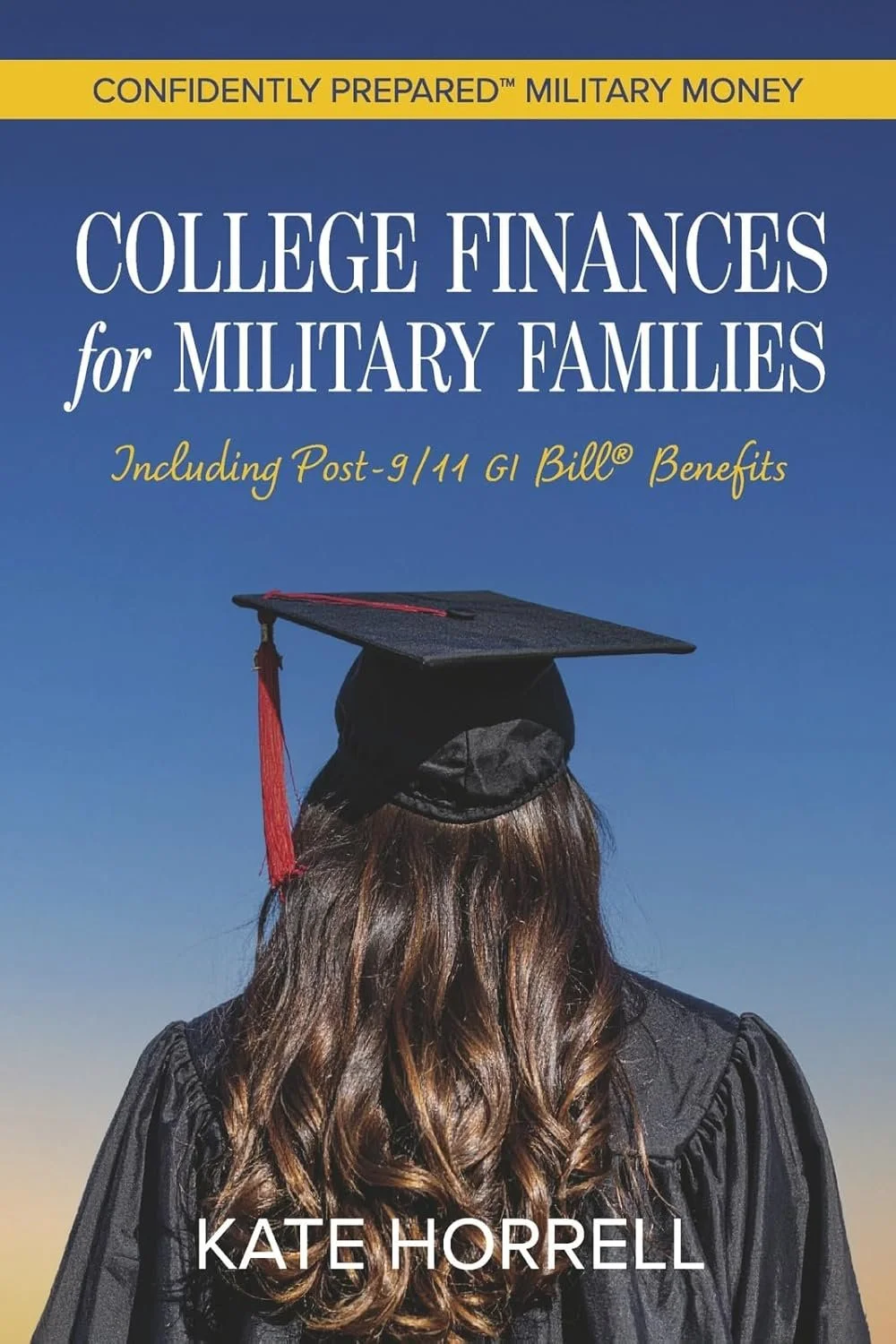
College Finances for Military Families by Kate Horrell

Click on cover image to purchase a copy

MWSA Review

College Finances for Military Families by Kate Horrell offers information and advice in clearly stated language for families who are planning to attend post-high school education. Some of the chapters offer advice and examples that any family can use—not just military. But the chapters dealing with aid available to military families demonstrate how very complicated this process is. Not only does the book relate the many sources of financial aid but also how to find these sources and how they can work together… or can conflict. Horrell provides clear-cut examples of how to stack the various sources for the most benefit. It's only when you lay out the various costs and benefits, including housing allowances, that you can see which option works.

She also reminds the reader in various chapters that (1) rules change often, both at the individual schools and at those agencies giving money; (2) get all agreements in writing; (3) if programs are not completed, you may have repay financial aid; (4) read financial award letters carefully and ask questions if the statements are not crystal clear or you don't understand something; (5) consider the whole family's plans not just the immediate future of the first child going to college; (6) use loans carefully; (7) reevaluate periodically.

This is a book that should be in the hands of every family with children who may want to continue their education or training after high school.

Review by Nancy Kauffman


Author's Synopsis

College Funding for Military Families is a simple yet comprehensive guide designed to help service members, veterans, and their families make smart, informed decisions about paying for higher education. With clear explanations and practical information, this book walks readers through the entire planning process―from understanding the education benefits earned through military service to learning how to coordinate those resources with other forms of financial aid. When you're done reading, you'll have a clear view of how to build a college financial plan that supports the education goals of the entire family.

Whether you're navigating your first duty station or left the service years ago, this guide demystifies the complex landscape of military education benefits. It provides straightforward information about the most widely used programs, including the Post-9/11 GI Bill, Montgomery GI Bill, Tuition Assistance, and the Yellow Ribbon Program. It also breaks down how and when to transfer GI Bill benefits to a spouse or child, what happens when eligibility changes, and how to ensure that those benefits are used efficiently and strategically. In addition to federal programs, College Funding for Military Families shines a light on state-level programs for military dependents, outside scholarships, and the implications of military life on in-state tuition.

Military families will see how to layer military-connected education benefits with civilian financial tools such as 529 college savings plans, federal student aid (including the FAFSA and Pell Grant), and private scholarships and grants. You'll learn how prioritize all these resources to build a strategic college funding plan that stretches resources for multiple children or degrees. This guide also addresses the realities of military life that affect educational planning―frequent moves, deployment cycles, unpredictable orders, and the transition to civilian life. You'll find tips on how to maintain eligibility through these challenges, how to choose flexible or military-friendly schools, and how to spot red flags in schools that aggressively market to military families.

Written by a financial educator with deep expertise in both college funding strategies and military benefit systems, this book is packed with real-life examples, timelines, and plain-English explanations that help military households avoid costly mistakes. It's not a textbook―it's a practical resource you can refer to again and again as your family's education needs evolve.

Whether your goal is a four-year university, a trade school, a graduate degree, or professional certification, College Funding for Military Families will help you unlock the full value of your benefits and build a cost-effective plan that works for your family. It's a must-read for any military household thinking about higher education―whether you're planning years in advance or scrambling to meet next semester's deadlines.

Format(s) for review: Paper or Kindle
Review genre: Nonfiction—How to/Business
Pages/Word count: 100 / 24,595

The Enigmatical Sphere of El Chupa-Ku by Juan Manuel Perez

Click on cover image to purchase a copy

MWSA Review

Writing from the perspective of a Mexican American Marine veteran of indigenous descent, the poet uses haiku poems to breathe life into and resurrect the legend of the chupacabra. This is not a traditional, somber exploration of nature, but rather a dance between the terrifying and the hilarious.

The chupacabra, often translated from Spanish as "goat sucker," is a legendary creature rooted in Latin American folklore, known for allegedly attacking livestock and draining their blood. It’s described as a two-legged, alien-like animal about four feet tall with spikes along its back, large eyes, and a reptilian-kangaroo appearance.

The chupacabra emerges not as a one-dimensional folklore predator but as a transformational archetype—vampiric killer, misunderstood outcast, pop culture icon, and metaphor for primal drives. El chupacabra becomes an all-encompassing lens: horror icon, comedic antihero, mysterious unsubstantiated predator, and cultural symbol.

The poet blends traditional three-line 5-7-5 syllable haiku structure with irreverent humor—pairing Godzilla fights, Mars colonies, personal ads, and tequila-drunk dances while grounding the absurdity in South Texas landscapes of mesquite trees, full moons, gray hides, and drained livestock.

Far from mere monster mixtures, the poems weave folklore with satire, horror, and poignant melancholy. Lighthearted entries imagine chupacabras in absurd scenarios: writing memoirs, starring in TV shows, wrestling goats, or posting personal ads for fatalistic partners. Darker pieces evoke genuine dread—silent coops, twisted goat faces in morning dew, the gray beast stalking under moonlight—echoing real rural fears of loss and the unknown.

Sharp and witty wording, (“Chupa-Man is born," "chupacabra tipping”), absurd scenarios (chupacabra crawl dance, "Take Your Chupacabra to School Day," radioactive Chupa-Man origin) alternate with chilling vignettes (silent coops, waiting in woods for skeptics, "let your pets come out") and cultural fusion (Olmec nagual meets Cthulhu) create a playful make-believe universe. Wordplay abounds ("Chupa-Khan," "Luchacabrador," "chupacabristas"), and pop-culture crossovers (Godzilla battles, Jimmy Kimmel guests, personal ads seeking "like-minded sucker") keep the tone lively without diluting the horror.

Deeper currents emerge: themes of marginalization ("prejudiced hotel," extinction dismissed), hunger as impartial ("chupacabras do not care / for it is just food"), and imagination as defense ("the only proof between us / fear or not to fear"). The poet subtly critiques human monstrosity ("why worry about / terrible chupacabras / worry about man") while embracing the beast as a kindred spirit: wild, self-serving, unapologetic.

Humor dominates much of the sequence: absurd combinations (Giant Chupacabra vs. King Kong comparing B.O., Chupacabra Flats on Mars, "Married with Chupacabras" TV show) inject levity, while pop-culture nods (Jimmy Kimmel, Scary Monsters Magazine) make it gleefully contemporary. Self-referential humor ("I don't always write / poems about chupacabras / ...who am I kidding") acknowledges the mania, yet the collection never flags.

By reimagining the chupacabra through gallows humor and rhythmic brevity, the author invites us to look past the shadow in the mesquite woods and recognize the "code of life" that governs all survivors.

It is a masterful blend of regional folklore, veteran grit, and playful poeticism. The collection celebrates imagination as proof against skepticism, turning a regional legend into a mirror for human fears, hungers, and absurdities.

Ultimately, the poet argues that belief in monsters (chupacabras or otherwise) confronts deeper anxieties: "you believe in ghosts / I, in el chupacabras / which makes us less scared." A masterful blend of folklore, satire, dread, and cultural pride. Highly original and endlessly re-readable.

Review by Frank Taylor


Author's Synopsis

Bilingual Edition
Just when you thought it was safe to liberate beautiful and natural haiku into the eloquent abode of nature, only to be violently attacked by a horrid, supernatural hybrid called el chupa-ku. Combining the simple, American haiku form with the legend and lore of el chupacabras, this unassuming, little book of short poems packs a swift kick to the literary pants in two languages: English and Spanish. Truly, this book can only be enjoyed in the dim-lit hours of the night with a bottle of mescal. ¡Orale!

Format(s) for review: Paper Only
Review genre: Poetry—Poetry Book
Pages/Word count: 114 / 2,426