Memoir/Biography

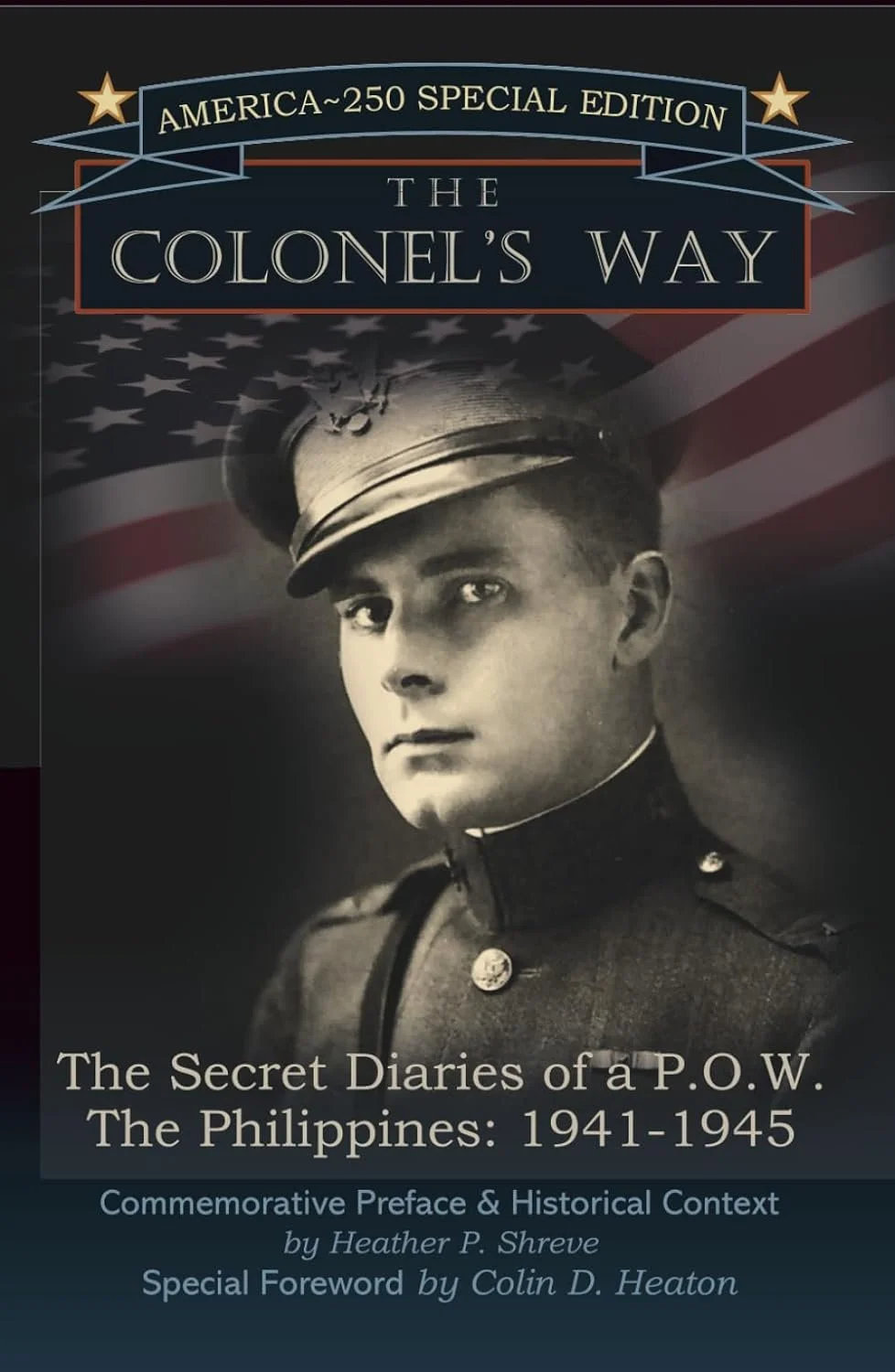
The Colonel's Way- The Secret Diaries of a POW: Philippines 1941-1945 by Heather P. Shreve

Click on cover image to purchase a copy

MWSA Review Pending


Author's Synopsis

A Commemorative Special Edition for America-250, Honoring a US Army officer with a military career that bridges five decades -- a titanic story of survival from a compassionate leader who had unsurpassed integrity.

When COL Arthur Lee Shreve, Jr. (U.S. Army pilot, WWI) becomes a POW of the Japanese, his life turns into an unforgettable tale of grit, American ingenuity, and raw bravery. After the fall of the Philippines, he survives the Bataan Death March, cares for his men, and leverages a secret intelligence operation for humanitarian purposes. Working with the Filipino Resistance, he smuggles in his own checkbook to buy food for his men—unthinkable acts of courage under the direst circumstances, risking execution, saving lives, and forging a legacy of leadership and purpose that defines a true hero: The Colonel’s Way.

These are his diaries, unabridged, transcribed by the War Department and his brother, COL L. G. Shreve from the originals written in Filipino composition schoolbooks and hidden from the Japanese while a POW. Not only an unmatched account of the Fall of Bataan and the teamwork that followed among his brothers, but submittable evidence in the 1946-48 International War Crimes Trials.

Format(s) for review: Paper Only
Review genre: Nonfiction—Memoir/Biography
Pages/Word count: 308 / 60,000

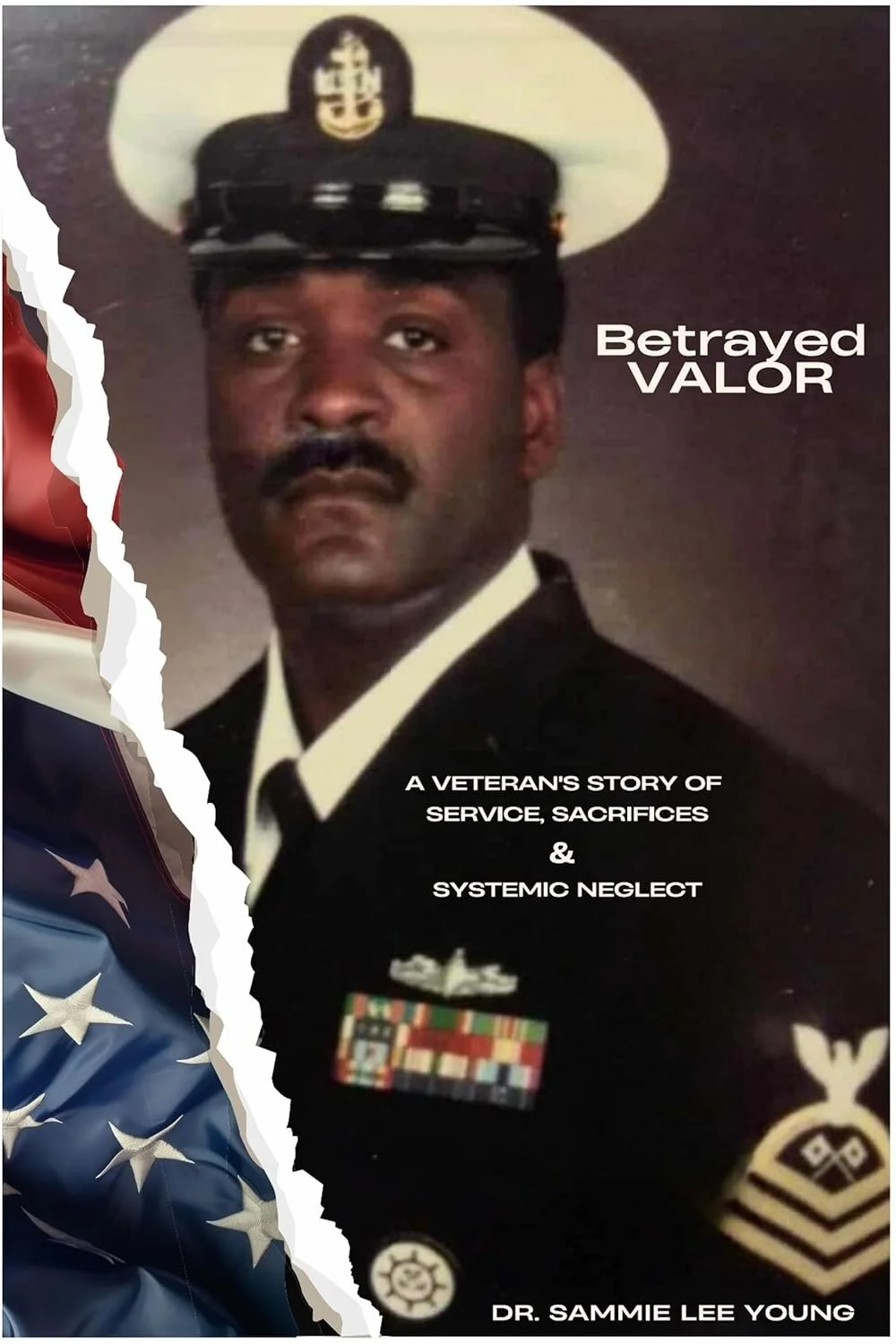
Betrayed Valor: A Veteran's Story of Service, Sacrifices and Systemic Neglect by Dr. Sammie Lee Young

Click on cover image to purchase a copy

MWSA Review Pending


Author's Synopsis

Betrayed Valor is the true story of Navy Chief Sammie Young, a combat veteran whose four decades of service were defined by leadership, duty, and an unwavering commitment to the creed “No Man Left Behind.” From the sands of Iraq to senior leadership roles within the federal system, Young dedicated his life to serving both his country and his fellow service members.

Yet his most difficult battle did not take place overseas.

When Chief Young sought help within the very institution designed to support veterans, he found himself facing retaliation, professional isolation, and systemic failure. What began as a request for assistance evolved into a deeply personal confrontation with bureaucracy, discrimination, and the human cost of speaking truth within a closed system.

Through candid reflection and documented experience, Betrayed Valor examines the often-unseen struggles veterans encounter after their uniforms are folded away. It explores the emotional and financial toll of institutional retaliation, the fragility of due process, and the moral responsibility owed to those who have served.

At its core, this is a story about integrity under pressure. It is about what happens when the creed “No Man Left Behind” collides with institutional self-preservation. It is about resilience in the face of isolation — and the courage required to stand alone.

More than a memoir, Betrayed Valor is both testimony and call for accountability. It invites readers to consider not only the sacrifices made in combat, but the promises that must be honored long after the battlefield is quiet.

Format(s) for review: Paper or Kindle
Review genre: Nonfiction—Memoir/Biography
Pages/Word count: 65 / 13,232

Redfish by A. Michael Hibner

Click on cover image to purchase a copy

MWSA Review Pending


Author's Synopsis

Arthur Francis Hibner, a high school senior from a small town in northern New Mexico, is drafted into the Navy during WWII. He goes to San Diego Naval Training Center for boot camp, then to BESS (Basic Enlisted Submarine School) in Groton, Connecticut, where he learns the basics for survival on submarines, then becomes a plank holder on the newly constructed Balao class submarine, Redfish, USS SS-395.

Though Redfish and crew spent only six months in hostile waters surrounding Japan and the Philippines, they made the most of their time and wreaked havoc on the Imperial Japanese Navy and Japanese supply shipping.

Third Class Torpedoman’s Mate Hibner relates the two epic patrols of Redfish, and its harrowing escape from the fury of three escorting destroyers after the sinking of the aircraft carrier Unryu.

Format(s) for review: Paper Only
Review genre: Nonfiction—Memoir/Biography
Pages/Word count: 159 / 67,500

Kick the Tires and Light the Fires: My Life as a Naval Aviator, FAA Test Pilot & Aviation Consultant by David Paul West with Ron Martz

Click on cover image to purchase a copy

MWSA Review Pending


Author's Synopsis

This memoir covers the author's life from his childhood in the 1940s and 1950s in Ironwood, Michigan; his education at the U.S. Naval Academy and subsequent training as a carrier pilot; tour of duty during the Vietnam War; attending the U.S. Air Force Test Pilot School; serving as a test pilot for Northrop Aviation and the Federal Aviation Administration, where he served on the team that developed the TCAS II; and completing his career in aviation as a Designated Engineering Representative and aviation consultant.

Format(s) for review: Paper Only
Review genre: Nonfiction—Memoir/Biography
Pages/Word count: 298 / 74,500

Unlearning What Worked by Matthew West-James

Click on cover image to purchase a copy

MWSA Review Pending


Author's Synopsis

Unlearning What Worked is a collection of lived stories about trying to be a successful human in a world that keeps changing the rules.

For much of my life, I relied on the tools that once kept me safe: staying invisible, avoiding risk, following the rules, and doing what was expected. On paper, those strategies worked. The career progressed. The responsibilities grew. From the outside, things looked successful.

But over time, those same tools stopped working. Growth slowed. Satisfaction faded. The paths that once felt reliable began to feel constraining instead of protective.

These essays trace moments from my life where progress required letting go of what had previously worked, and learning to adapt without a clear playbook. They are stories about leadership, failure, stagnation, and change. About discovering that success does not always come with fulfillment. And about becoming more intentional, honest, and present in the life I was building.

This is not a guidebook or a set of prescriptions. It is a reflective collection for readers who find themselves between versions of who they were and who they are becoming, and who are learning that growth sometimes begins by unlearning.

Format(s) for review: Paper or Kindle
Review genre: Nonfiction—Memoir/Biography
Pages/Word count: 81 / 14,980

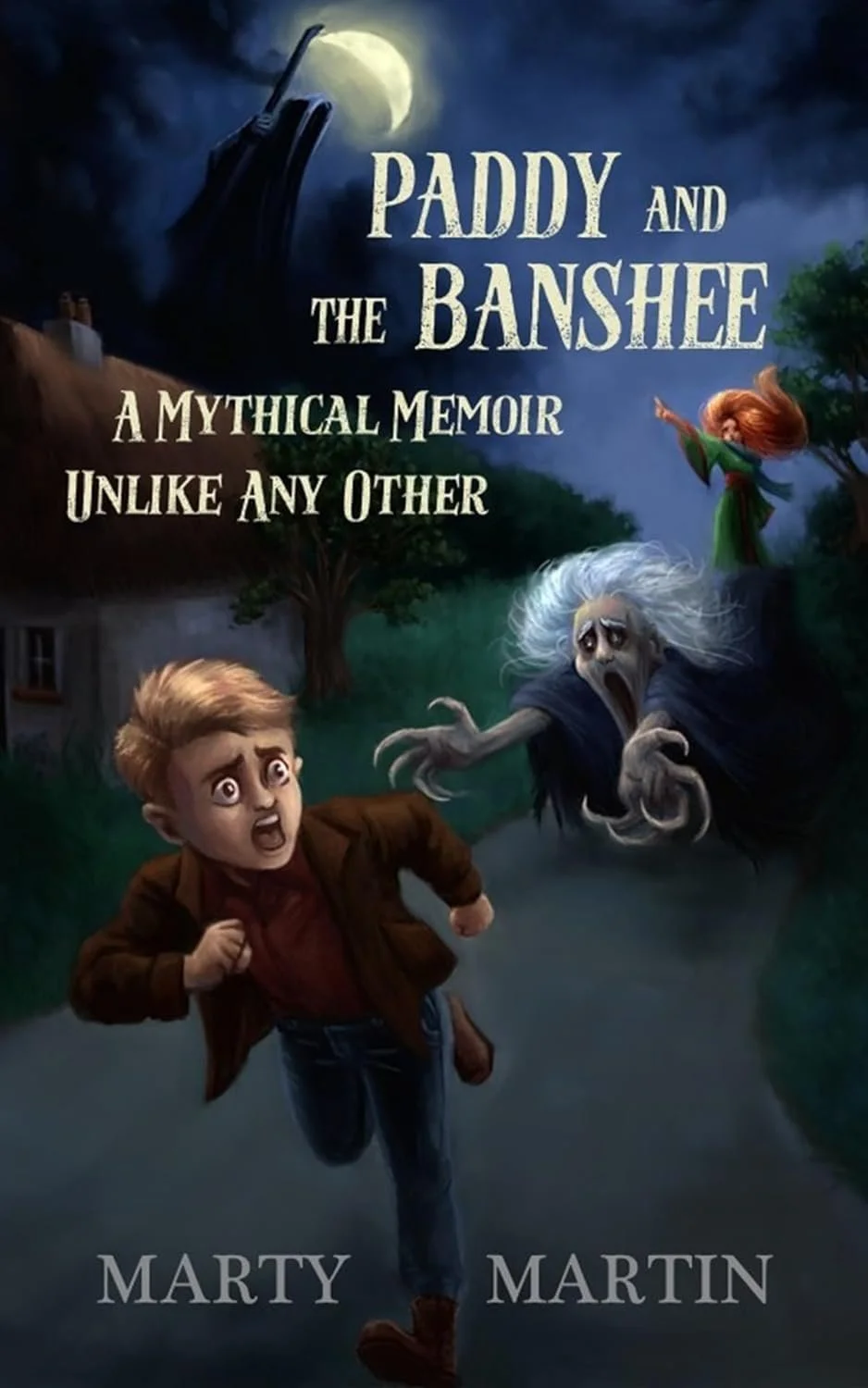
Paddy and the Banshee: A Mythical Memoir Unlike Any Other by Marty Martin

Click on cover image to purchase a copy

MWSA Review Pending


Author's Synopsis

The story began as a fantasy based on a childhood memory about a Banshee in Ireland. As repressed memories surfaced, the story evolved into a memoir unlike any other. The story blends imagination with the true story about six-year-old Paddy in the 1960s and his life in New York City, to rural Kilkenny County in Ireland, and back to New York, and how he learned that Banshees are real while also managing to navigate and survive a broken home and a variety of other early-life challenges. The boy’s name may not really be Paddy, but to tell this story, a hint of Irishness and anonymity may be necessary.

Format(s) for review: Paper or Kindle
Review genre: Nonfiction—Memoir/Biography
Pages/Word count: 196 / 35,992

My Father and My Uncles by Jim Hodge

Click on cover image to purchase a copy

MWSA Review Pending


Author's Synopsis

From the building of the Ledo Road into China, to the battlefields of Guadalcanal, New Guinea, the Philippines, and the air and ground war on continental Europe, the author's father and uncles relate their World War II timelines and experiences.
Through interviews and correspondence with each of these six men before their passings, the pattern of young men being transitioned from the Depression into a wartime footing is not only a precious family history, but a chronology that reflects on all those who served in those years. In total, these young men were spread out across six of the earth's seven continents. Included is a recently discovered handwritten journal of one of the men's bombing missions over Eastern Europe.
Praise God that they each came home to create the extended family that the author has been privileged to be part of.

Format(s) for review: Paper Only
Review genre: Nonfiction—Memoir/Biography
Pages/Word count: 217 / 22,427

Crazyhorse: Flying Apache Attack Helicopters with the 1st Cavalry Division in Iraq, 2006–2007 by Daniel M McClinton

Click on cover image to purchase a copy

MWSA Review

In 2007, the United States was embroiled in a war with Iraq. Dubbed Operation Iraqi Freedom (OIF), most of the U.S. only learned about this conflict by reading newspapers or watching the television news reports. However, many in the U.S. military were actually experiencing the events firsthand. In Crazyhorse: Flying Apache Attack Helicopters with the 1st Cavalry Division in Iraq, 2006 – 2007, author Daniel M. McClinton welcomes the reader into the world of an attack helicopter pilot during this conflict.

From the time of his deployment in 2006 through the surge in spring 2007 and finishing with his return home in the end of that year, McClinton paints a vivid picture of what life was like for a pilot in the midst of this war. Along with descriptions of actual combat missions, McClinton takes us into the mundane hours not spent flying missions. From filling out reports, to dealing with typical military bureaucracy, the author takes the reader into a world rarely experienced by others, including those in the military. The author has also supplied numerous personal color photographs of the helicopters and the Iraqi environment, enhancing the narrative of the book.

Especially of interest is the author's narrative of the death of two Reuters reporters and the wounding of two children on 12 July 2007. McClinton gives us not only his narrative of the events as they occurred, but also the reports from the inquiry into the reporters' deaths, along with the photographs that were included in the inquiry. As the author points out, most of the world only knew what was presented them by a press eager to spin their own biased narrative. The film, entitled Collateral Murder in Iraq by Wikileaks, paints a picture of warmongering pilots bent on murdering any Iraqi they could. However, as the author points out, and the video of the incident demonstrates, the enemy was well known to employ children as living bombs as well as human shields. Additionally, for reporters to embed themselves without any type of identification with enemy combatants and not expect potential harm is the height of hubris and arrogance.

Of additional interest is the author's in-depth depiction of military bureaucracy. With examples like "The Three Rules of Company Command or How to Get Ahead, without Really Doing Anything" (page 186) or "...field-grade officers who couldn't stand the thought of soldiers with nothing to do" (page 182), the inability of military command to grasp what life was really like for the soldiers in the field is well demonstrated to the amusement of the reader and the annoyance of the soldier.

One item of note is that this book is replete with army acronyms. While the author includes a glossary at the end of the book, the jargon used will slow down the reader who is not used to such language. This reviewer is a life-long civilian and was thoroughly encumbered by these terms. Having said that, the use of these terms is absolutely obligatory in any type of military essay. Despite this one potential concern, the book is well worth the read for an amazing look into what combat is really like for those valiant pilots fighting to protect the United States.

Review by Daniel E. Long
 

Author's Synopsis

This book describes aerial combat at the controls of the fearsome AH-64 Apache attack helicopter during the Operation Iraqi Freedom “Surge.”

This memoir reveals, for the first time, many stories of selfless service, courage, and sacrifice that will be compelling to all readers. At the same time, it also illustrates the absurdities that are involved with living in a massive bureaucracy like the US military. Also included are many original color photographs taken by the author in the combat zone.

Format(s) for review: Paper Only
Review genre: Nonfiction—Memoir/Biography
Pages/Word count: 303 / 96,210

Disgracefully Easy: A B-24 Pilot's Letters Home by William Hanchett with Thomas F. Hanchett

Click on cover image to purchase a copy

MWSA Review

Disgracefully Easy: A B-24 Pilot's Letters Home by William Hanchett, with Thomas F. Hanchett, is a thoroughly entertaining first-person account of one's experiences in becoming a U.S. Army Air Force pilot during World War II. This is a book not written from memory, years later, but is a primary firsthand account that is candid and observant, giving the reader exacting insight into pilot training during the war.

What makes the book especially effective is the author's feelings. For example, he discusses how he disliked flying after being berated by overly bellicose instructors. That immediacy gives the narrative its strength. In one passage, Hanchett says, “Man has not changed for the last thousand years … and that we must learn that peace will come only when we cease to think of good and right in terms of just over nations, ourselves.”

Disgracefully Easy is exceptionally well laid out. This structure makes the letters easy to follow with sharp, definitive chapter introductions written by Thomas Hanchett. For readers interested in World War II history, especially the Army Air Corps, this is a valuable and compelling book. There are no heroics from bombing missions over Europe; instead, it tells the story of a frustrated pilot who wanted just that but understood his mission to train new pilots so they could carry on the mission. Highly recommended.

Review by James Bultema


Author's Synopsis

Long before William “Bill” Hanchett became a professor of history and a notable expert on Abraham Lincoln, he was a B-24 Liberator heavy bomber pilot in the U.S. Army Air Forces during World War II. While telling a unique story of the Army Air Forces, Disgracefully Easy: A B-24 Pilot’s Letters Home is a book of correspondence which highlights Hanchett’s early writing, powers of observation and growing historical perspective. In addition to vivid first-person descriptions of flying, Hanchett’s letters and postal cards discuss the difficulties of a once wealthy family struggling to recover from the Great Depression.

From living as a recruit in a luxury beachfront hotel converted into barracks by the Army, to taking courses at a civilian college as an aviation student, to “bombing” the San Diego Naval Base in his future beloved home town, Bill Hanchett takes his family with him from basic training through advanced flying school where he hoped to be a hotshot fighter pilot, “dancing around the sky.” Instead, much to his chagrin, he was assigned as an instructor-pilot, teaching cadets from the rear seat of a BT-13 Valiant training airplane. He began to enjoy being an instructor, but as the war progressed and the flying school closed, Lieutenant Hanchett transitioned to become a four-engine bomber pilot in the fall of 1944, as the presidential election was well underway. Clearly expressed in his correspondence were Bill’s strong opinions about the divisive politics of that time, which usually conflicted with his father’s outlook.

Ultimately, in early 1945 Bill became responsible for training a bomber crew in the Nevada desert for an overseas assignment which never materialized because the war ended. While training his men hard, he became frustrated with what he viewed as pointless flying and concluded to his father that his service was “disgracefully easy” compared to others who saw combat. The chapter introductions and notes in Disgracefully Easy were prepared by Bill Hanchett’s son, Tom.

Format(s) for review: Paper or Kindle
Review genre: Nonfiction—Memoir/Biography
Pages/Word count: 308 / 94,928

Camouflage: How I Emerged from the Shadows of a Military Marriage by Heather Sweeney

Click on cover image to purchase a copy

MWSA Review Pending


Author's Synopsis

Camouflage: How I Emerged from the Shadows of a Military Marriage is about a woman’s journey from being overshadowed by her husband’s military career to rediscovering her identity as a single mother entering a new stage in life. The memoir explores how, like many military spouses, she camouflaged her identity, conforming to the expected role of the supportive wife who was secondary to her husband’s career as a Navy officer. But after she ended her thirteen-year marriage in her late thirties, she set out on a quest to figure out who she was as a woman without her husband, discovering that the hardships of military life—the forced independence, frequent loneliness, required adaptability, and fierce resilience—had trained her for life after divorce.

Format(s) for review: Paper or Kindle
Review genre: Nonfiction—Memoir/Biography
Pages/Word count: 294 / 79,000

The Master Chief's Sea Stories: Volume II Duty Ashore and USS Comte De Grasse (DD 974) by Johnny J Moye

Click on cover image to purchase a copy

MWSA Review Pending


Author's Synopsis

The Master Chief’s extraordinary journey continues as he spins his yarns from the second four years of his naval service. First, while becoming a renowned teletype technician, Moye delighted himself in the freedoms that shore duty afforded—further discovering himself both as a person and a sailor. Then, when thrust into an incredibly demanding leadership role aboard one of the world’s most formidable warships, he guided man and machine through what also became his crew’s most difficult duty. Head-on, together they met the mission.
The meek sailor we found in Volume I transformed into a true sailor’s sailor as he led his crew through extraordinary hardships found only at sea. With the mission always first, Moye also stereotypically enjoyed wine, women, and song in ports far from the hills of his childhood. All forging him into the confident sailor, communicator, and leader he became.
Based on his daily journal entries, Moye vividly recounts life-changing events as they unfold—telling a unique story rooted in lived experience. He captures his ongoing transformation, along with that of the sailors alongside him, in tales full of adventure, hardship, and sometimes incomprehensible moments.
Follow the Master Chief as he revisits some of his life’s most pivotal events, preparing him for future challenges—both professional and personal. Sail alongside through moments of euphoria and despair while navigating life’s tempests at sea. Truly, this is a story like no other.
Hold fast for these stories within are straight-up, no-shitters—as raw and real as they get.

Format(s) for review: Paper or Kindle
Review genre: Nonfiction—Memoir/Biography
Pages/Word count: 670 / 245,000

TOP FIN: Tales of Courage and Chaos from a Coast Guard Rescue Swimmer by George Cavallo

Click on cover image to purchase a copy

MWSA Review Pending


Author's Synopsis

Master Chief Darell Gelakoska wasn’t supposed to be there. At forty-three, decades older than the kids beside him, he marched back into Navy Rescue Swimmer School to prove that courage doesn’t retire with age. What followed was a test of grit, humility, and relentless determination that defined a legacy.

Top Fin pulls you straight into the unforgiving world of Coast Guard rescue swimmers—the elite few who leap from helicopters into raging seas, knowing the line between life and death can come down to seconds. Through hurricanes, shipwrecks, and helicopter crashes, these stories reveal not only the danger of the missions but the humor, chaos, and raw humanity of those who answer the call.

This isn’t just a memoir of rescues. It’s the journey of a man who helped shape the future of lifesaving itself. From sleepless nights on storm-tossed decks to the creation of the Advanced Rescue Swimmer School, Gelakoska’s story shows how experience, innovation, and stubborn willpower transformed training for generations to come.

Told with cinematic detail, gallows humor, and unflinching honesty, Top Fin is equal parts history and adrenaline—perfect for fans of military nonfiction.

Step into the cabin. Hear the rotors thunder. Watch the cabin door slide open to the storm. This is what it means to be Top Fin.

Format(s) for review: Paper or Kindle
Review genre: Nonfiction—Memoir/Biography
Pages/Word count: 456 / 57,885

Waiting at the Red Gate by Weston Roudebush

Click on cover image to purchase a copy

MWSA Review Pending


Author's Synopsis

Some gates you cross change everything. Others you barely notice until you look back and realize how far you've traveled.
Standing at his red gate, waiting for his family to come home, Weston Roudebush reflects on the journey from a quiet kid who kept his head down to a father teaching his boys that the strongest hands are often the gentlest.
This isn't a book about dramatic moments or battlefield heroics. It's about the spaces in between where character is forged in kitchens and bedrooms, where steady hands learn to build instead of break, where quiet strength speaks louder than any war cry.
Through stories spanning military service, law enforcement, fatherhood, and faith, Weston maps the territory where boys become men not through violence, but through the courage to remain tender in a hard world. These foundations are built not with concrete and steel, but with patient presence and the willingness to stand watch at the gates that matter most.
For fathers raising boys into men. For veterans learning to live with what they've carried. For anyone who has discovered that the deepest strength often speaks in whispers.
This is a book about building something that lasts, one quiet choice at a time.

Format(s) for review: Paper or Kindle
Review genre: Nonfiction—Memoir/Biography
Pages/Word count: 225 / 56,158

The Resurrected Pirate: The Life, Death, and Subsequent Career of the Notorious George Lowther by Craig S. Chapman

Click on cover image to purchase a copy

MWSA Review Pending


Author's Synopsis

The Resurrected Pirate reveals the astonishing life story of George Lowther, the most singular buccaneer from piracy’s golden age. This book explores his motivations, mistakes, tactics, and leadership as he trolls for victims and chases down his prey. Based on meticulous research, Lowther’s years ravaging the Caribbean and North Atlantic provide insight into the sordid lives of sea bandits. The brutality of the age comes into focus as he and his partners inflict robberies, torment and sometimes murder, culminating in their own deaths by violence, hangings, and Lowther’s supposed suicide in 1723. A stunning revelation adds a whole new chapter to his story. Lowther later re-emerges from a contented civilian life to help Britain in time of war and thereby restore his reputation. Commissioned in the Royal Navy, Lieutenant Lowther throws himself into capturing part of Spain’s empire in a dramatic quest for redemption.

Format(s) for review: Paper Only
Review genre: Nonfiction—Memoir/Biography
Pages/Word count: 240 / 90,000

Pig Fat Soup: How I Survived My USS Pueblo Prisoner of War Journey by Steven Woelk, Robert Lofthouse

Click on cover image to purchase a copy

MWSA Review

Pig Fat Soup, the memoir of Steven Woelk, follows a young sailor aboard the USS Pueblo as he experiences capture and endures 11 months as a POW in the Hermit Kingdom of North Korea. How "Pig Fat Soup" became the title is revealed as the story of captivity unfolds. The book was well written as it takes the reader along with the author back to 1968 during the events of the attack on the Pueblo, the injuries sustained in the attack, and the horrid conditions that the crew endures at the hands of the North Koreans. The author recounts the brutal medical procedures, harsh treatment, forced confessions, and the constant propaganda that he and his fellow POWs lived through. The final resolution discusses the negotiation and release of the US POWs and their re-entry back into US society.

The author also reveals insights into the state of the U.S. military as well as the decision-making processes of the upper echelons of military power, some of the shortsighted decisions that led directly to the North Koreans gathering technology and intelligence from the capture of the USS Pueblo and passing it along to the USSR and other nations.

Overall, the book is insightful and allows the reader to get a small picture of the sacrifice that some of our military members experience in service to our country on our behalf.

Review by Randy Beard


Author's Synopsis

First-Hand Account Brings USS Pueblo Story to Life

It was one of the darkest days in United States military history, as the US Navy failed to protect the USS Pueblo in international waters off the coast of North Korea in January 1968. Pueblo was captured by the North Korean Navy shortly following the Blue House Incident and her crew was subjected to 11 months of captivity, torture and medical treatment with no anesthesia.

Steven Woelk was one of the 83 crewmen aboard Pueblo when it was captured. One sailor was killed in the capture, while the other 82 endured hardships that barely can be understood by rational people. Steven was severely injured, and this is his story.

Nearly 60 years later, Woelk has assembled his thoughts and memories into a captivating book: PIG FAT SOUP: Surviving My USS Pueblo Prisoner of War Journey. His story blends history, context and personal experience into a manuscript you won’t be able to put down.

Woelk describes the tranquility Pueblo’s crew felt in the days and weeks prior to the surprise attack by the North Koreans. Even though the US Navy did not equip Pueblo with the necessary weaponry to defend, they believed the safety of international waters would eliminate any antagonistic efforts by the enemy.

Woelk saw his best friend, Duane Hodges, die in the effort to destroy TOP-SECRET documents. Woelk was the most severely wounded of the remaining 82 crewmen. He underwent multiple surgeries in primitive conditions, without anesthesia. He then went through months of separation from the rest of the crew as he recovered. Upon his return to the rest of the captives, his fellow crewmen were suspicious that Woelk had been brainwashed by the North Koreans and placed in their midst to US Navy secrets.

Readers will be privy to the inmost thoughts of isolation, confusion, anxiety and anger that permeate the mind of a prisoner of war, during and after captivity. PTSD is common among most military veterans who have served in combat yet is unique in its manifestation to each one.

Upon its release, Pig Fat Soup earned Amazon best seller status at number 35.

Format(s) for review: Paper or Kindle
Review genre: Nonfiction—Memoir/Biography
Pages/Word count: 187 / 47,200

Fugitive Son by Aramis Calderon

Click on cover image to purchase a copy

MWSA Review

This memoir begins with the author and his family visiting his father in a Louisiana prison when he was eleven years old. After his father escapes, the family packs what they can and heads for Florida, where they reunite with his father and begin their lives as fugitives. The author takes the reader along with him and his three siblings as they endure the trauma of life on the run with two drug addict parents trying to stay one step ahead of the law. He does a great job describing the range of experiences they go through and the variety of living situations they find themselves in. We get to know the personalities of his family members, but most of the focus is on his relationship with his father. The father converted to Islam while in prison and forced his son to read the Quran, pray, and learn Arabic. He alternates between berating and psychologically abusing his son and telling him he loves him.

Eventually, the nightmare ends when his father is recaptured. In the rest of the book, the author shares information he learned later about what was going on that he wasn’t aware of at the time. The epilogue wraps up the story for the author and his parents, but not his siblings.

This is a heartbreaking, but inspirational book. The author clearly has done a lot of soul searching and healing. I highly recommend it for anyone who has experienced a traumatic childhood. They may learn from the author’s story and how he came to find healing and forgiveness.

Review by Eva Nevarez St John (January 2026)


Author's Synopsis

Aramís Calderón was eleven in 1992 when federal marshals conducted a nighttime raid at the Baton Rouge apartment where he lived with his mother and four siblings. They were searching for Aramís’s father, who had escaped from a nearby federal prison. Once satisfied with the answers from Aramís’s mother, the marshals departed. At daybreak, so did Aramís’s family—and drove toward a rendezvous with his father, who had fled to South Florida. Thus began an eight-month ordeal of constant moves, family aliases, and drug deals.

As Calderón shares, Fugitive Son is not a love letter to his father, whom he sees even after his death as an unethical, toxic, and incredibly complex man. Rather, Calderón’s memoir explores how his father’s undeniable love for his family despite drug addiction, lawlessness, and toxic masculinity informed Aramís’s rebellious decision to join the Marines, and how all this shaped his determination to become the father he wished his own had been.

Format(s) for review: Paper or Kindle
Review genre: Nonfiction—Memoir/Biography
Pages/Word count: 214 / 64,000

Welcome To The Jungle - A Sailor's Memoir of Service Aboard the USS Fresno (LST-1182) by H.J. Peterson II

Click on cover image to purchase a copy

MWSA Review

This memoir begins with the author explaining why he joined the Navy in high school. He gives a detailed description of every step in the enlistment process, as well as every day he spent in boot camp and apprentice training in San Diego. It was there that he first experienced his favorite part of being in the Navy: liberty.

After apprentice training and leaving home, the author flew to meet up with his ship, the USS Fresno. It was participating in WestPac 1988 in the Philippines. He continues to describe every day in detail, with an emphasis on his favorite time: liberty. In less than a week, the ship headed out to sea, where they found themselves in the middle of a typhoon. From there they went to Guam, Pearl Harbor, and then to Long Beach. The USS Fresno remained in Long Beach from December 1988 through December 1989.

In January 1990, the USS Fresno deployed for the six-month WestPac 1990, and the author resumes his daily descriptions. Over the next several months, they went back and forth between Japan and the Philippines. Then they went to Hong Kong and Singapore. On their way from Singapore to Thailand they crossed the equator and the author participated in the Shellback Initiation, which sounds like an intense fraternity hazing ritual. From there it was back to the Philippines, Hawaii, and Long Beach. The author’s last day in the Navy was the day the USS Fresno docked in Long Beach.

The rest of the book covers the author’s time in college and the Naval Reserves, including two weeks back on the USS Fresno in Long Beach and a nightmare trip for training in Chicago in January. He finally completed all his Naval service in August 1995. There are four Epilogues with minimal information about what happened in the author’s life from the time he left the Navy until he published this book.

I would have liked to learn more about the author’s life after he finished his Navy service, especially how he overcame his addiction to alcohol.

Review by Eva Nevarez St John


Author's Synopsis

A 17-year-old kid from Wyoming joins the Navy to earn money for college and ends up gaining an education he didn’t expect. Welcome To The Jungle is a no-holds-barred coming-of-age tale of how a boy became a man in the U.S. Navy. Follow the author from his decision to join the Navy through boot camp and out to the fleet aboard the USS Fresno (LST-1182) and his adventures in the Western Pacific, and finally into the Navy Reserves. Read the real-life stories of what the Navy was like for an enlisted kid in the late 80's and early 90's. This collection of stories, memories, and journal entries documents a boy's transition into manhood and beyond. If you've ever wondered what being in the Navy was REALLY like, this book holds the answers.

Format(s) for review: Paper or Kindle
Review genre: Nonfiction—Memoir/Biography
Pages/Word count: 600 / 284,230

Fatal Second Helen: A Modern Veteran's Iliad by Josh Cannon

Click on cover image to purchase a copy

MWSA Review

Mention The Iliad to people today, and the first thing that might come to mind to many is the 2004 movie Troy, while a few might say it was that boring book from high school. To Fatal Second Helen author and Marine veteran Josh Cannon, it was a way to square away many aspects of his service in Iraq during wartime by comparing and contrasting his experiences to the oldest war story and the oldest book in the history of Western Civilization.

Cannon, who served as an enlisted Arabic Cryptologic Linguist and deployed to Iraq twice (first with the invasion in 2003, and again in 2004), is eminently qualified to write this book. After his time with the Marines, he attended the University of Pittsburgh and then the University of Chicago, where he received his PhD, ultimately becoming the Director of Research, and an adjunct faculty member for the Classics Department and the Anthropology Department. He has also worked on numerous archaeological digs in Turkey, including ones that interacted with the location thought to be the site of Troy.

Despite the heady subject and academic credentials of the author, it is quite an enjoyable and very insightful read. The author deftly highlights how, at the level of the individual warrior, most of the physical, emotional, and psychological elements of war and its aftermath, can be found in The Iliad, including possibly the first documented “blue falcon” in the history of military service.

This fine book will be of interest to veterans, students of military history and ancient times, and anyone who is seeking to understand the effects of war on those who have served.

Review by Terry Lloyd (January 2026)

Author's Synopsis

In the tradition of Jonathan Shay’s 'Achilles in Vietnam' (1994), Josh Cannon’s 'Fatal Second Helen: A Modern Veteran’s Iliad' brings to the audience a discussion of Homer’s Iliad that allows the ancient text to teach us about modern war. Cannon’s work differentiates itself from Shay’s by discussing the Iliad holistically. His book seeks to demystify the Iliad through connecting it to his military service via a presentation of his personal stories.

By sharing his story, Cannon’s book shares a new angle on an old tale. He makes the Iliad accessible to any audience and helps unearth a lesson that, despite being millennia old, still has much to teach us.

Format(s) for review: Paper or Kindle
Review genre: Nonfiction—Memoir/Biography
Pages/Word count: 178 / 50,000

Knowing My Father: The Collision of the OB Jennings and War Knight by Col. Joseph R. Tedeschi, US Army (Ret)

Click on cover image to purchase a copy

MWSA Review

Knowing My Father is a voyage of discovery that works on two widely diverse levels. The author is a decorated U.S. Army veteran who was a teenager when his father died. In the months and years that followed this personal heartbreak, he came to realize that he really did not know much about his late father beyond the understanding that he was a good, loyal, and loving family man.

Eventually, the author’s haunting sense of loss compelled him to examine his father’s upbringing and early life through genealogical sources and public records, including his military records. While piecing together a more robust profile of his dad, he uncovered a pivotal incident in his father’s World War I service with the U.S. Navy Armed Guard. This discovery led him down a new path to explore a deadly collision at sea involving his father’s ship.

At the height of the war, Germany’s pursuit of unrestricted submarine warfare in the Atlantic Ocean and Mediterranean Sea was threatening the survival of the Allies, especially Great Britain. Convoys of merchant ships and tankers were eventually manned with U.S. Navy gun crews as additional protection against U-Boat attacks.

Much of the book focuses on a convoy of thirty-two merchant ships and their escorts, which sailed from Halifax, Nova Scotia, on March 18, 1918, bound for England. The author’s father was making his third Atlantic crossing as a Navy gunner aboard a U.S. civilian tanker, the O. B. Jennings. Five days later the convoy was in the English Channel, maneuvering to avoid U-Boats in the dark of night. Another ship in the convoy, the British freighter War Knight, rammed into the Jennings, igniting its cargo of volatile naphtha with tragic loss of life. Although his father was one of the survivors of the collision, he surmised that the deadly incident had a lasting effect on his dad.

The author conducted extensive research into the events and decisions leading up to the collision. During his research, he accessed multiple sources, including British Admiralty Court of Enquiry archives, to reconstruct the incident and its aftermath. Citations are documented in the text with extensive footnotes. While the bulk of the text deals with the deadly collision between two WWI merchant ships, the author’s father remains at the center of the story.

In the end, the author achieved his primary goal—essential understanding of his father’s developmental experiences as a young man. He states his assessment simply and eloquently: “Researching my father’s early life has been truly cathartic. I really feel that I got to know him better, especially by reliving his World War I experiences.”

In a broader sense, he later concludes: “… [W]riting this book allowed me to better know and understand my long-lost father and to pay tribute to all the brave men who risk their lives going down to the sea in ships during time of war.” The value to the greater reading public will come from its thorough and gripping account of a single tragic incident during WWI that typifies the cost of the German submarine war on Allied shipping during WWI.

Review by Peter Young


Author's Synopsis

Knowing My Father: The Collision of the O. B. Jennings and War Knight relates Joe's methodical search to know more about his long-lost father. In that search, Joe discovers the tragic story of the fiery collision of the US tanker O. B. Jennings and the British merchant ship War Knight during World War I as their convoy evaded German U-boats in the English Channel. A US Navy armed guard defending the O. B. Jennings, gunner's mate Michael Tedeschi was heroically rescued by the British Royal Navy escorts from the burning sea. Joe satisfies his search to know his father better and, at the same time, reveals and exposes one of the unfortunate naval disasters that occur in times of war. Knowing My Father serves as a companion to Joe Tedeschi's memoir, A Rock in the Clouds.

Format(s) for review: Paper or Kindle
Review genre: Nonfiction—Memoir/Biography
Pages/Word count: 128 / 28,160

Lost in History by FE Taylor

Click on cover image to purchase a copy

MWSA Review

F. E. Taylor waited 50 years to write about his Purple Heart experience in South Vietnam, claiming that it was his grandson’s playing soccer in Hanoi, Vietnam —he “played against the grandchildren of men I once faced in combat”—that inspired him. But his memoir, Lost in History, shows he’d been composing these pages in his mind his entire life.

Throughout his unexceptional childhood in the small-town American South, Taylor was a shrewd observer, inclined by nature to be skeptical of convention. He did well in school, graduating with a degree in forestry from Clemson University, married his high school sweetheart, and foresaw a professional career doing what he loved. Drafted into the Army and becoming a combat infantry soldier, he mentally recorded his military life as a radical departure from the civilian path he had imagined. The book was being written all along.

Placing that personal experience into the context of U.S. and world history, however, took years of reading and reflection as he returned to join a “generation of forest managers [who] achieved remarkable success, quadrupling the productivity of the southeastern forests in the U.S. … producing more timber than is harvested.” His depiction of specific events at home and overseas takes readers into his world, from finding himself in the Army’s melting pot of race, culture, and economic class to discovering the mix of peoples and pasts in Southeast Asia. The physical and psychological demands of war led him to discover his own bedrock beliefs.

Taylor concludes that American leaders at home—and some military leaders in the field—made errors in judgment that led to tragic human costs for his country and others. Taylor also connects some of those mistakes to disparities of status in America’s past that continue today. At the same time, he commends his fellow soldiers, “dust-off” helicopter pilots, medical staff, and Red Cross volunteers.

One of his most telling conclusions should not be “lost in history,” especially at this time of national debate: “As I’ve mentioned before, what makes America truly exceptional is not that we always get it right the first time, but that we have the capacity to reflect, learn, and rectify past mistakes, such as the legacy of slavery.”

He writes for his generation. I hope others will read.

Review by Michael Lund


Author's Synopsis

In the grand sweep of history, this memoir may seem as small and insignificant as an atom in a vast universe. Yet, for the combat infantryman whose story it tells, these experiences form a monumental part of his life. Unwittingly shaped into a warrior through the trials of childhood and adolescence, he is unexpectedly drafted into the Vietnam War, an event that changes his world forever.

Format(s) for review: Paper or Kindle
Review genre: Nonfiction—Memoir/Biography
Pages/Word count: 277 / 64,794