
Always On My Mind by Bob Every

Click on cover image to purchase a copy

MWSA Review

Always on My Mind by Bob Every tells the story of two souls crossing paths in the Navy, parting, and reuniting. I was hooked from the start. I rooted for Emmett MacDonald, enjoyed his best friend Cappy, and liked neighbor Bubba and his family.

Emmett joins a private yacht club so he can drink a beer on any given Sunday. A U.S. Navy veteran, he is best friends with another Navy vet, Cappy, the bartender in the club. Cappy lives on a boat docked behind the club — not really a boat — more of a floating house because there is no engine. The yacht club is Emmett’s favorite hangout. It’s also the favorite hangout of a tough guy called The King and his bodyguard Dom, both of whom are deeply involved with the Philadelphia mob.

Two battle-hardened vets colliding with two low-down dirty rats. What could go wrong?

Enter Janice Wilson, a retired Navy nurse who served with Emmett. She remembers their dates and how he treated her with kindness and love, yet he never said the words. When Emmett retired and returned to Port Clinton, Pennsylvania, Janice also retired and decided to hike the Appalachian Trail with her eye on one particular respite stop, Port Clinton.

Emmett buys a farm along the shores of the Susquehanna River and goes into business with Cappy as his partner. When Bubba and his family are threatened by the mob, the two vets go on the offensive.

Having made enemies of The King and Dom, Emmett and Cappy are always on alert for trouble.

The author crafts a kaleidoscope of action that made me turn each page. The characters lingered with me even after the final sentence—this is a story that stays with you long after the reading is done.

Review by Nancy Panko
 

Author's Synopsis

Emmett McDonald never planned to start a war. He just wanted a beer on a Sunday in Port Clinton, Pennsylvania.

Janice Wilson never planned a five-million-step quest through the wilderness—the Appalachian Trail. But it's not Mount Katahdin she's aiming for. It's Port Clinton, Pennsylvania, an insignificant town of under three hundred people.

Brace yourself—Emmett McDonald, a battle-hardened veteran of three wars, is now in a struggle a lot bigger than a closed bar on a Sunday. It's about who makes the rules - and who has the grit to stand up to them.

Can an irascible Irishman with street smarts, scars, and an inconvenient conscience take on the people who run everything? And what happens when Janice finally reaches Port Clinton?

Do you believe street smarts can win over organized power? Does the quest of Don Quixote of La Mancha inspire you? Am I a good enough writer to pull it off?

Clicking the sample bar suffices. The decision is yours.

Format(s) for review: Kindle & paper
Review genre: Fiction—Literary Fiction
Pages/Word count: 273 / 70,000
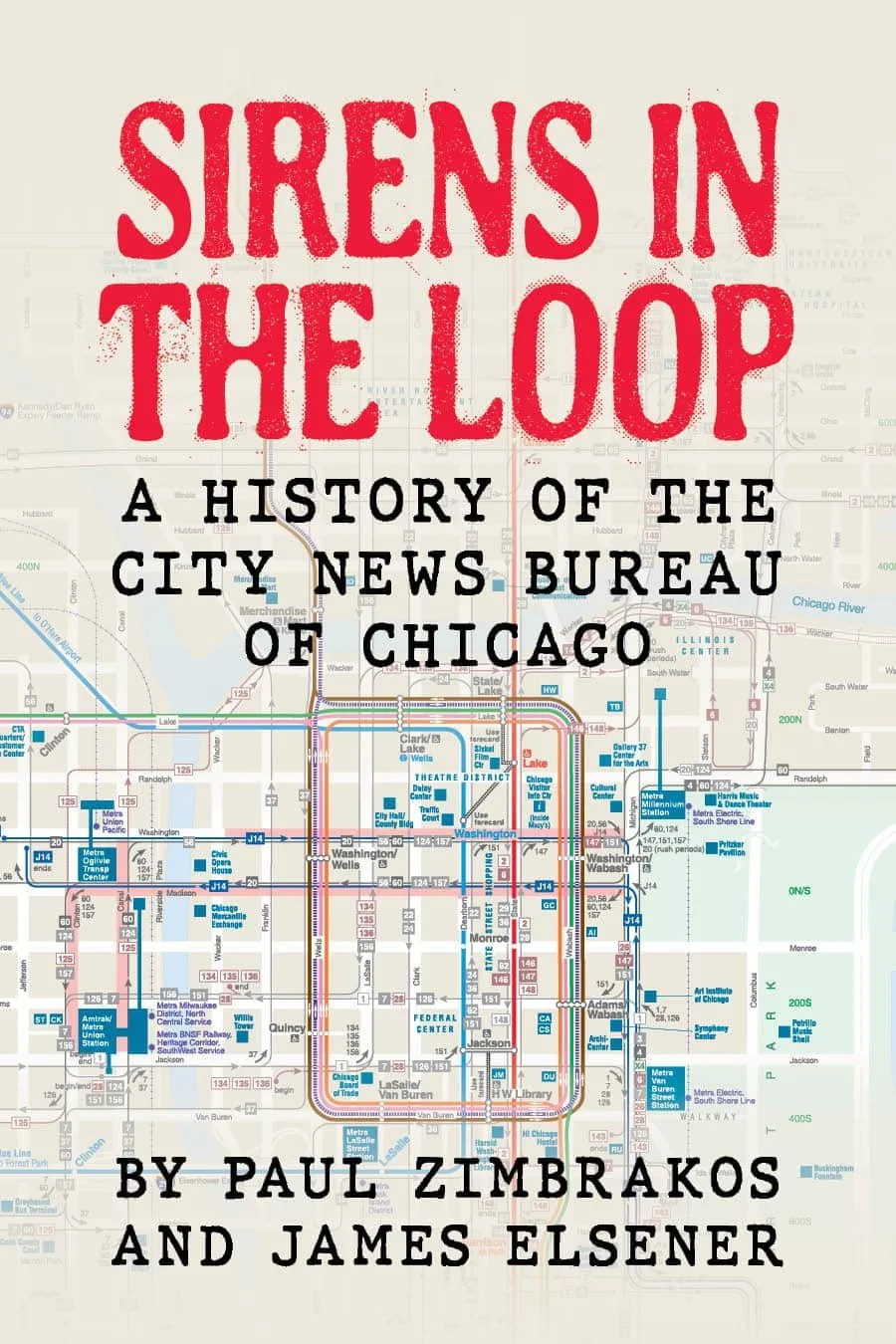
Sirens in the Loop - A History of the City News Bureau of Chicago by Paul Zimbrakos / James Elsener

Click on cover image to purchase a copy

MWSA Review

Sirens in the Loop is a narrative history of the legendary Chicago City News Bureau framed as a collective memoir from the perspectives of many of the news service’s alumni. The title is taken from the traditional alert that went out when squad cars, ambulances, or fire engines took to the streets of the inner city, sending Bureau reporters out in pursuit of the all-important “scoop.”

Founded in the late 19th Century, the CNB was the central hub for local “hard” news coverage in the rapidly growing “City of the Big Shoulders”—an era of sensational scandals, tragedies, and disasters. The bureau was set up by a consortium of the city’s major newspapers as an independent joint enterprise that focused on local “hard” news, allowing its shareholders to concentrate on national and international events. Chicago in the early decades of the 20th century was served by as many as ten daily English-language newspapers, some issuing multiple editions each day.

In its 115-year history, the CNB earned a reputation as the city’s training ground for budding reporters, many of whom moved on to senior positions in print journalism, radio, and television.
Newly hired news writers were quickly thrown into a demanding 24/7 hard-news environment covering police beats, city hall, the Cook county offices, criminal courts, and the coroner’s office. Their work was characterized by long hours, low pay, and relentless pursuit of “the facts”—Who? What? Where? When? How? Why? Hard-nosed Bureau editors were known for sending cub reporters back to a crime scene or a grieving family to confirm the smallest missing detail. The CNB mantra was: “If your mother says she loves you, check it out.”

The details of the City News legacy in this account are primarily the product of decades of research and archiving by long-term Bureau chief Paul Zimbrakos, who led the organization for more than forty years from 1958 until its closing in 2005. Zimbrakos started his journalism career as a copy boy at the Chicago Daily News before joining City News Bureau as a cub reporter. After a tour in the US Army, he returned to the Bureau and worked his way up the newsroom hierarchy from morgue reporter to the police beat and ultimately long service as its Managing Editor. In the course of his career, Zimbrakos mentored generations of journalists, including Kurt Vonnegut and Mike Royko. His is leadership style was characterized by tough love and an unrelenting demand for accuracy. He was renowned for riding his street reporters on the phone to “get it right, get it fast.”

Zimbrakos augmented his personal recollections with dozens of first-person anecdotes from Bureau veterans who covered some of the major stories of their eras. Unfortunately, he passed away before he could compile and organize his work for publication. That task fell to his long-time friend (and CNB alumnus) James Elsener.

Following his service as a US Marine in Vietnam, co-author James Elsener was hired as a green reporter by Bureau Chief Paul Zimbrakos in 1970. Elsener was immediately thrown into the CNB crucible. In his two-year stint at the Bureau, under Zimbrakos’s tough encouragement, he honed his skills as a news correspondent. As with many CNB veterans, Elsener went on to work with prominent area newspapers, including the Chicago Tribune, The Business Ledger, and the Daily Herald before retiring in 2017. He is the author of two novels, The Last Road Trip and Reflections of Valour.

Sirens in the Loop records a unique chapter in American journalism history—and thereby the history of one of our country’s most dynamic and noteworthy cities. Readers with an interest in the roots of modern-day news coverage and the standards of professional journalism will be rewarded by the first-hand accounts of the many men and women who earned their spurs in the demanding environment of the Chicago City News Bureau. Others with a more general interest in the newsworthy events and milestones of 20th-Century Chicago—ranging from the gangland St. Valentine’s Day Massacre to the horrors of serial killer John Wayne Gacy--will be treated to new perspectives into how they were reported to the public.

Review by Peter Adams Young
 

Author's Synopsis

“Sirens in the Loop” traces the rise and legacy of the City News Bureau of Chicago, the legendary news wire service that shaped generations of reporters and defined the city’s gritty journalistic identity.
Through vivid storytelling, the book explores its founding, its relentless “If your mother says she loves you, check it out” ethos, and the countless scoops, scandals, and characters forged in its chaotic newsroom. From crime scenes to city hall, it chronicles how the bureau’s demanding culture sharpened young reporters’ instincts and left an enduring imprint on American journalism.
“Co-authored by veteran editors Paul Zimbrakos and James Elsener, the narrative traces the agency’s evolution from its founding in 1890 to its “final” closure 115 years later. It offers a front-row seat to Chicago’s most harrowing headlines, including the St. Valentine's Day Massacre, the Our Lady of the Angels fire, and the Tylenol murders. Beyond the hard news, the book captures the "Chicago style" of reporting through hundreds of anecdotes from alumni luminaries like Mike Royko, Kurt Vonnegut, and Seymour Hersh.
The title refers to the "Sirens in the Loop" BULLETINS that signaled immediate breaking news to the city’s media outlets. From the clatter of manual typewriters and pneumatic delivery tubes to the digital age, this book stands as a testament to a bygone era of street-smart, high-stakes reporting that shaped the landscape of American journalism.

Format(s) for review: Paper Only
Review genre: Nonfiction—History
Pages/Word count: 272 / 75,000

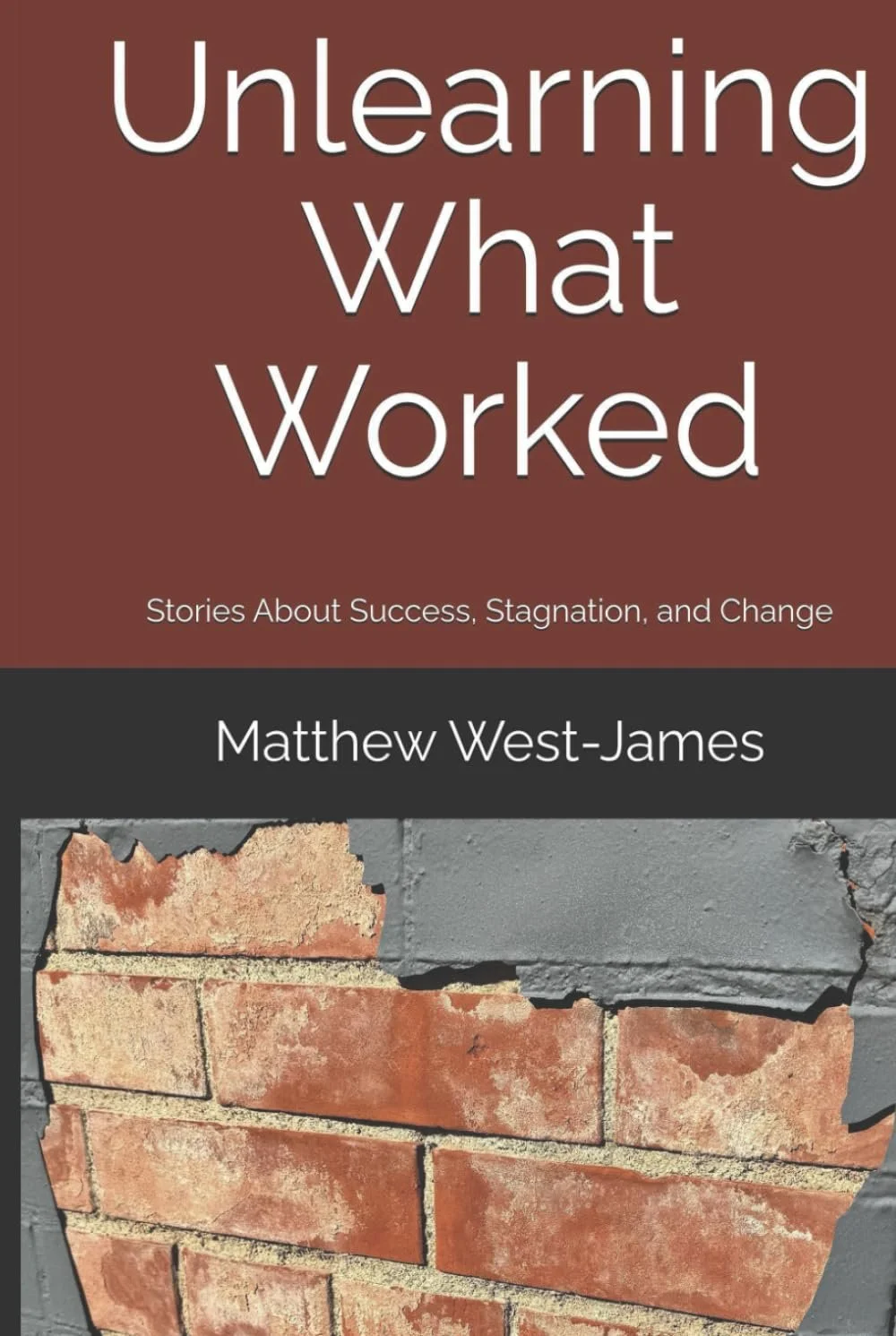
Unlearning What Worked by Matthew West-James

Click on cover image to purchase a copy

MWSA Review

Unlearning What Worked: Stories About Success, Stagnation, and Change by Matthew James-West is a short collection of autobiographical stories that show we must sometimes change the way we deal with things in life. The author is self-deprecating enough to win readers to his thoughts, solutions, and results. The book encourages us to examine our lives for our unwritten rules that are causing us to stall, whether in relationships or career. Each chapter addresses a different “rule” that sometimes needs to be abandoned for our greater growth. For instance, his early life taught him to become invisible to avoid pain and bullying. Later, as an adult, he had to change that defense mechanism. As he wrote, “…it marked a shift for me, from surviving quietly to leading visibly, and from hiding behind competence to building trust that flows both ways."

The author doesn’t proclaim that his experiences are a pattern for others to follow. Rather he gently encourages readers to examine their own unwritten rules to determine if it is time to change. Those who are looking to change will find many things to mull in this book. My favorite pearl of wisdom is his caution to  “ …give each other grace and assume good intent until proven otherwise."

Review by Betsy Beard


Author's Synopsis

Unlearning What Worked is a collection of lived stories about trying to be a successful human in a world that keeps changing the rules.

For much of my life, I relied on the tools that once kept me safe: staying invisible, avoiding risk, following the rules, and doing what was expected. On paper, those strategies worked. The career progressed. The responsibilities grew. From the outside, things looked successful.

But over time, those same tools stopped working. Growth slowed. Satisfaction faded. The paths that once felt reliable began to feel constraining instead of protective.

These essays trace moments from my life where progress required letting go of what had previously worked, and learning to adapt without a clear playbook. They are stories about leadership, failure, stagnation, and change. About discovering that success does not always come with fulfillment. And about becoming more intentional, honest, and present in the life I was building.

This is not a guidebook or a set of prescriptions. It is a reflective collection for readers who find themselves between versions of who they were and who they are becoming, and who are learning that growth sometimes begins by unlearning.

Format(s) for review: Paper or Kindle
Review genre: Nonfiction—Memoir/Biography
Pages/Word count: 81 / 14,980

Wooftastic and Mr. Wonderful by Circe Olson Woessner

Click on cover image to purchase a copy

MWSA Review

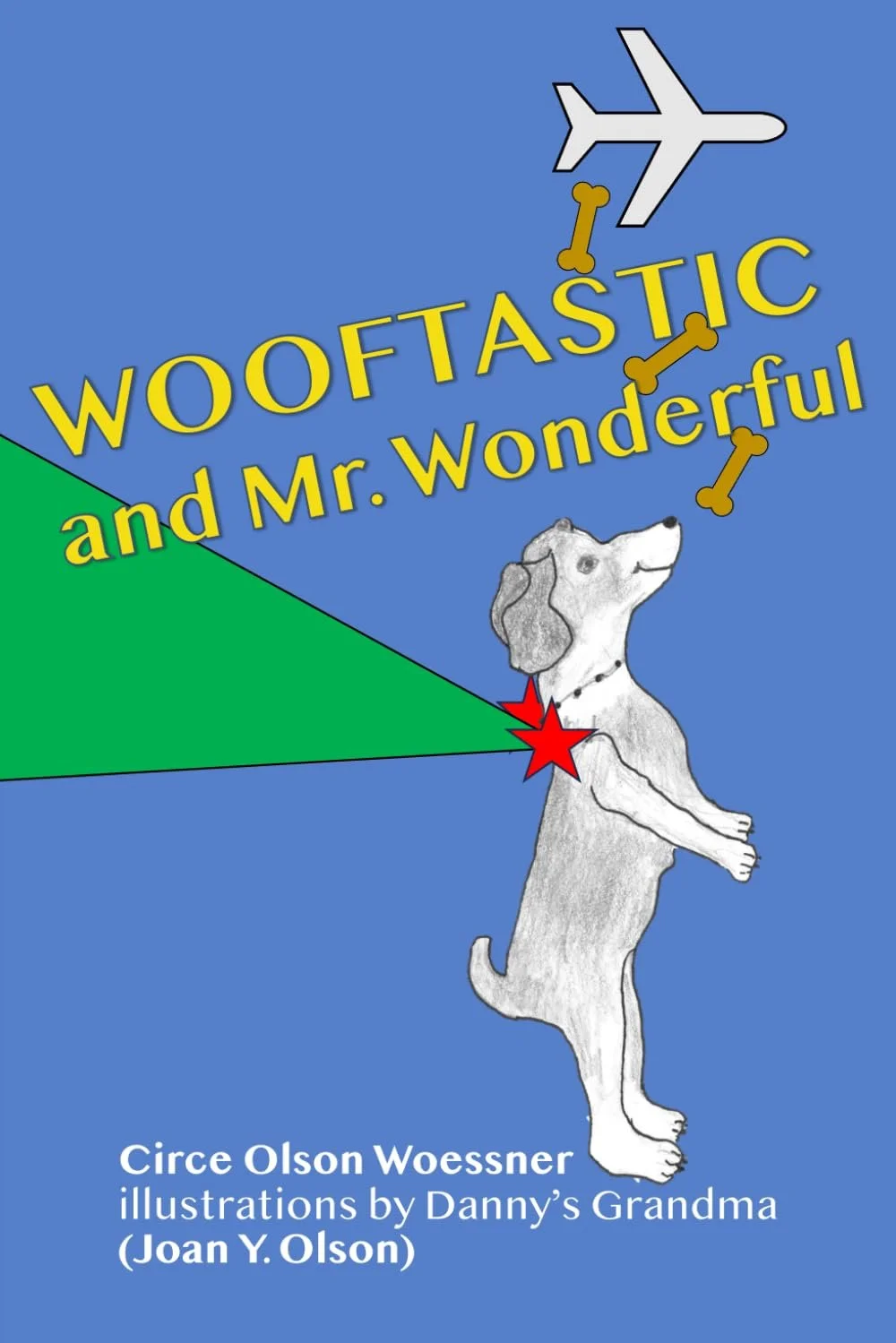
Circe Olson Woessner’s Wooftastic and Mr. Wonderful is a delightful chapter book written from the family pup Wooftastic’s perspective. It is humorous from the start—for example, “My humans call themselves ‘Mommy’ and ‘Daddy,’ which is ridiculous because I’m older than they are in dog years and I’m not a human.” I greatly appreciated the voice and playful personality of Wooftastic, also known as Danny.

The book tells a series of vignettes displaying Wooftastic’s sense of adventure, lack of understanding dangerous scenarios, and his repeated heroic acts. He saves the day more than once due to his canine sense of smell and the use of his imagination. Wooftastic describes situations oftentimes in comical phrases where he is repeating what he has heard, such as when he calls cats “Leave It Cats,” since this is what he was being told.

Black and white sketches drawn by Danny’s human grandmother accompany the story and add a fun visual element to the book. Stories about military moves and adjustments that families and their pets have to make were relatable to servicemembers and their families. Children, their parents, and especially dog lovers will enjoy the escapades of one small dog and his personal take on life as an adventurous four-legged military family member.

Review by Valerie Ormond


Author's Synopsis

This easy-to-read chapter book tells the story of Danny, also known as WOOFTASTIC, in his own words. Danny is part of a service family that goes wherever Uncle Sam sends them. Danny is loyal, opinionated, and imaginative. He loves his family and keeps them organized and safe. His main jobs are to guard his family from stress and very big monsters, and to keep them from getting lost in the woods. He loves Daddy first, and then it's a hard choice between Grandma and Mommy. Grandma cooks better, so that makes it a little easier to pick her.

Danny is a real dog, and his real 95-year-old grandma drew the pictures in this book to accompany his real and made-up adventures. Young readers will appreciate the stories as told in dog speak, and adults can imagine how their dogs would react if they were dropped into Danny’s/WOOFTASTIC’s adventures.

Format(s) for review: Paper Only
Review genre: Children & Young Adult—Children's Chapter Book
Pages/Word count: 102 / 20,161

The Gotland Deception by James Rosone

Click on cover image to purchase a copy

MWSA Review

In his book, The Gotland Deception, author James Rosone sets up the reader for a major conflict between superpowers in the 2030s. His description of the new AI weaponry is fascinating, and the worldwide settings he uses for the inevitable conflict is indicative of the author's good understanding of military strategy. Fans of futuristic military conflict should love Rosone's writing. I was sucked into the story and developed an interest in what the book held in store for a number of the characters. Readers of this book should be forewarned that this book is the first in the series, and that the story is left completely open ended at the end of this book. You will need to get the next book and maybe subsequent ones to know how it ends. If you want to read a good futuristic military combat and don't mind waiting for the next installment of Rosone's books then this book is for you.

Review by Bob Doerr
 

Author's Synopsis

The world was on fire.
It didn’t matter who started it…
…only who ended it.

In the 2030s, the era of Putin and Xi ended, not with a bang, but in a poisoned whisper. In their place, new leaders emerged—charismatic, technocratic, and unflinchingly bold. As Russia and China purged their past, crushing the oligarchy, an alliance for future control emerged.

Format(s) for review: Paper or Kindle
Review genre: Fiction—Mystery/Thriller/Crime
Pages/Word count: 357 / 102,000

Commanding the Stars: War, Strategy, and Power in Science Fiction by Michael A. VanPutte

Click on cover image to purchase a copy

Author's Synopsis

From Sun Tzu and Clausewitz to Heinlein and Orwell, Commanding the Stars explores how writers and strategists alike grapple with the essence of conflict, its logic, its instruments, and its human cost. Whether examining cyber warfare, autonomous systems, or the manipulation of perception and information, VanPutte demonstrates that fictional futures often forecast the next evolution of command and combat.

Organized into five comprehensive parts — Foundations, Means, Military Concepts, Ways, and End Game — the book dissects the anatomy of war across real and imagined battlefields. Readers encounter the full spectrum of strategic thought, from mobilization and logistics to deception, subversion, and the ethical reckoning that follows every campaign.

Drawing vivid lessons from Star Wars, The Expanse, Star Trek, and beyond, VanPutte shows how speculative narratives challenge assumptions and compel flexible, creative thinking, the very traits upon which survival and victory depend. As Eileen Gunn once observed, “Science fiction, at its best, engenders the sort of flexible thinking that not only inspires us but compels us to consider the myriad potential consequences of our actions.”

At once scholarly and visionary, Commanding the Stars bridges the worlds of the strategist and the storyteller. It invites military professionals, students, and writers alike to test their theories within the boundless theater of imagination, before confronting the unforgiving terrain of reality.2026

Soft cover, Kindle, ePub/iBook

Nonfiction

Last Gunship Dial M for Mullinnix by Frank A. Wood

Click on cover image to purchase a copy

MWSA Review

In his third book, Last Gunship: Dial M for Mullinnix, author Frank Wood departs from his normal non-fiction style and creates a murder thriller at sea. USS Mullinnix has a job to do on the gunline of Vietnam, killing the enemy. But a member of the crew is killing civilians in port and the crew underway, and the ship's company is more scared of this faceless killer than it is of the enemy. Will the killer be brought to justice, or will the ship tear itself apart faster than a main boiler explosion?

Frank Wood knows the life of a "tin-can sailor," and it brings it vividly to the pages of this book. He weaves an intricate story while capturing the sometimes terrifying but usually mundane life of a ship on the gunline in Vietnam. Those who have sailed aboard small Navy ships will feel nostalgic about this book, and those who enjoy murder mysteries will find something to enjoy as well.

Review by Rob Ballister
 

Author's Synopsis

War kills everything! What could be worse? A boiler room explosion and fire, a putrefied body in the bilges, a reefer dedicated to body bags, and the unimaginable – a possible murderer aboard ship!
Wood captures the psychological & emotional reality of serving during Vietnam with unflinching detail and authenticity. Raw. Real. Vivid. Disillusionment. Its humanity laid bare. A powerful account of the camaraderie and haunting aftermath of sailors that served on the Vietnam Gunline in the mid-1960s.

Format(s) for review: Paper or Kindle
Review genre: Fiction—Mystery/Thriller/Crime
Pages/Word count: 313 / 56,346

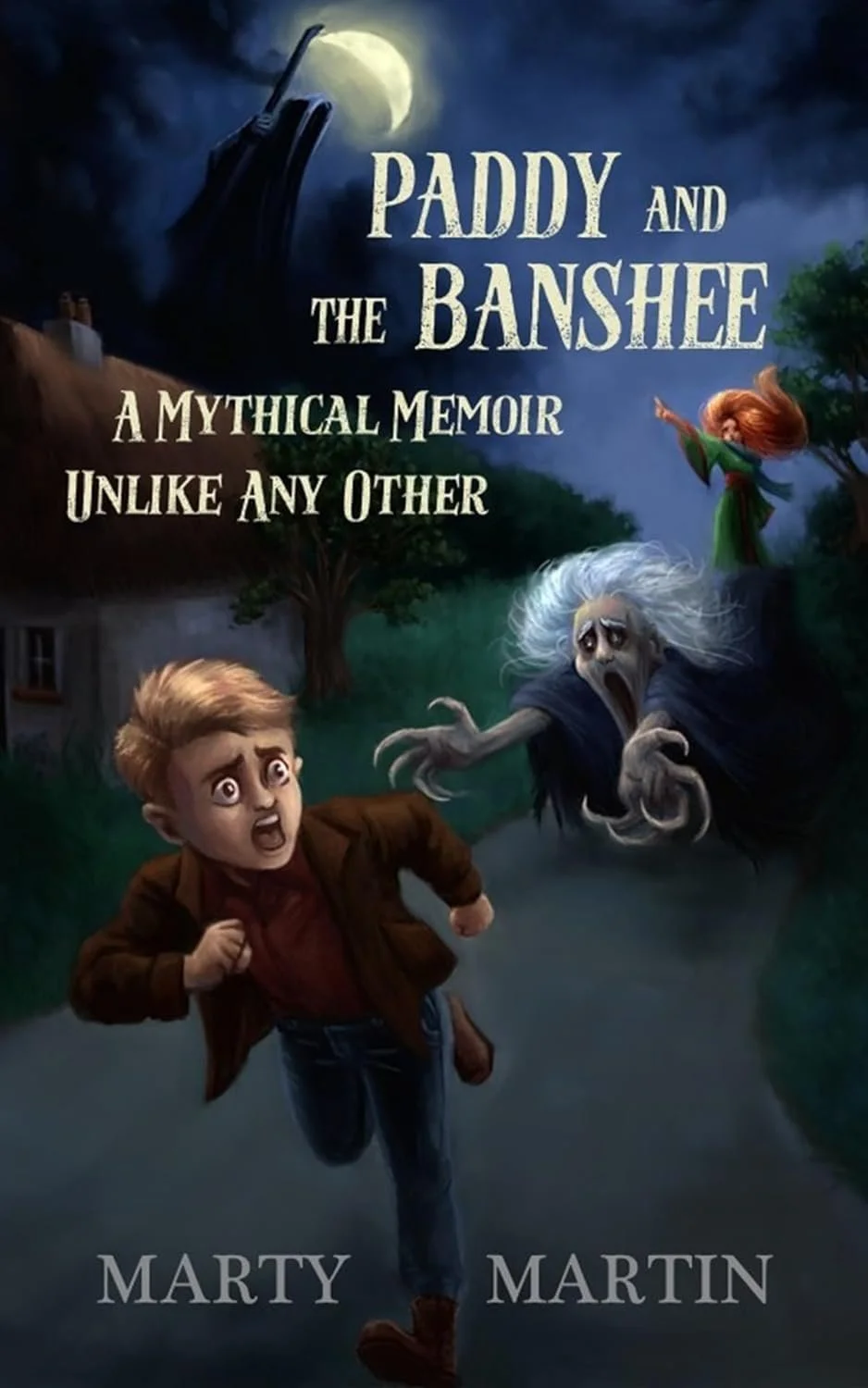
Paddy and the Banshee: A Mythical Memoir Unlike Any Other by Marty Martin

Click on cover image to purchase a copy

MWSA Review Pending


Author's Synopsis

The story began as a fantasy based on a childhood memory about a Banshee in Ireland. As repressed memories surfaced, the story evolved into a memoir unlike any other. The story blends imagination with the true story about six-year-old Paddy in the 1960s and his life in New York City, to rural Kilkenny County in Ireland, and back to New York, and how he learned that Banshees are real while also managing to navigate and survive a broken home and a variety of other early-life challenges. The boy’s name may not really be Paddy, but to tell this story, a hint of Irishness and anonymity may be necessary.

Format(s) for review: Paper or Kindle
Review genre: Nonfiction—Memoir/Biography
Pages/Word count: 196 / 35,992

Coherent Chaos: The Unity Paradox... by A. Quinn Stanley, Ph.D.

Click on cover image to purchase a copy

MWSA Review

Coherent Chaos is the story of Quinn, a high school dropout who transformed himself into a college credentialed PhD and professor. It sets up a compelling, ambitious framework for learning about conflict resolution. It isn't just a "how-to" guide for conflict resolution, but a philosophical and practical bridge linking seemingly irreconcilable forces. The title, Coherent Chaos, is an excellent oxymoron that perfectly encapsulates the author's argument that chaos isn't just noise to be silenced, but a structured process that can lead to a higher state of unity. The author moves beyond the "conflict is bad" cliché and positions it as an evolutionary and spiritual necessity.

This book rests on three main pillars:
• Paradox: Life through death (Christianity) and progress through struggle (Biology).
• Practical Mindfulness: The difficulty of learning during a conflict rather than after.
• Synthesis: The harmonized outcome is stronger than either side of the conflict.

The preface successfully sells the problem and the potential solution. It promises a sophisticated look at conflict that respects the reader's intelligence and addresses the modern chaos we see in the news and our own homes.

The tone of Dr. Stanley's work is grounded yet hopeful. It avoids the toxic positivity often found in self-help by acknowledging that disputes drive people apart for good reasons. The term "smaller cousins" used for conflict and confusion adds a touch of literary flair that makes the complex subject matter feel more approachable.

This book is a powerful "bridge" book for both faith and science circles. There is a strong use of data to support mystical experiences and the value is in a high personal impact through vulnerable storytelling. Dr. Stanley employs exceptional use of "mental imagery" to explain science concepts and uses strong, active first-person narratives with a clear "why."

The book's total word count is 117,015 but the core read is found in a 60,000-word nugget of gold found after the Preface and before the Glossary and Endnotes. The latter are extremely helpful for reference and validation. The former is where you'll find a delightful treatise with style, wit, and structure. Dr. Stanley's academic discipline (PhD studies) contributes to the "cleanliness" of the prose.

Review by Rob Lofthouse 

Author's Synopsis

What if conflict could be your greatest teacher-and your pathway to peace? In Coherent Chaos, educator, veteran, and "blue-collar philosopher" A. Quinn Stanley draws from a lifetime of paradoxes—military and ministry, science and faith, rebellion and redemption—to explore one unifying question: How do we connect through the very chaos that divides us? Blending riveting personal narratives with deep neurological, psychological, and theological insight, Stanley proposes a daring thesis: conflict, when handled with wisdom, can actually foster healing, clarity, and unity. Whether it's reconciling science and religion, understanding the subconscious triggers behind our behavior, or simply learning to listen across differences, Coherent Chaos is both a memoir and a manual for turning turmoil into transformation. This intellectual journey defies genre—part auto ethnography, part spiritual reflection, part social science. Ultimately, it is a hope-filled invitation to find harmony within the dissonance of modern life.

Format(s) for review: Paper or Kindle
Review genre: Other—Religious/Spiritual
Pages/Word count: 316 / 117,015

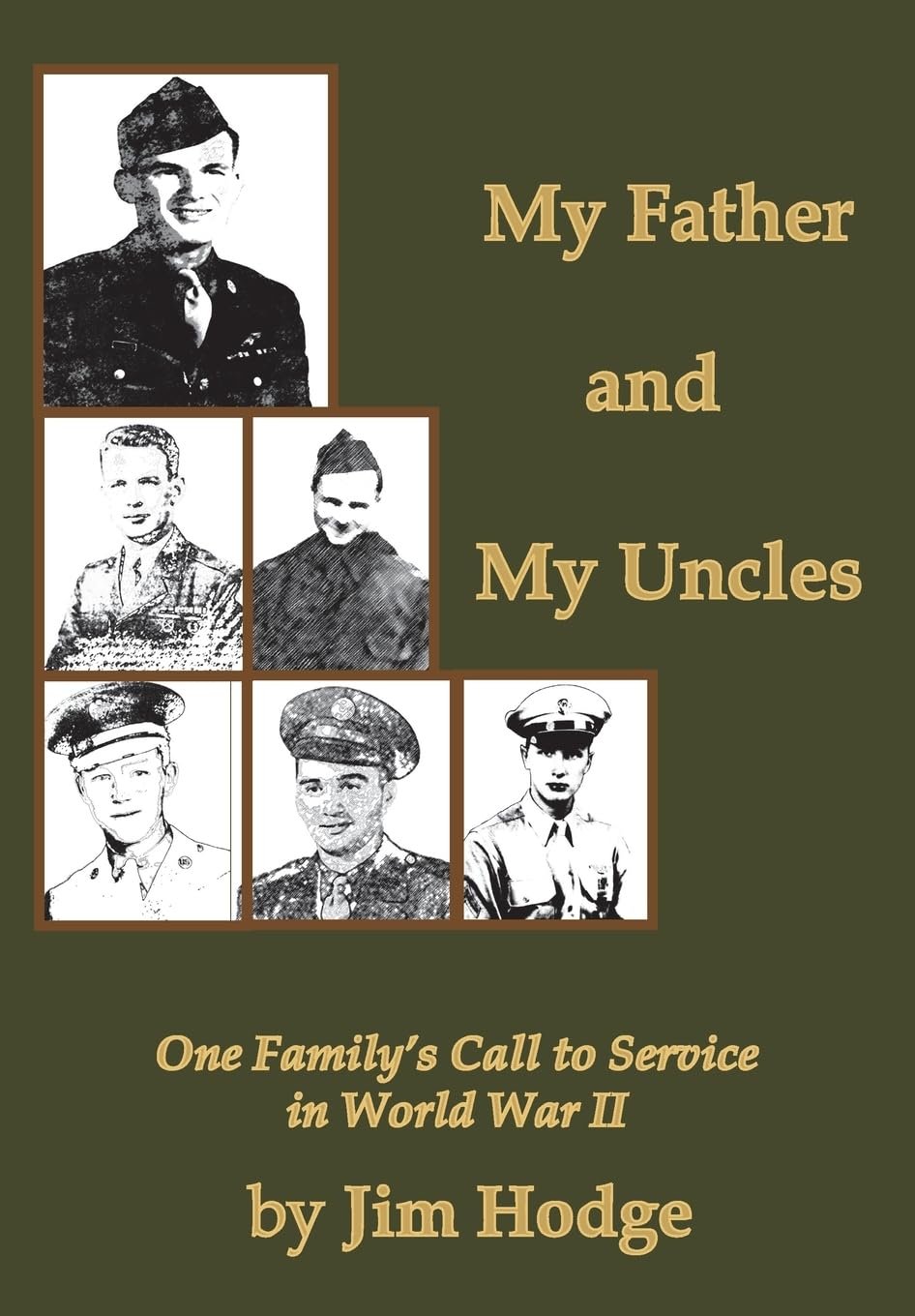
My Father and My Uncles by Jim Hodge

Click on cover image to purchase a copy

MWSA Review

In My Father and My Uncles, author Jim Hodge successfully weaves together the diverse stories of six young men who served in World War II and relates how their lives converged. While setting out to chronicle the war experiences of family members may seem challenging, Hodge has succeeded admirably. He provides detailed historical context for each war experience as well as personal information about each man, allowing readers to get to know them and understand how their service fits into the larger strategic picture of the war. While recounting their war experiences, the author weaves together threads that eventually unite them into a family in peacetime. Hodge’s inclusion of his father’s B-17 bombing mission diary is excellent historical material, and its last sentence is truly timeless: “I am thankful to finish safe. I just wish all the boys could have done the same.” A heartfelt and insightful book, and an admirable tribute to American veterans. Highly recommended.

Review by Zita Ballinger Fletcher


Author's Synopsis

From the building of the Ledo Road into China, to the battlefields of Guadalcanal, New Guinea, the Philippines, and the air and ground war on continental Europe, the author's father and uncles relate their World War II timelines and experiences.
Through interviews and correspondence with each of these six men before their passings, the pattern of young men being transitioned from the Depression into a wartime footing is not only a precious family history, but a chronology that reflects on all those who served in those years. In total, these young men were spread out across six of the earth's seven continents. Included is a recently discovered handwritten journal of one of the men's bombing missions over Eastern Europe.
Praise God that they each came home to create the extended family that the author has been privileged to be part of.

Format(s) for review: Paper Only
Review genre: Nonfiction—Memoir/Biography
Pages/Word count: 217 / 22,427

College Finances for Military Families by Kate Horrell

Click on cover image to purchase a copy

MWSA Review

College Finances for Military Families by Kate Horrell offers information and advice in clearly stated language for families who are planning to attend post-high school education. Some of the chapters offer advice and examples that any family can use—not just military. But the chapters dealing with aid available to military families demonstrate how very complicated this process is. Not only does the book relate the many sources of financial aid but also how to find these sources and how they can work together… or can conflict. Horrell provides clear-cut examples of how to stack the various sources for the most benefit. It's only when you lay out the various costs and benefits, including housing allowances, that you can see which option works.

She also reminds the reader in various chapters that (1) rules change often, both at the individual schools and at those agencies giving money; (2) get all agreements in writing; (3) if programs are not completed, you may have repay financial aid; (4) read financial award letters carefully and ask questions if the statements are not crystal clear or you don't understand something; (5) consider the whole family's plans not just the immediate future of the first child going to college; (6) use loans carefully; (7) reevaluate periodically.

This is a book that should be in the hands of every family with children who may want to continue their education or training after high school.

Review by Nancy Kauffman


Author's Synopsis

College Funding for Military Families is a simple yet comprehensive guide designed to help service members, veterans, and their families make smart, informed decisions about paying for higher education. With clear explanations and practical information, this book walks readers through the entire planning process―from understanding the education benefits earned through military service to learning how to coordinate those resources with other forms of financial aid. When you're done reading, you'll have a clear view of how to build a college financial plan that supports the education goals of the entire family.

Whether you're navigating your first duty station or left the service years ago, this guide demystifies the complex landscape of military education benefits. It provides straightforward information about the most widely used programs, including the Post-9/11 GI Bill, Montgomery GI Bill, Tuition Assistance, and the Yellow Ribbon Program. It also breaks down how and when to transfer GI Bill benefits to a spouse or child, what happens when eligibility changes, and how to ensure that those benefits are used efficiently and strategically. In addition to federal programs, College Funding for Military Families shines a light on state-level programs for military dependents, outside scholarships, and the implications of military life on in-state tuition.

Military families will see how to layer military-connected education benefits with civilian financial tools such as 529 college savings plans, federal student aid (including the FAFSA and Pell Grant), and private scholarships and grants. You'll learn how prioritize all these resources to build a strategic college funding plan that stretches resources for multiple children or degrees. This guide also addresses the realities of military life that affect educational planning―frequent moves, deployment cycles, unpredictable orders, and the transition to civilian life. You'll find tips on how to maintain eligibility through these challenges, how to choose flexible or military-friendly schools, and how to spot red flags in schools that aggressively market to military families.

Written by a financial educator with deep expertise in both college funding strategies and military benefit systems, this book is packed with real-life examples, timelines, and plain-English explanations that help military households avoid costly mistakes. It's not a textbook―it's a practical resource you can refer to again and again as your family's education needs evolve.

Whether your goal is a four-year university, a trade school, a graduate degree, or professional certification, College Funding for Military Families will help you unlock the full value of your benefits and build a cost-effective plan that works for your family. It's a must-read for any military household thinking about higher education―whether you're planning years in advance or scrambling to meet next semester's deadlines.

Format(s) for review: Paper or Kindle
Review genre: Nonfiction—How to/Business
Pages/Word count: 100 / 24,595

The Enigmatical Sphere of El Chupa-Ku by Juan Manuel Perez

Click on cover image to purchase a copy

MWSA Review

Writing from the perspective of a Mexican American Marine veteran of indigenous descent, the poet uses haiku poems to breathe life into and resurrect the legend of the chupacabra. This is not a traditional, somber exploration of nature, but rather a dance between the terrifying and the hilarious.

The chupacabra, often translated from Spanish as "goat sucker," is a legendary creature rooted in Latin American folklore, known for allegedly attacking livestock and draining their blood. It’s described as a two-legged, alien-like animal about four feet tall with spikes along its back, large eyes, and a reptilian-kangaroo appearance.

The chupacabra emerges not as a one-dimensional folklore predator but as a transformational archetype—vampiric killer, misunderstood outcast, pop culture icon, and metaphor for primal drives. El chupacabra becomes an all-encompassing lens: horror icon, comedic antihero, mysterious unsubstantiated predator, and cultural symbol.

The poet blends traditional three-line 5-7-5 syllable haiku structure with irreverent humor—pairing Godzilla fights, Mars colonies, personal ads, and tequila-drunk dances while grounding the absurdity in South Texas landscapes of mesquite trees, full moons, gray hides, and drained livestock.

Far from mere monster mixtures, the poems weave folklore with satire, horror, and poignant melancholy. Lighthearted entries imagine chupacabras in absurd scenarios: writing memoirs, starring in TV shows, wrestling goats, or posting personal ads for fatalistic partners. Darker pieces evoke genuine dread—silent coops, twisted goat faces in morning dew, the gray beast stalking under moonlight—echoing real rural fears of loss and the unknown.

Sharp and witty wording, (“Chupa-Man is born," "chupacabra tipping”), absurd scenarios (chupacabra crawl dance, "Take Your Chupacabra to School Day," radioactive Chupa-Man origin) alternate with chilling vignettes (silent coops, waiting in woods for skeptics, "let your pets come out") and cultural fusion (Olmec nagual meets Cthulhu) create a playful make-believe universe. Wordplay abounds ("Chupa-Khan," "Luchacabrador," "chupacabristas"), and pop-culture crossovers (Godzilla battles, Jimmy Kimmel guests, personal ads seeking "like-minded sucker") keep the tone lively without diluting the horror.

Deeper currents emerge: themes of marginalization ("prejudiced hotel," extinction dismissed), hunger as impartial ("chupacabras do not care / for it is just food"), and imagination as defense ("the only proof between us / fear or not to fear"). The poet subtly critiques human monstrosity ("why worry about / terrible chupacabras / worry about man") while embracing the beast as a kindred spirit: wild, self-serving, unapologetic.

Humor dominates much of the sequence: absurd combinations (Giant Chupacabra vs. King Kong comparing B.O., Chupacabra Flats on Mars, "Married with Chupacabras" TV show) inject levity, while pop-culture nods (Jimmy Kimmel, Scary Monsters Magazine) make it gleefully contemporary. Self-referential humor ("I don't always write / poems about chupacabras / ...who am I kidding") acknowledges the mania, yet the collection never flags.

By reimagining the chupacabra through gallows humor and rhythmic brevity, the author invites us to look past the shadow in the mesquite woods and recognize the "code of life" that governs all survivors.

It is a masterful blend of regional folklore, veteran grit, and playful poeticism. The collection celebrates imagination as proof against skepticism, turning a regional legend into a mirror for human fears, hungers, and absurdities.

Ultimately, the poet argues that belief in monsters (chupacabras or otherwise) confronts deeper anxieties: "you believe in ghosts / I, in el chupacabras / which makes us less scared." A masterful blend of folklore, satire, dread, and cultural pride. Highly original and endlessly re-readable.

Review by Frank Taylor


Author's Synopsis

Bilingual Edition
Just when you thought it was safe to liberate beautiful and natural haiku into the eloquent abode of nature, only to be violently attacked by a horrid, supernatural hybrid called el chupa-ku. Combining the simple, American haiku form with the legend and lore of el chupacabras, this unassuming, little book of short poems packs a swift kick to the literary pants in two languages: English and Spanish. Truly, this book can only be enjoyed in the dim-lit hours of the night with a bottle of mescal. ¡Orale!

Format(s) for review: Paper Only
Review genre: Poetry—Poetry Book
Pages/Word count: 114 / 2,426

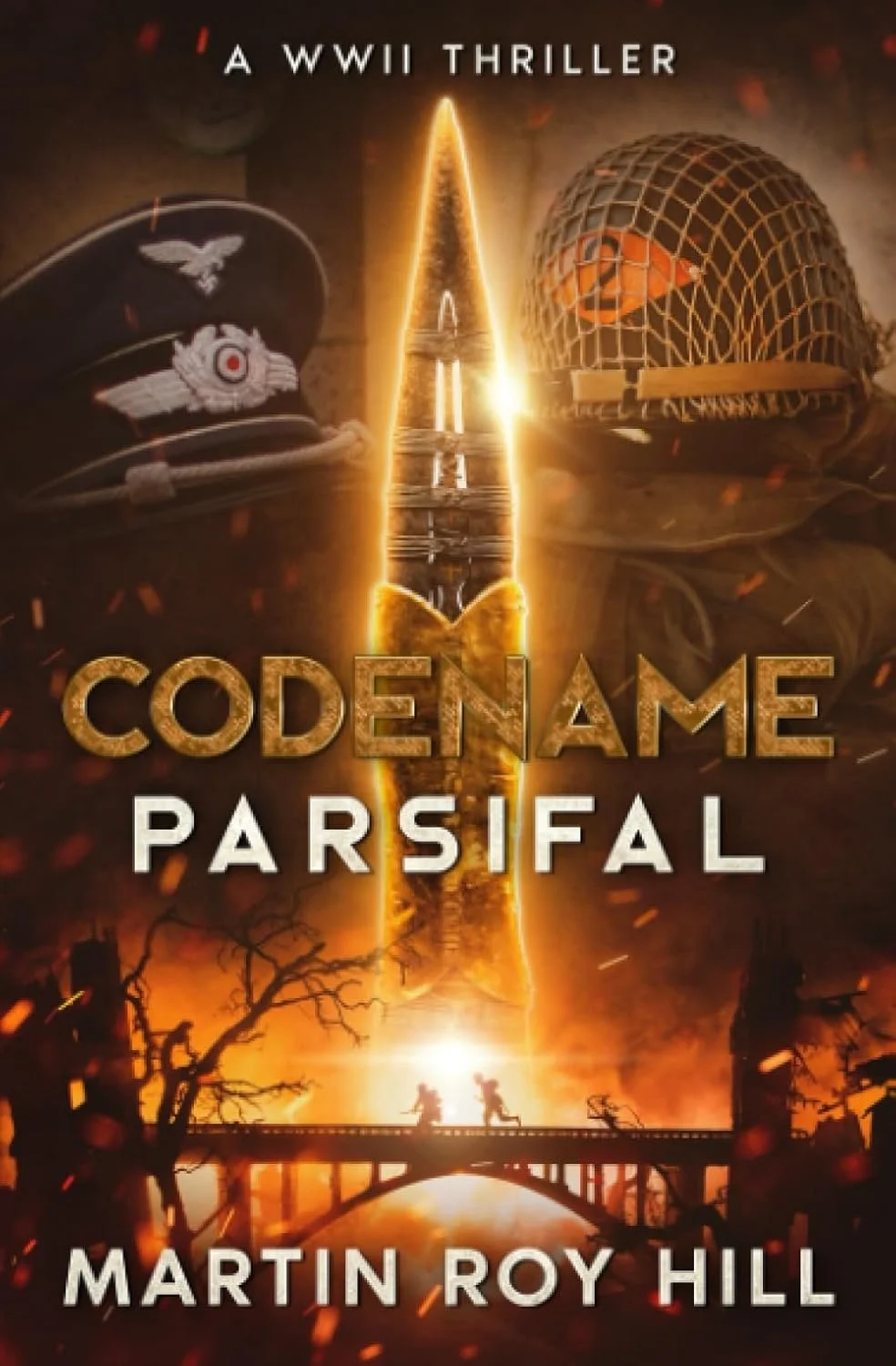
Codename: Parsifal by Martin Roy Hill

Click on cover image to purchase a copy

MWSA Review

As World War II draws to a close in a dirty, rubble-strewn, chaotic way, orders from both the Germans and Americans send teams to recapture an artifact that Hitler stole from a museum in Austria (the head of the spear that pierced Jesus during his crucifixion). Himmler wants this relic. Patton wants this relic. And late in the game Stalin wants it as well, because the spear is reputed to have mystical powers. Compounding the difficulty in finding the actual Holy Roman treasure is the fact that Himmler has made several copies for both himself and Hitler.

The tale evolves with twists and turns in this historical novel that can also be considered a thriller. There are bad actors, wild goose chases, strange orders from generals, and realistic scenes of the war in its last throes. The daring acts of the American team, composed of OSS operatives and a historian, will engage readers right up to the very last word.

Review by Betsy Beard


Author's Synopsis


The Spear of Destiny. The Roman Legionnaire's lance that pierced Christ's body as he hung on the cross.

Legend claims whomever possesses it will become a great conqueror. But if they lose it, they will lose everything—including their lives.

Shortly before WWII, Hitler stole the spear from a museum in Vienna. In the last weeks of the European war, he lost it. General George Patton orders an American OSS team to find the spear and recover it. Unknown to the Americans, both the Russians and the Germans have also sent commando teams to retrieve it.

In the dying embers of Europe's largest conflagration, the three teams are on a collision course that will lead them to one of the most evil places on earth—the ideological heart of the Nazi SS.

Inspired by historical events.

Format(s) for review: Paper or Kindle
Review genre: Fiction—Historical Fiction
Pages/Word count: 296 / 56,400

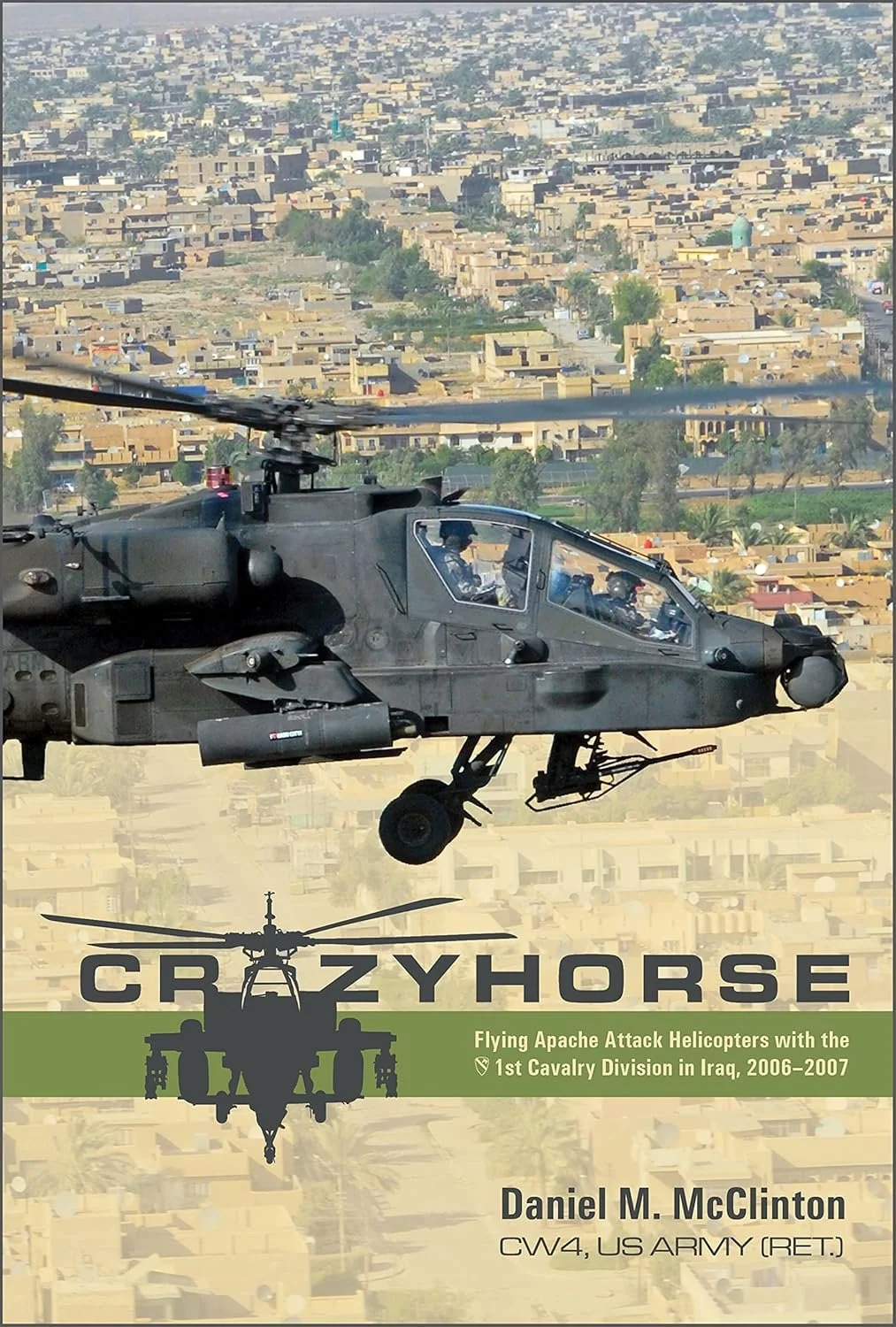
Crazyhorse: Flying Apache Attack Helicopters with the 1st Cavalry Division in Iraq, 2006–2007 by Daniel M McClinton

Click on cover image to purchase a copy

MWSA Review

In 2007, the United States was embroiled in a war with Iraq. Dubbed Operation Iraqi Freedom (OIF), most of the U.S. only learned about this conflict by reading newspapers or watching the television news reports. However, many in the U.S. military were actually experiencing the events firsthand. In Crazyhorse: Flying Apache Attack Helicopters with the 1st Cavalry Division in Iraq, 2006 – 2007, author Daniel M. McClinton welcomes the reader into the world of an attack helicopter pilot during this conflict.

From the time of his deployment in 2006 through the surge in spring 2007 and finishing with his return home in the end of that year, McClinton paints a vivid picture of what life was like for a pilot in the midst of this war. Along with descriptions of actual combat missions, McClinton takes us into the mundane hours not spent flying missions. From filling out reports, to dealing with typical military bureaucracy, the author takes the reader into a world rarely experienced by others, including those in the military. The author has also supplied numerous personal color photographs of the helicopters and the Iraqi environment, enhancing the narrative of the book.

Especially of interest is the author's narrative of the death of two Reuters reporters and the wounding of two children on 12 July 2007. McClinton gives us not only his narrative of the events as they occurred, but also the reports from the inquiry into the reporters' deaths, along with the photographs that were included in the inquiry. As the author points out, most of the world only knew what was presented them by a press eager to spin their own biased narrative. The film, entitled Collateral Murder in Iraq by Wikileaks, paints a picture of warmongering pilots bent on murdering any Iraqi they could. However, as the author points out, and the video of the incident demonstrates, the enemy was well known to employ children as living bombs as well as human shields. Additionally, for reporters to embed themselves without any type of identification with enemy combatants and not expect potential harm is the height of hubris and arrogance.

Of additional interest is the author's in-depth depiction of military bureaucracy. With examples like "The Three Rules of Company Command or How to Get Ahead, without Really Doing Anything" (page 186) or "...field-grade officers who couldn't stand the thought of soldiers with nothing to do" (page 182), the inability of military command to grasp what life was really like for the soldiers in the field is well demonstrated to the amusement of the reader and the annoyance of the soldier.

One item of note is that this book is replete with army acronyms. While the author includes a glossary at the end of the book, the jargon used will slow down the reader who is not used to such language. This reviewer is a life-long civilian and was thoroughly encumbered by these terms. Having said that, the use of these terms is absolutely obligatory in any type of military essay. Despite this one potential concern, the book is well worth the read for an amazing look into what combat is really like for those valiant pilots fighting to protect the United States.

Review by Daniel E. Long
 

Author's Synopsis

This book describes aerial combat at the controls of the fearsome AH-64 Apache attack helicopter during the Operation Iraqi Freedom “Surge.”

This memoir reveals, for the first time, many stories of selfless service, courage, and sacrifice that will be compelling to all readers. At the same time, it also illustrates the absurdities that are involved with living in a massive bureaucracy like the US military. Also included are many original color photographs taken by the author in the combat zone.

Format(s) for review: Paper Only
Review genre: Nonfiction—Memoir/Biography
Pages/Word count: 303 / 96,210

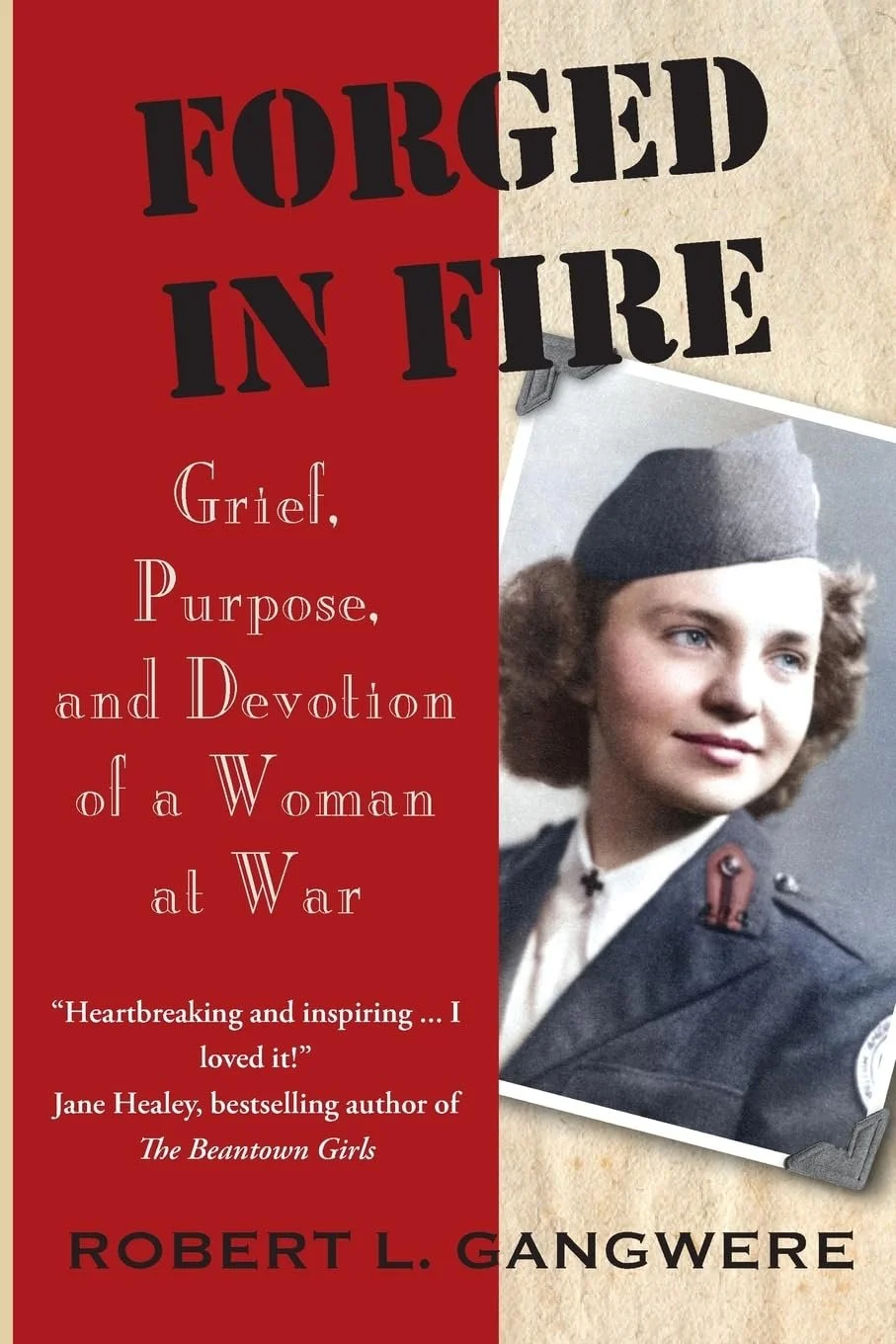
Forged in Fire: Grief, Purpose, and Devotion of a Woman at War by Robert L. Gangwere

Click on cover image to purchase a copy

MWSA Review

Forged in Fire: Grief, Purpose, and Devotion of a Woman at War is a well-researched and memorable story of a midwestern girl learning much about herself when serving in WWII for the American Red Cross. One of the most endearing aspects is that the book is written by Blanche Barnes’s son, Robert L. Gangwere. His was not a casual retelling of a story, but one crafted over years of important interviews, laughs, love, and tears, which comes through well in the narrative shared with readers.

Through Blanche’s words and Gangwere's historical research, the book explains what most would never know about the challenges facing the young women who volunteered to serve their country overseas, supporting the American Red Cross Clubmobile Department. With very little training, these young women were launched into wartime environments to raise morale. And they were happy to do their part! Blanche speaks of the defeats seen on the faces of airmen and soldiers, the horrifying aftermaths of bombed out countries, and her personal fear from both the enemy and the men she supported.

I highly recommend this book, especially for anyone who wants to learn more about this era. The author sheds great light and much deserved gratitude to those who volunteered to serve their country in whatever way they could during WWII.

Review by Valerie Ormond


Author's Synopsis

Most American women of the 1940s did not attend college, learn to fly a plane, drive a 2 1/2 ton truck or a Sherman tank; or serve in war zones, but Blanche Barnes did before the age of 28.

"Forged in Fire" is a coming-of-age tale of a sheltered midwestern woman who, after suffering a sudden, heart-breaking loss, found something larger than herself that ultimately provided her a new purpose for her shattered life. The vehicle for this transformation was the American Red Cross's new and innovative overseas clubmobile program.

As a "clubmobile girl," Blanche served on multiple 8th Air Force air bases outside of Kettering, England, including Molesworth Airfield, the home of the famous 303rd Bombardment Group or "Hell's Angels," then she served on the continent at the Cigarette Camps located outside of Le Havre, France, and finally in war-torn Germany. Along the way she crossed paths with such notables as Medal of Honor winner Col. John "Killer" Kane, journalist Ernie Pyle, and U.S. generals George S. Patton, Jr., Omar N. Bradley, and Leonard T. Gerow, as well as movie actress Marlene Dietrich and the members of the Glenn Miller Orchestra. She also witnessed first-hand the destruction and tragedy of world war.

Forged in Fire expertly weaves Blanche's story in with the history of the clubmobile program, and how it raised the morale of America's fighting men. The backbone of the program was a cadre of well-educated, independent, and resolute women (such as Blanche) who served up coffee, doughnuts, and hope for the future to hundreds of thousands of war-weary, exhausted American GIs.

Format(s) for review: Paper or Kindle
Review genre: Nonfiction—History
Pages/Word count: 278 / 82,217

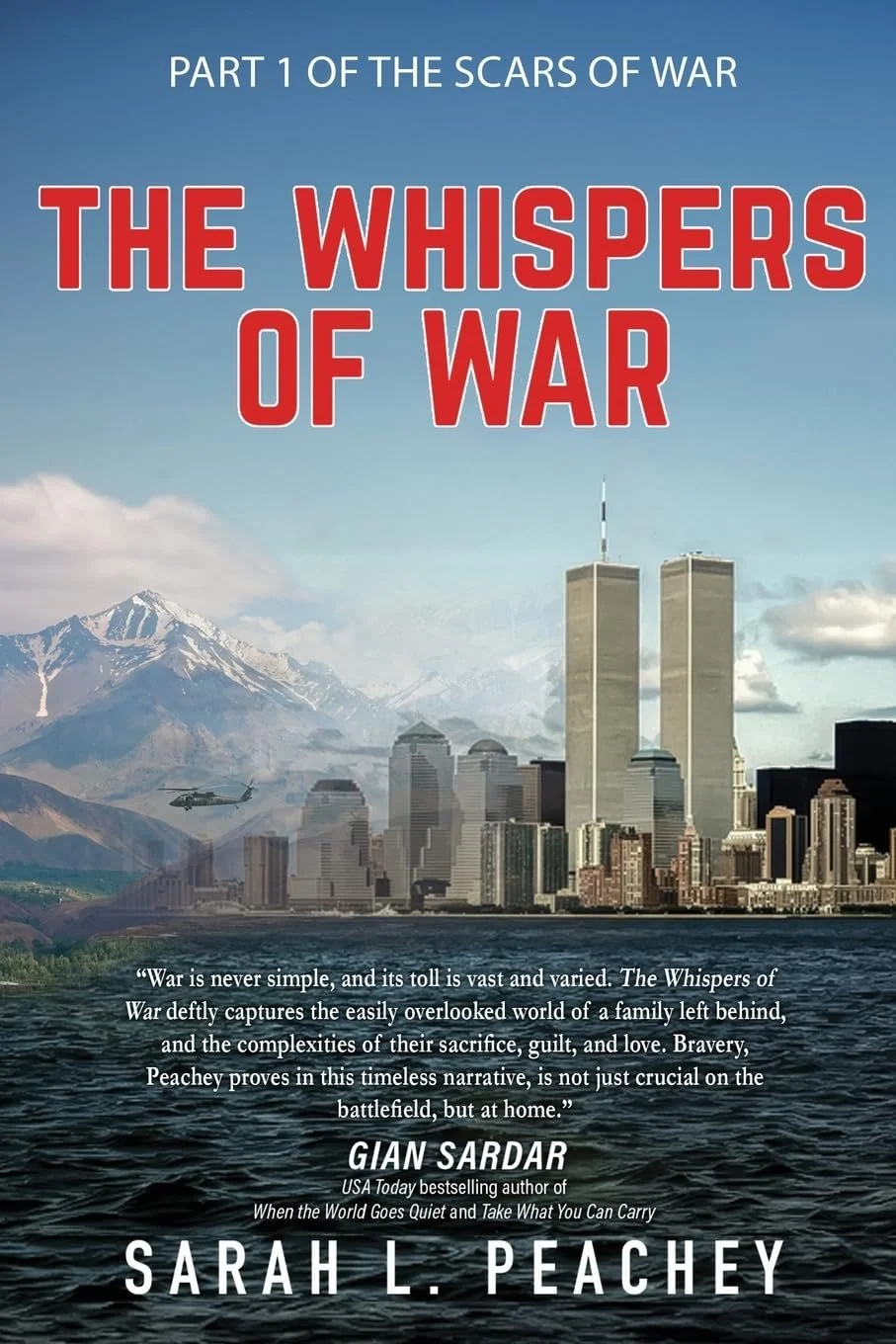
The Whispers of War by Sarah L. Peachey

Click on cover image to purchase a copy

MWSA Review

The Whispers of War is a powerful, deeply human debut that brings the post–9/11 home front into sharp, unforgettable focus. Sarah L. Peachey delivers a poignant coming-of-age story and an unflinching portrait of military family life that will resonate long after the final page.

Told primarily through the eyes of fourteen-year-old Annaliese Pechman — an anti-war military child who resents the very system her family serves — this novel captures the complicated tension between love of family and disillusionment with war. Anna's leather-bound journal and her imagined dialogues with Emily Dickinson become a quiet counterpoint to the noise of history, grounding an intimate story in the sweeping events of September 11, 2001, and the long war that follows. Peachey's depiction of 9/11 and its aftermath is especially striking: she evokes a moment readers remember vividly without over-writing it, allowing them to layer in their own memories as Anna's innocence is stripped away.

As Anna's father, Robert, deploys with the first conventional forces into Afghanistan, the novel moves fluidly between battlefield and home front, revealing how the same war reshapes a devoted Army sergeant and the daughter who cannot reconcile her love for him with her hatred of what takes him away. Peachey writes Robert not as a symbol but as a fully realized man — honorable, steady, and proud of his soldiers — whose most devastating battle begins only after he comes home gravely wounded in body, mind, and spirit. The scenes of departure and homecoming are rendered with heartbreaking authenticity, capturing both the public ritual and the private cost that only those who have lived it truly know.

What sets The Whispers of War apart is its emotional range and nuance. Peachey refuses easy answers: Anna's anti-war activism, her father's fierce sense of duty, and the family's efforts to piece themselves back together are all treated with empathy and honesty. The author's lived experience as a long-time military spouse shows in the granular details of everyday military life — frequent moves, the constant recalibration around deployments, the unspoken rule to "put on a good face" — and in the quiet moments of connection that make this story so affecting. The result is a narrative that illuminates the silent suffering of service on both sides of the uniform, without vilifying or glorifying war.

For readers, The Whispers of War offers both an engaging story and a valuable education. It invites those outside the military community into a world with its own rules, rhythms, and sacrifices, while offering those within it the rare gift of seeing their experiences reflected with respect and clarity. With its deft handling of time, layered perspectives, and unforgettable characters, The Whispers of War is a beautiful, urgent, and ultimately hopeful novel — one that deserves a wide audience in book clubs, classrooms, and beyond.

Review by Elvis Leighton


Author's Synopsis

An anti-war military child who longs for freedom. A career-Army father who can’t imagine being anything else. A long war bound to change them.

Fourteen-year-old Annaliese Pechman has always been a military child, but no one knows how she resents the frequent relocation or the long separations from her beloved father. After moving to Fort Drum, New York, she purchases a leather-bound journal to record her hopes and dreams under the watchful eye of her idol, Emily Dickinson. But Anna’s life changes on September 11, 2001, rinsing away her naivete and exposing the world’s harsh realities.

Anna’s father, Robert, deploys in October 2001 as part of the first conventional forces in Afghanistan, while Anna struggles to find her place in the constant change. But one thing rises above the noise: Anna’s disapproval of war and her father’s role in it. Two months before Robert deploys yet again, Anna basks in the success of her first anti-war protest, but Robert disapproves for reasons Anna can’t understand. When Robert suffers a grave injury, Anna places her future on hold, but more than physical recovery is at stake. Anna must decide whether family bonds are enough to heal the wounds of war, or if it’s time to walk away alone.

Format(s) for review: Paper or Kindle
Review genre: Fiction—Literary Fiction
Pages/Word count: 274 / 103,000

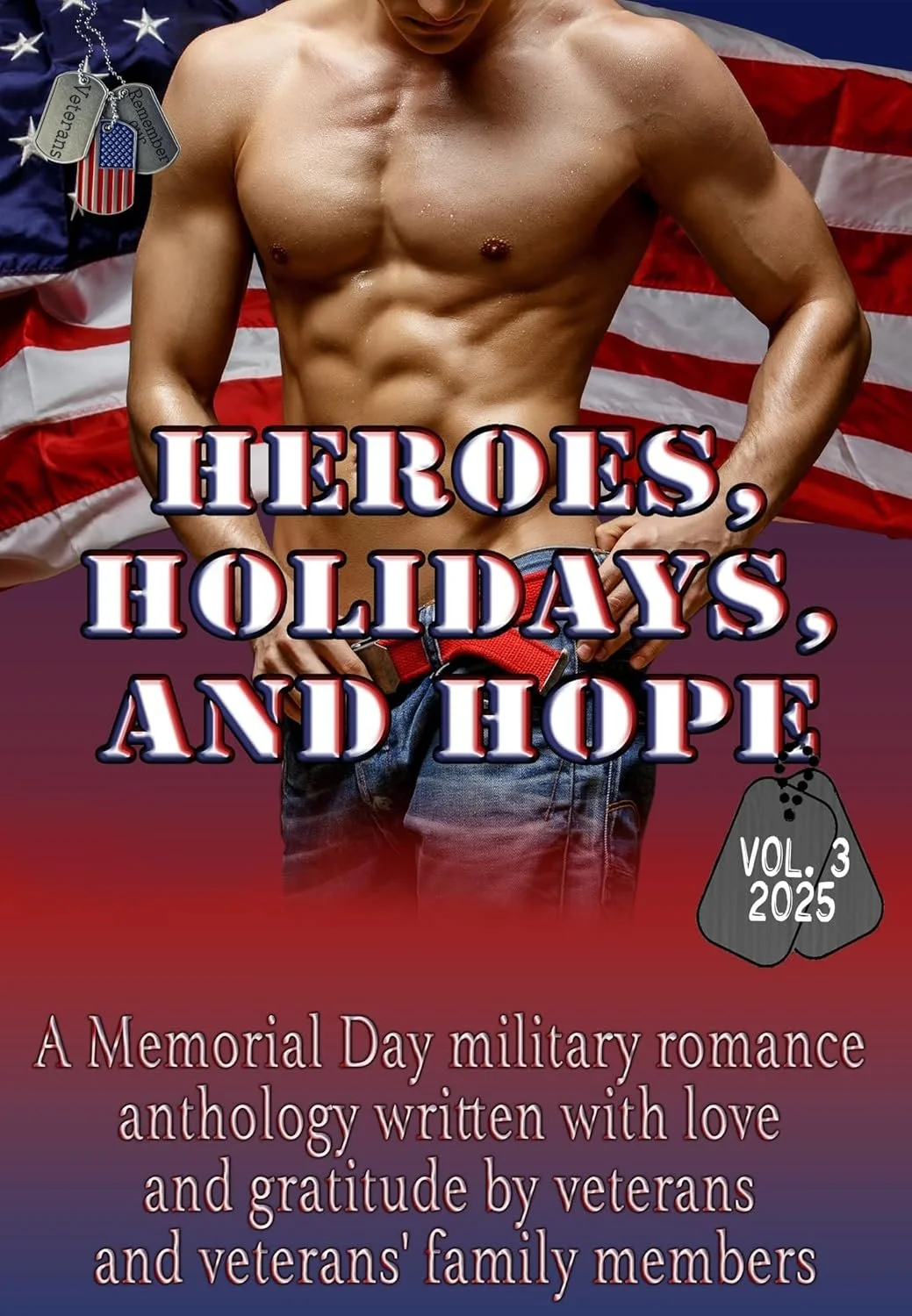
Heroes, Holidays, and Hope (Vol.. 3) by Dania Voss, Megan Michelle, Laura M. Baird, Sharon Wray, D.C. Stone

Click on cover image to purchase a copy

MWSA Review

Heroes, Holidays, and Hope is the third compilation of romance stories by authors Dania Voss, Laura M. Baird, D.C. Stone, Megan Michelle, and Sharon Wray. Proceeds from this book benefit veterans and their families through the Wounded Warrior Project.

All the stories in the book center on active duty and former military veterans preparing for Memorial Day celebrations in small-town America. To quote a tagline from the back of the book, “They fought courageously on the battlefield. Now they’re fighting for love.” Each author created likable characters dealing with some sort of conflict, navigating sexual tension that blossoms into a steamy romance, and working together to solve complex issues or unexpected problems.

I applaud these ladies who use their talents in a positive way to fund worthwhile charities benefiting veterans and their families. This summer, Heroes, Holidays, and Hope would be a great beach read while benefiting others less fortunate. But read it near the water because you will surely need to cool off. For mature audiences only.

Review by Nancy Panko


Author's Synopsis

Sacrifice. Valor. Patriotism.

They fought courageously on the battlefield. Now they’re fighting for love.

We are a group of Veterans and Veterans' family members who are also bestselling and award-winning romance authors. We put our group together to publish a yearly limited edition, military romance collection set around various holidays. Each volume supports a military and veteran related charity.

We’re excited to bring you our third collection, which supports Wounded Warrior Project, whose mission is to empower wounded service personnel through programs and services such as long-term rehabilitative care, mental health care, and career counseling.

"Peace does not come just because we wish for it. Peace must be fought for." Lyndon Johnson, 1966. And so it is on Memorial Day that we honor those who made the ultimate sacrifice for our country and our freedom.

These stories embody sacrifice and resilience, passion and love, and the enduring human spirit. Enjoy these military romances of various tropes set around the Memorial Day holiday.

This “must have” collection is only available for 6 months after launch day, then it’s gone for good as we prepare for Volume 4!

Participating authors include Dania Voss, Laura M. Baird, D.C. Stone, Megan Michelle, and Sharon Wray.

Find us online and get all the details about the Heroes, Holidays, and Hope Project!

Website – https://www.heroesholidaysandhope.com
Facebook group – https://www.facebook.com/groups/hhhsupportersgroup
Merch store – https://bit.ly/HHHmerch
Wounded Warrior Project® – https://www.woundedwarriorproject.org/

Format(s) for review: Paper or Kindle
Review genre: Fiction—Romance
Pages/Word count: 681 / 156,400

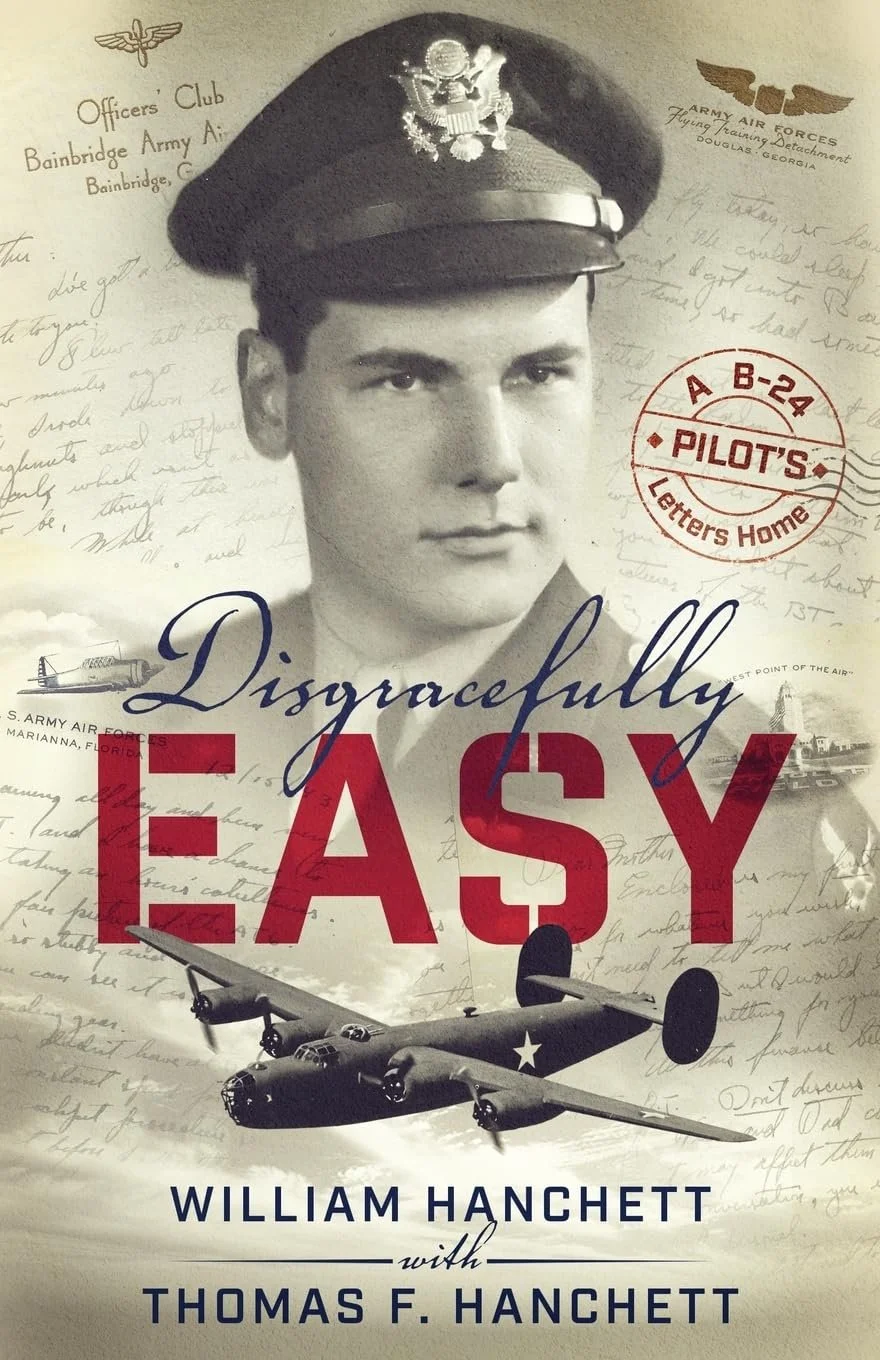
Disgracefully Easy: A B-24 Pilot's Letters Home by William Hanchett with Thomas F. Hanchett

Click on cover image to purchase a copy

MWSA Review

Disgracefully Easy: A B-24 Pilot's Letters Home by William Hanchett, with Thomas F. Hanchett, is a thoroughly entertaining first-person account of one's experiences in becoming a U.S. Army Air Force pilot during World War II. This is a book not written from memory, years later, but is a primary firsthand account that is candid and observant, giving the reader exacting insight into pilot training during the war.

What makes the book especially effective is the author's feelings. For example, he discusses how he disliked flying after being berated by overly bellicose instructors. That immediacy gives the narrative its strength. In one passage, Hanchett says, “Man has not changed for the last thousand years … and that we must learn that peace will come only when we cease to think of good and right in terms of just over nations, ourselves.”

Disgracefully Easy is exceptionally well laid out. This structure makes the letters easy to follow with sharp, definitive chapter introductions written by Thomas Hanchett. For readers interested in World War II history, especially the Army Air Corps, this is a valuable and compelling book. There are no heroics from bombing missions over Europe; instead, it tells the story of a frustrated pilot who wanted just that but understood his mission to train new pilots so they could carry on the mission. Highly recommended.

Review by James Bultema


Author's Synopsis

Long before William “Bill” Hanchett became a professor of history and a notable expert on Abraham Lincoln, he was a B-24 Liberator heavy bomber pilot in the U.S. Army Air Forces during World War II. While telling a unique story of the Army Air Forces, Disgracefully Easy: A B-24 Pilot’s Letters Home is a book of correspondence which highlights Hanchett’s early writing, powers of observation and growing historical perspective. In addition to vivid first-person descriptions of flying, Hanchett’s letters and postal cards discuss the difficulties of a once wealthy family struggling to recover from the Great Depression.

From living as a recruit in a luxury beachfront hotel converted into barracks by the Army, to taking courses at a civilian college as an aviation student, to “bombing” the San Diego Naval Base in his future beloved home town, Bill Hanchett takes his family with him from basic training through advanced flying school where he hoped to be a hotshot fighter pilot, “dancing around the sky.” Instead, much to his chagrin, he was assigned as an instructor-pilot, teaching cadets from the rear seat of a BT-13 Valiant training airplane. He began to enjoy being an instructor, but as the war progressed and the flying school closed, Lieutenant Hanchett transitioned to become a four-engine bomber pilot in the fall of 1944, as the presidential election was well underway. Clearly expressed in his correspondence were Bill’s strong opinions about the divisive politics of that time, which usually conflicted with his father’s outlook.

Ultimately, in early 1945 Bill became responsible for training a bomber crew in the Nevada desert for an overseas assignment which never materialized because the war ended. While training his men hard, he became frustrated with what he viewed as pointless flying and concluded to his father that his service was “disgracefully easy” compared to others who saw combat. The chapter introductions and notes in Disgracefully Easy were prepared by Bill Hanchett’s son, Tom.

Format(s) for review: Paper or Kindle
Review genre: Nonfiction—Memoir/Biography
Pages/Word count: 308 / 94,928

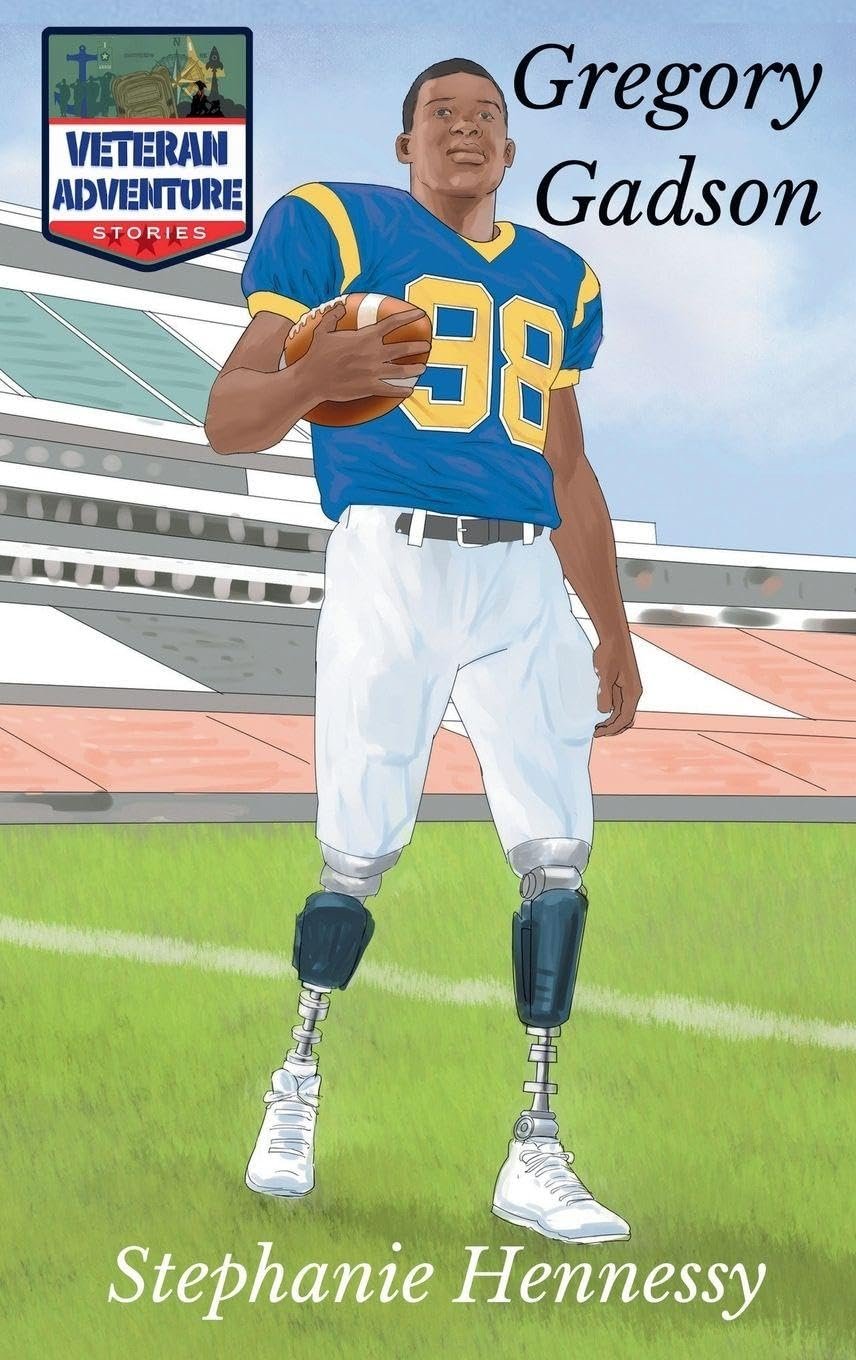
Veteran Adventure Stories: Gregory Gadson by Stephanie Hennessy

Click on cover image to purchase a copy

MWSA Review

Stephanie Hennessy, an Army veteran, has written a series of illustrated Veteran Adventure Stories. This one features Gregory Gadson.

Gregory begins his adventure as a little kid with big dreams. He’s strong, he runs really fast, and he never gives up. All through school he plays football and hopes to someday play professional football. But when it comes time to go to college, the only place he is invited to play is West Point, the United States Army Academy. This means he will be a soldier when he graduates. He is sent to Iraq, which is where the unthinkable happens. He is injured in a bomb blast. Despite losing his legs, he still wants to play football and uses the things he learned as a young kid to keep going, never giving up and working hard.

Gadson is an exemplary role model for children. Due to the nature of the material and some of the words (defined in a glossary in the back) the book is suitable for the older range of picture book readers (8-9). It's a great book to be read together with a parent Pages in the back of the book explain things like convoys and prosthetic legs. There are also activities that can be used for additional discussions.

Review by Betsy Beard

Author's Synopsis

Greg's biggest dream was to play football, but life had bigger plans.

From cheering crowds to real-life battles, Greg found courage and endured challenges that tested his strength and spirit. His journey is filled with adventure, bravery, and surprises at every turn.

Inspired by the true story of Colonel Gregory D. Gadson, a U.S. Army veteran, athlete, and leader, this beautifully illustrated children's book shows how dreams can come true in ways we never could have imagined.

Perfect for classrooms, libraries, and families, Veteran Adventure Stories: Gregory Gadson inspires young readers to face obstacles with heart, hope, and perseverance.

Part of the "Veteran Adventure Stories" series: real heroes, real adventures, and lessons that last a lifetime.

Format(s) for review: Paper Only
Review genre: Children & Young Adult—Picture Book
Pages/Word count: 32 / 915

Camouflage: How I Emerged from the Shadows of a Military Marriage by Heather Sweeney

Click on cover image to purchase a copy

MWSA Review

This book begins with a red flag when Heather’s fiancé Tristin announces that he is going to join the military two months before their wedding. He didn’t ask her what she thought about it, and she put her own plans on hold to support him by being the perfect military wife. They did decide together on his first duty station in Pensacola, Florida.

Heather continued her education as Tristin settled into his career as a naval officer. They both adjusted to military life and decided to have a child. Six months after their son was born, Tristin deployed to Iraq. After Tristin returned, the marriage started going downhill. The family relocated to Japan and added a daughter. Before they moved to their next duty station in Virginia Beach, they started talking about divorce. Even though their marriage continued to deteriorate, they stayed together for another three years.

It was in Virginia that Heather began expanding her life beyond the role of wife and mother. She became a serious runner and started writing. Eventually, she found the strength to leave and restart her life as a single mother.

This is a good book to read to learn about life as a military spouse. Also, it can serve as a road map for anyone who needs inspiration to get out of a relationship that isn’t working and rebuild a fulfilling life for themselves and their family.

Review by Eva Nevarez St John


Author's Synopsis

Camouflage: How I Emerged from the Shadows of a Military Marriage is about a woman’s journey from being overshadowed by her husband’s military career to rediscovering her identity as a single mother entering a new stage in life. The memoir explores how, like many military spouses, she camouflaged her identity, conforming to the expected role of the supportive wife who was secondary to her husband’s career as a Navy officer. But after she ended her thirteen-year marriage in her late thirties, she set out on a quest to figure out who she was as a woman without her husband, discovering that the hardships of military life—the forced independence, frequent loneliness, required adaptability, and fierce resilience—had trained her for life after divorce.

Format(s) for review: Paper or Kindle
Review genre: Nonfiction—Memoir/Biography
Pages/Word count: 294 / 79,000