2026

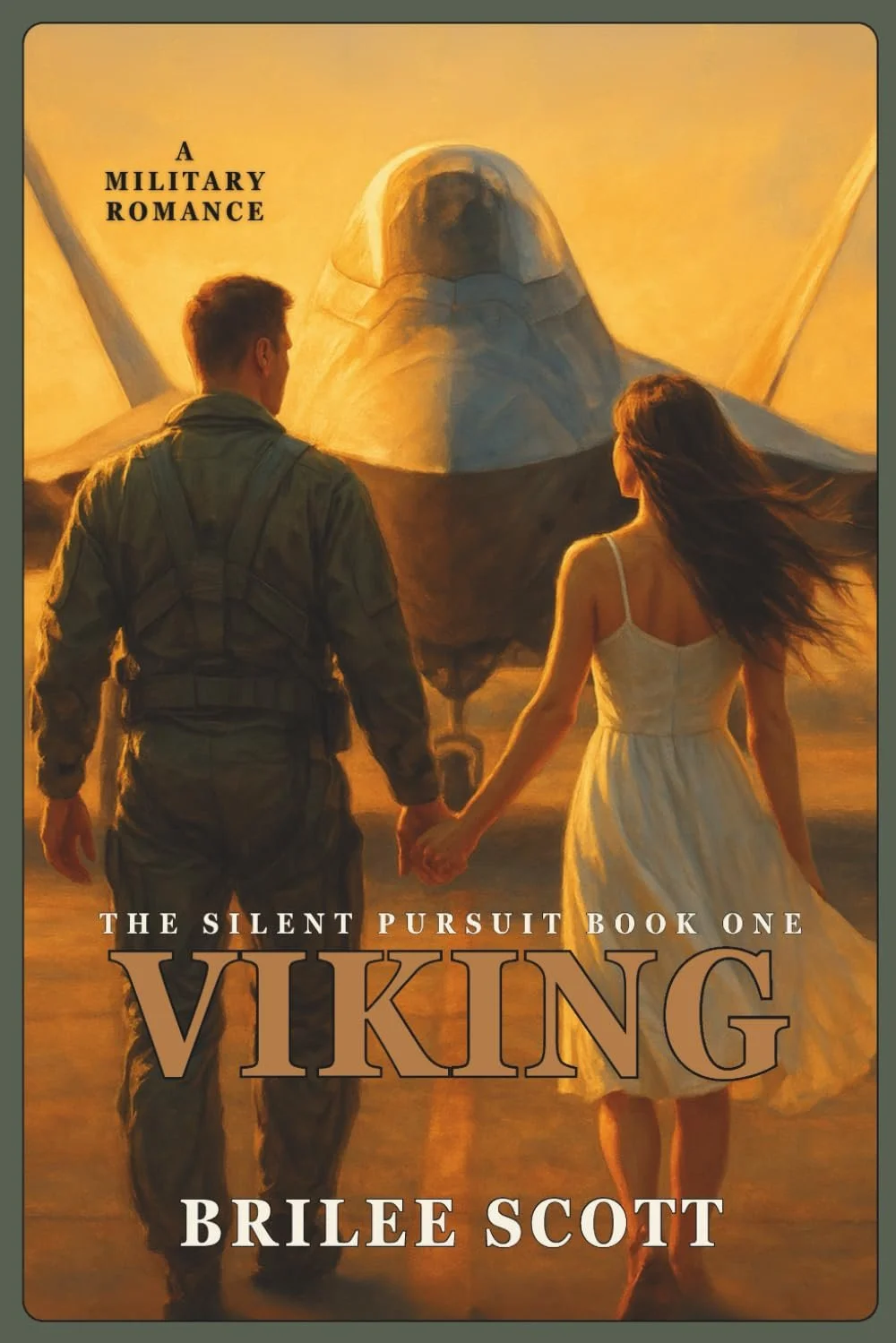
Viking by Brilee Scott

Click on cover image to purchase a copy

MWSA Review Pending


Author's Synopsis

HE’S HER REFUGE. SHE’S HIS WAR.

Fifteen years ago, I entered the United States Air Force Academy and never looked back. Becoming a fighter pilot, protecting my country, pushing limits—this was the only future I saw for myself. Until one mission changed everything. A split-second decision turned the sky from a place of freedom into a battlefield I can’t escape.
Lila was supposed to be a memory, but she never faded. And now she’s back—embedded in my squadron, my jet, and my head. Wanting her isn’t just reckless. It’s dangerous. But I’m not sure I have the strength to stay away.

I know what it means to lose someone to the call of duty. The missing man flyover. The folded flag. The silence that follows. It broke me once—and I promised myself I’d never risk that kind of pain again.
I thought I’d made my peace with Vegas. With that night. With him. But Logan was never meant to be forgotten. Now, every look, every word, and every moment pulls me closer, even when I know better.
Because the truth is simple—Loving him could destroy me.
But losing him again? That might ruin me completely.

Format(s) for review: Paper or Kindle
Review genre: Fiction—Romance
Pages/Word count: 374 / 100,000

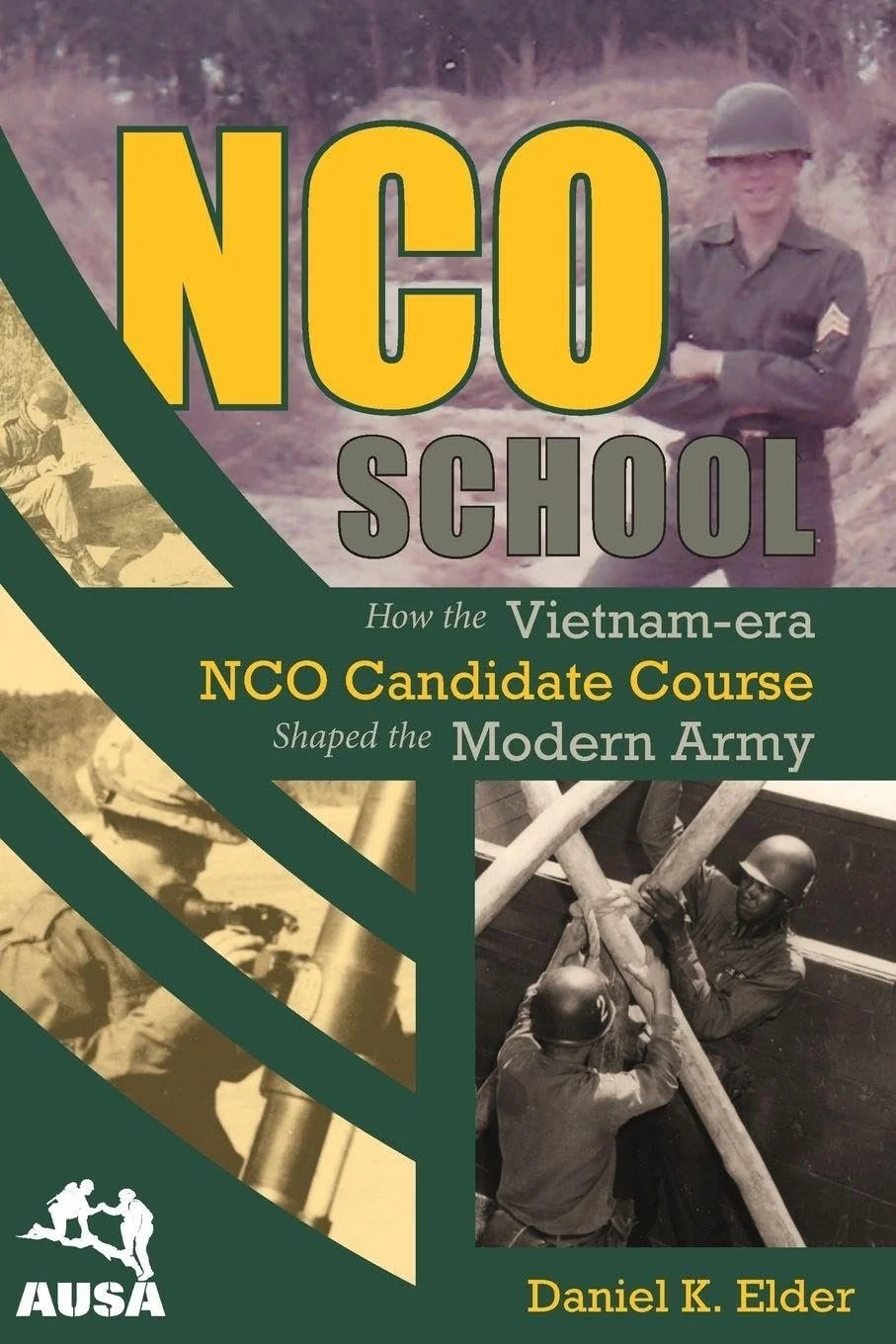
NCO School by Daniel K. Elder

Click on cover image to purchase a copy

MWSA Review

NCO School by Daniel K. Elder contains a wealth of information that is interesting and important for students of military history as well as current and future military policy makers, especially those involved in training and career development for noncommissioned officers. Thorough and detailed research builds a picture of the context, both inside and outside the U.S. Army, which led to creation of NCO schools during the Vietnam War.

The second year of the Vietnam War saw a critical shortage of NCOs, the sergeants who led squads and platoons in combat. This book describes how the U.S. Army met this need by creating, for the first time in its history (other than a few unit-specific iterations) a formal course of instruction to develop noncommissioned officers from among promising enlisted personnel. The author describes how novel this was and how controversial among some in the rank and file. But the concept worked and provides a template for the military should a similar need arise again.

NCO School is the only definitive history of a program that served the Army and the nation well in a time of need. As such, it is an important resource for military trainers, planners, and senior leaders now and into an uncertain future.

Review by Jamie Thompson 

Author's Synopsis

This is the undertold story of the U.S. Army Noncommissioned Officer Candidate Course (NCOCC), a transformative yet overlooked chapter in military history. NCO School: How the Vietnam-era NCO Candidate Course Shaped the Modern Army unveils the rigorous training and complex legacy of a program designed to rapidly produce combat-ready leaders during the Vietnam War. Often dismissed as "Shake 'n Bake" NCOs, these men faced harsh scrutiny and intense pressure despite their vital role in military operations. This meticulously researched book challenges the myths and stereotypes surrounding NCOs and their training, highlighting the program's impact on the NCO Corps' evolution and its enduring lessons for military leadership. Drawing from firsthand accounts, historical records, and personal reflections, author Daniel K. Elder offers a comprehensive narrative that not only honors those who served but also provides critical insights for today's military scholars and practitioners. A must-read for anyone interested in military studies, leadership development, and the hidden stories of those who led from the frontlines.

Format(s) for review: Paper Only
Review genre: Nonfiction—History
Pages/Word count: 278 / 70,381

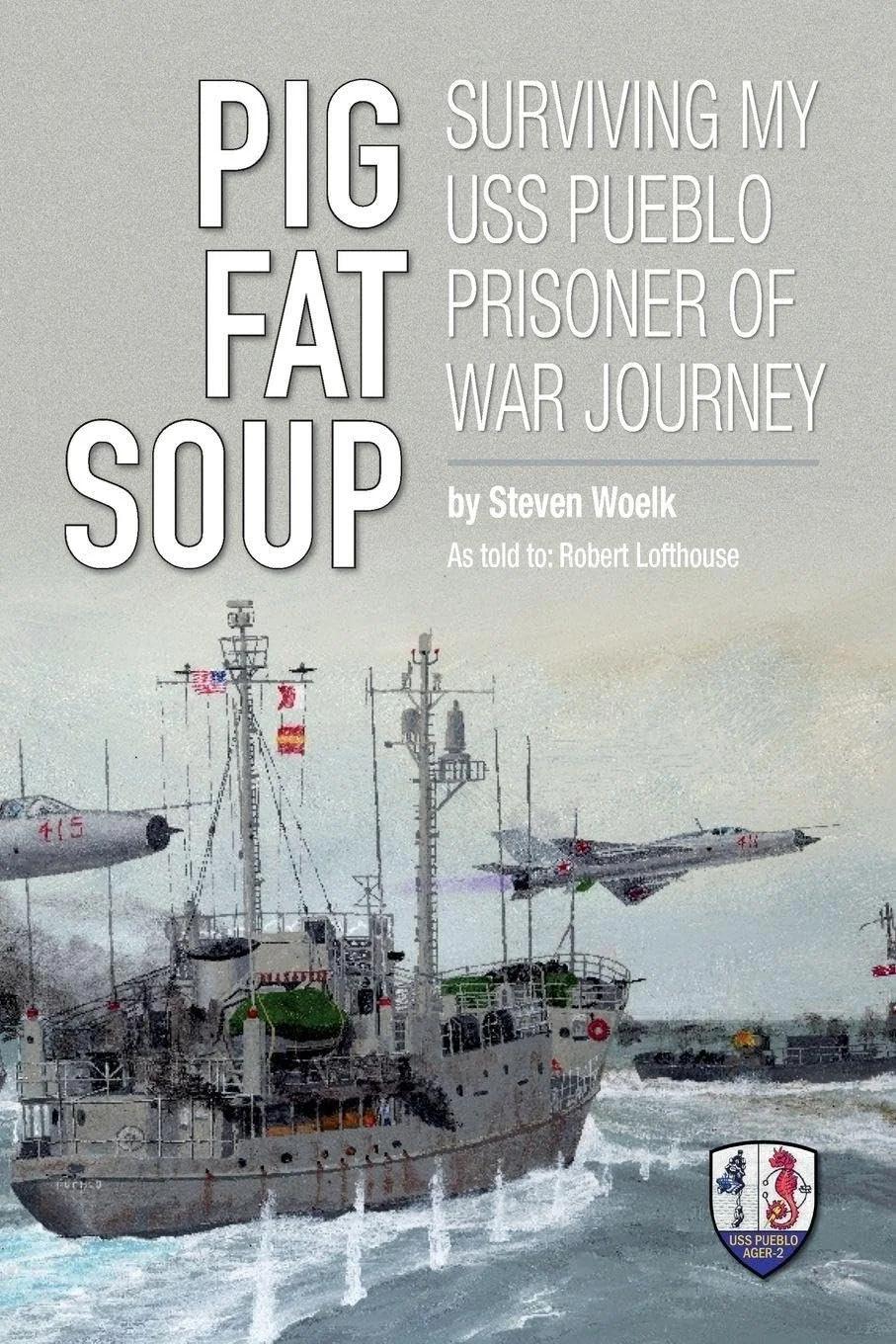
Pig Fat Soup: How I Survived My USS Pueblo Prisoner of War Journey by Steven Woelk, Robert Lofthouse

Click on cover image to purchase a copy

MWSA Review

Pig Fat Soup, the memoir of Steven Woelk, follows a young sailor aboard the USS Pueblo as he experiences capture and endures 11 months as a POW in the Hermit Kingdom of North Korea. How "Pig Fat Soup" became the title is revealed as the story of captivity unfolds. The book was well written as it takes the reader along with the author back to 1968 during the events of the attack on the Pueblo, the injuries sustained in the attack, and the horrid conditions that the crew endures at the hands of the North Koreans. The author recounts the brutal medical procedures, harsh treatment, forced confessions, and the constant propaganda that he and his fellow POWs lived through. The final resolution discusses the negotiation and release of the US POWs and their re-entry back into US society.

The author also reveals insights into the state of the U.S. military as well as the decision-making processes of the upper echelons of military power, some of the shortsighted decisions that led directly to the North Koreans gathering technology and intelligence from the capture of the USS Pueblo and passing it along to the USSR and other nations.

Overall, the book is insightful and allows the reader to get a small picture of the sacrifice that some of our military members experience in service to our country on our behalf.

Review by Randy Beard


Author's Synopsis

First-Hand Account Brings USS Pueblo Story to Life

It was one of the darkest days in United States military history, as the US Navy failed to protect the USS Pueblo in international waters off the coast of North Korea in January 1968. Pueblo was captured by the North Korean Navy shortly following the Blue House Incident and her crew was subjected to 11 months of captivity, torture and medical treatment with no anesthesia.

Steven Woelk was one of the 83 crewmen aboard Pueblo when it was captured. One sailor was killed in the capture, while the other 82 endured hardships that barely can be understood by rational people. Steven was severely injured, and this is his story.

Nearly 60 years later, Woelk has assembled his thoughts and memories into a captivating book: PIG FAT SOUP: Surviving My USS Pueblo Prisoner of War Journey. His story blends history, context and personal experience into a manuscript you won’t be able to put down.

Woelk describes the tranquility Pueblo’s crew felt in the days and weeks prior to the surprise attack by the North Koreans. Even though the US Navy did not equip Pueblo with the necessary weaponry to defend, they believed the safety of international waters would eliminate any antagonistic efforts by the enemy.

Woelk saw his best friend, Duane Hodges, die in the effort to destroy TOP-SECRET documents. Woelk was the most severely wounded of the remaining 82 crewmen. He underwent multiple surgeries in primitive conditions, without anesthesia. He then went through months of separation from the rest of the crew as he recovered. Upon his return to the rest of the captives, his fellow crewmen were suspicious that Woelk had been brainwashed by the North Koreans and placed in their midst to US Navy secrets.

Readers will be privy to the inmost thoughts of isolation, confusion, anxiety and anger that permeate the mind of a prisoner of war, during and after captivity. PTSD is common among most military veterans who have served in combat yet is unique in its manifestation to each one.

Upon its release, Pig Fat Soup earned Amazon best seller status at number 35.

Format(s) for review: Paper or Kindle
Review genre: Nonfiction—Memoir/Biography
Pages/Word count: 187 / 47,200

Seasons of New Mexico: A Natural High by John J. Candelaria and Wanda Jerome: Poetry; Jasmine Tritten and Rick Speed: Photography

Click on cover image to purchase a copy

MWSA Review

Seasons of New Mexico: A Natural High, is a collation of poems by John J. Candelaria and Wanda W. Jerome, with photographs by Jasmine Tritten (with some contributed by Rick Speed and John Candelaria) that portray the New Mexico landscape and culture. The book is divided into four sections named for the seasons, each section introduced by a dramatic full-page photograph that highlights the season, either with a close-up of a flower or a more distant landscape. Poems are presented in alternating fashion by poet, most accompanied by a small photographic image or a graphic of animal tracks or chili peppers.

The photographs are quite appealing. The colorful landscapes—the fiery sunrise and sunset skies, the misty mountain ridges, the bold pink roses against the dark mountains, a gold autumn tree against the bright blue sky—are stunningly rendered. However, most are too small to have the dramatic impact they deserve, and there are many that are similar, also cutting down on their impact. There are a few other photographs of people, animals, and historical and cultural objects,

The poetry, like the photography, has some appealing qualities. Wanda Jerome's poems muse quietly on the desert landscape and wind and clouds and creatures; John Candelaria's poems describe his memories of particular places such as El Malpais National Monument, the Museum of Natural History, and Los Alamos National Laboratory, adding interesting facts to his descriptions. 

I did find that simply picking up the book and flipping through to look at a photo and read the paired poem was often enjoyable, and I expect this is what other readers will also find.

Review by Nancy Arbuthnot
 

Author's Synopsis

A poetic picture of the many ways New Mexico calls people to love her land - the flora and fauna - the diverse cultures that make her The Land of Enchantment. This tapestry of poetry and photography captures both ancient and new places with words, colors and vistas - her glorious sunrises and blue skies - the TRUE essence of the homeplace known as New Mexico.

Format(s) for review: Paper Only
Review genre: Poetry—Poetry Book
Pages/Word count: 141 / 16,420

George Eaton's Odd Granny (Rode a Pig Home Yesterday) by Nancy Panko

Click on cover image to purchase a copy

MWSA Review

George Eaton’s Odd Granny (Rode a Pig Home Yesterday) is a lively and engaging picture book that immediately captures a child’s attention through its colorful illustrations and whimsical sense of humor. The artwork is filled with bold colors and exaggerated motion that invites young readers to explore each page. The illustrations do more than decorate the story; they actively enhance it, helping children follow the action and emotions.

The characters are quirky and memorable, especially Granny herself, whose larger-than-life antics provide both comedy and heart. George’s reactions—ranging from embarrassment to eventual confidence—are relatable for children facing school challenges, while Granny’s unconventional approach adds warmth and fun without overshadowing the child’s perspective.

The book offers value for young readers by blending humor with learning. The story introduces problem-solving and memory techniques in a way that encourages creativity. I’ll bet readers will try to remember the title whenever they come across the word geography from now on. With its strong appeal, engaging visuals, and positive message, this book is well-suited for home reading, classrooms, and library collections alike.

Review by John Cathcart


Author's Synopsis

George Eaton and his sister, Tilly, are doing their homework after school. George is struggling with spelling. He's stuck on one word.
The kids hear the sound of a motorcycle pulling into the driveway. George and Tilly run outside to greet their granny, an odd woman with bright red pigtails that flap in the wind when she rides her cycle. Granny tells George she can help with his problem.
Read about Granny’s crazy caper that makes headlines in the daily paper, and helps George with his spelling.
Award-winning author Nancy Panko has written another delightfully illustrated story that makes learning fun, using a tool called a mnemonic. Following the story is a list of commonly used mnemonics for school-aged children, as well as an activity to do in the kitchen with a grown-up.

Format(s) for review: Paper Only
Review genre: Children & Young Adult—Picture Book
Pages/Word count: 34 / ~1200

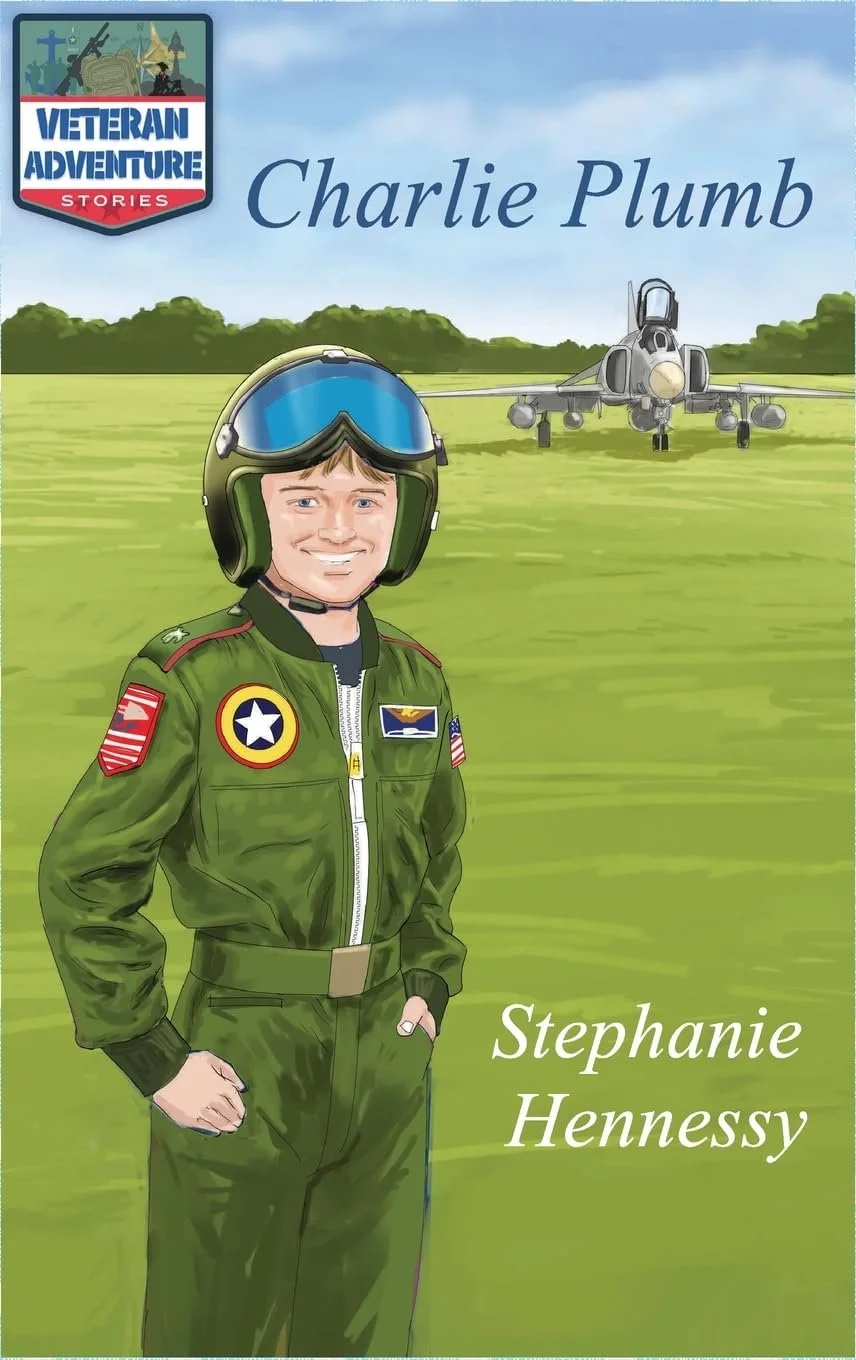
Veteran Adventure Stories: Charlie Plumb by Stephanie Hennessy

Click on cover image to purchase a copy

MWSA Review

Geared toward 6- to 9-year-olds, the story of Charlie Plumb handles difficult life situations with sensitivity and warmth. Charlie’s story starts as a baby and shows him growing up and learning lessons that he will take with him his whole life. The book provides an excellent example of an ordinary kid who learns to overcome great difficulty. There are enough examples of childhood learning to appeal to young readers. His situation as a prisoner of war is depicted with compassion. His homecoming and subsequent post traumatic stress are important themes as well.

The final pages offer some great ways for adults to help children interact with the book's material, while providing fun activities as well as a glossary. The pages about the cow pond will likely delight readers of all ages. Somber themes are handled delicately without whitewashing and without horror.

The illustrations are stellar. Characters look realistic, and facial expressions are meaningful. I was especially taken with the illustration of Charlie’s mother when she receives the news that he will be going to Vietnam. I recommend this book to parents who want their children to understand the sacrifices of military service. Charlie is a great role model.

Review by Betsy Beard
 

Author's Synopsis

Told from the perspective of the veteran, this powerful illustrated book shares the true story of Navy pilot Charlie Plumb—shot down during the Vietnam War and held as a prisoner for nearly six years. The story unfolds with honesty, warmth, and courage, connecting young readers to Charlie's life before and after his POW experience. The story invites young readers into a journey of survival, strength, and resilience.

Perfect for ages 6-9, this book gently introduces themes of perseverance, family, and hope in the face of loss. Includes author's note, updates of Captain Plumb's life now, and four educational pages.

Format(s) for review: Paper Only
Review genre: Children —Picture Book
Pages/Word count: 32 / 1,239

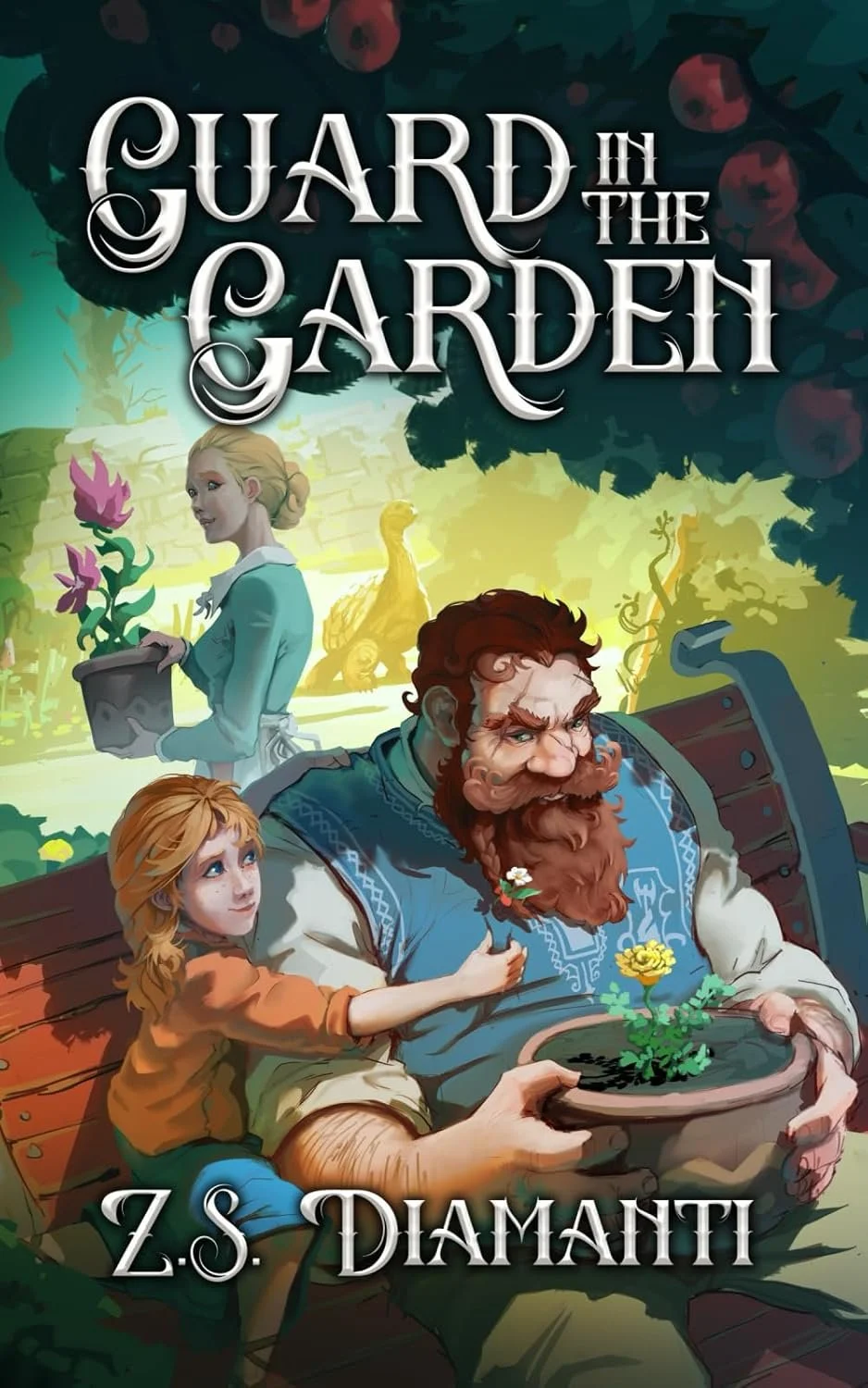
Guard in the Garden by Z.S. Diamanti

Click on cover image to purchase a copy

MWSA Review

Author D. S. Diamanti has provided us with an enjoyable read with his book Guard in the Garden. This fantasy's protagonist, Felton Holdum, is a dwarf, a warrior by profession who is nearly killed in battle at the beginning of the book. A severely injured leg has made it impossible for him to return to his unit. Even walking seems to be impossible without the support of a cane. To compound his problems he begins to have nightmares and feelings of worthlessness since he can no longer do the job he was trained to do, suffering from what we would call PTSD.

Not being able to return to the military, he joins the city guard, a job that results in his meeting a number of city folk to include the Marigold women as he likes to refer to them. The mother, a widow whose husband died years earlier, and her precocious daughter.

This is a delightful story that shows how love and friendship have healing powers that most individuals who need them are slow to realize. I recommend this book.

Review by Bob Doerr


Author's Synopsis

From dragon fire to garden flowers …

Felton Holdum spent his entire life training to become one of Galium’s elite dwarven warriors. When a bloody battle leaves him injured, he has no choice but to move into his eccentric twin aunts’ quaint home in the town’s quiet Garome District.

With his life of military service seemingly over, the captain of the city guard gives Felton his only chance at a fresh start in the new life he never wanted.

But when a human woman barges through his front door, the grumpy dwarf starts to wonder if there is more to life than war. The sunshine woman invites him to visit her garden, where Felton gains a new nemesis and a new purpose in life.

Embark on a wholesome journey of healing and self-discovery. A cozy fantasy tale of forging new friendships and overcoming fears. A quiet quest of family bonds and budding romance.

Take a walk through the garden and see what magic awaits.

“Virgin River meets The Hobbit” in this heartwarming, feel-good fantasy.

Format(s) for review: Paper or Kindle
Review genre: Fiction—Horror/Fantasy/Sci-Fi
Pages/Word count: 267 / 67,000

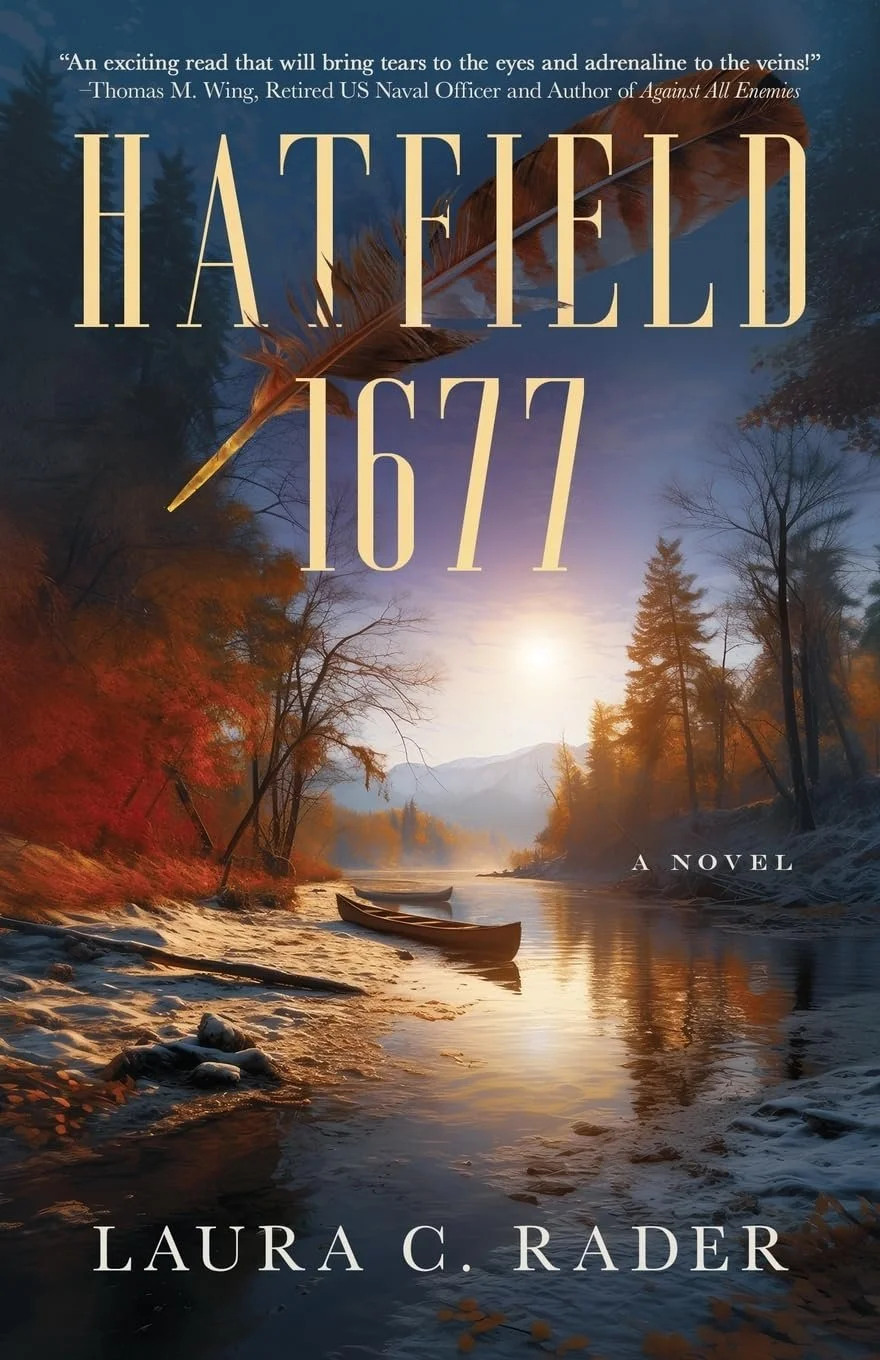
Hatfield 1677 by Laura C. Rader

Click on cover image to purchase a copy

MWSA Review

Laura C. Rader’s Hatfield 1677 is a love story set against a backdrop of colonial conflict. This is not traditional military fiction. Frontier violence and survival are central to the story, but the heart of the narrative is a family’s faith in and love for each other. Readers who like relationship- and character-driven stories and survival epics will likely enjoy this book.

Readers seeking a treatise on North American colonial warfare must find it elsewhere. While there is little discussion of campaigning, Rader succeeds in exposing the horrors of war. Examining battlefield dynamics is not the novel’s primary aim. Rader paints a convincing portrait of colonial life, and her world-building feels authentic. She clearly devoted significant time and effort to researching colonial Massachusetts.

Hatfield 1677 is recommended to readers seeking historical fiction grounded in family connections. Rader offers a moving portrayal of perseverance and connection in trying times, leaving a strong impression on those who value the human side of history.

Review by Ben Powers
 

Author's Synopsis

Inspired by a true story of love, courage, and survival in seventeenth-century New England.

Benjamin Waite, devoted husband and father, is the volunteer military scout for the colonial Massachusetts town of Hatfield during King Philip’s War. He protests a planned attack against a Native American camp but reluctantly guides the army on their ill-advised mission.

The Algonquian sachem Ashpelon and his tribe retaliate, laying waste to Hatfield and taking seventeen colonists captive, including Benjamin’s wife Martha and their three young daughters. Then, Ashpelon heads north to Canada with his hostages in a desperate bid for freedom.

While Martha courageously strives to endure captivity and protect her children, Ben and his friend Stephen Jennings defy bureaucracy and brave the wilderness to find and rescue their loved ones.

Based on the lives of the author’s ninth great-grandparents, this riveting novel of love and war in colonial America, told through three different perspectives, is one you will not forget.

Format(s) for review: Paper or Kindle
Review genre: Fiction—Historical Fiction
Pages/Word count: 396 / 99,000

Fugitive Son by Aramis Calderon

Click on cover image to purchase a copy

MWSA Review

This memoir begins with the author and his family visiting his father in a Louisiana prison when he was eleven years old. After his father escapes, the family packs what they can and heads for Florida, where they reunite with his father and begin their lives as fugitives. The author takes the reader along with him and his three siblings as they endure the trauma of life on the run with two drug addict parents trying to stay one step ahead of the law. He does a great job describing the range of experiences they go through and the variety of living situations they find themselves in. We get to know the personalities of his family members, but most of the focus is on his relationship with his father. The father converted to Islam while in prison and forced his son to read the Quran, pray, and learn Arabic. He alternates between berating and psychologically abusing his son and telling him he loves him.

Eventually, the nightmare ends when his father is recaptured. In the rest of the book, the author shares information he learned later about what was going on that he wasn’t aware of at the time. The epilogue wraps up the story for the author and his parents, but not his siblings.

This is a heartbreaking, but inspirational book. The author clearly has done a lot of soul searching and healing. I highly recommend it for anyone who has experienced a traumatic childhood. They may learn from the author’s story and how he came to find healing and forgiveness.

Review by Eva Nevarez St John (January 2026)


Author's Synopsis

Aramís Calderón was eleven in 1992 when federal marshals conducted a nighttime raid at the Baton Rouge apartment where he lived with his mother and four siblings. They were searching for Aramís’s father, who had escaped from a nearby federal prison. Once satisfied with the answers from Aramís’s mother, the marshals departed. At daybreak, so did Aramís’s family—and drove toward a rendezvous with his father, who had fled to South Florida. Thus began an eight-month ordeal of constant moves, family aliases, and drug deals.

As Calderón shares, Fugitive Son is not a love letter to his father, whom he sees even after his death as an unethical, toxic, and incredibly complex man. Rather, Calderón’s memoir explores how his father’s undeniable love for his family despite drug addiction, lawlessness, and toxic masculinity informed Aramís’s rebellious decision to join the Marines, and how all this shaped his determination to become the father he wished his own had been.

Format(s) for review: Paper or Kindle
Review genre: Nonfiction—Memoir/Biography
Pages/Word count: 214 / 64,000

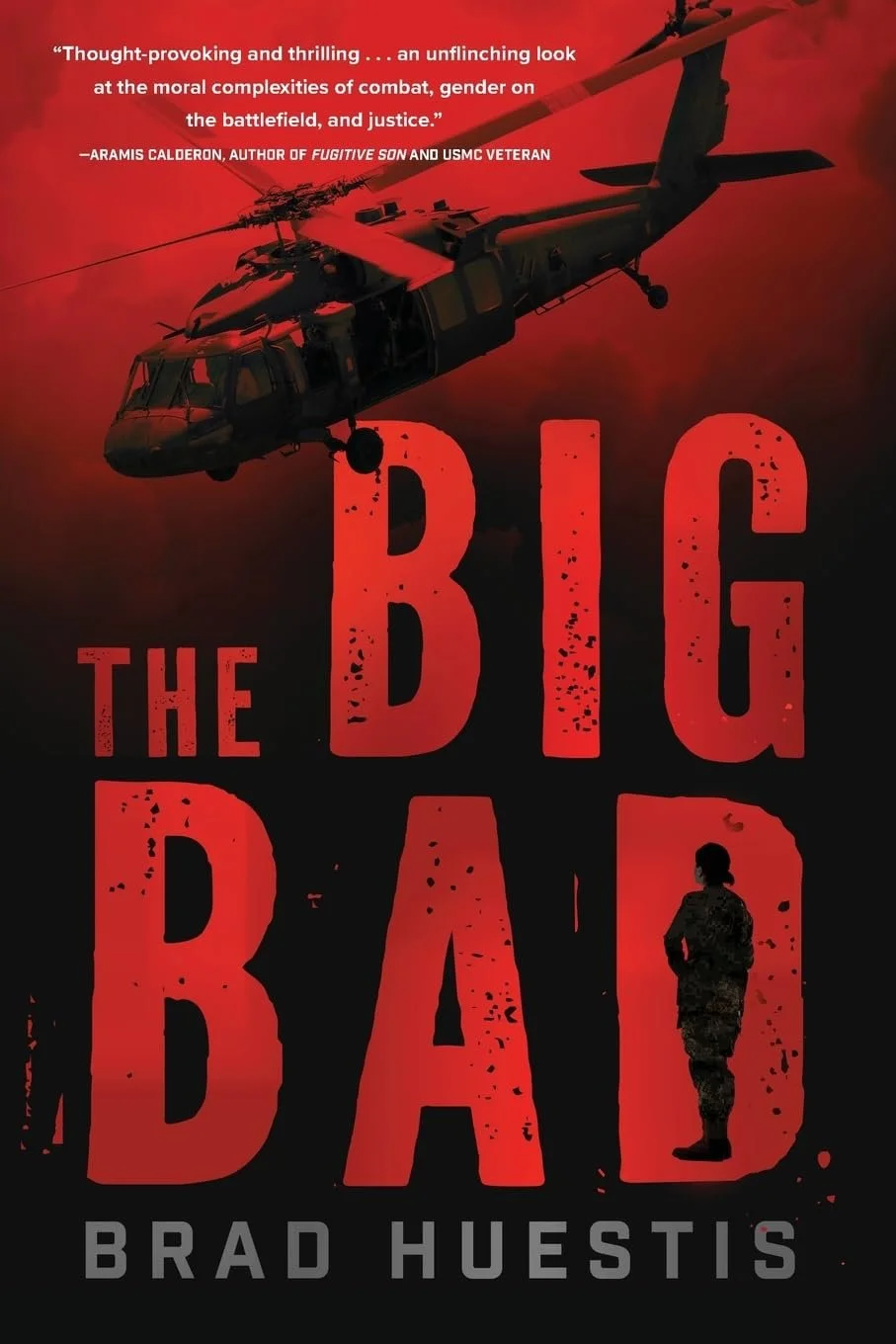
The Big Bad by Brad Huestis

Click on cover image to purchase a copy

MWSA Review

The Big Bad charges out of the starting gate introducing three of the main characters and hinting at the challenges they will face. Major Jess Gilbert’s inner dialogue reveals her reasons for choosing the field of law and her unlikely decision to join the Army. Her desires to deploy and make an impact beyond rear echelon work are realized when her three-star general boss informs her and her female mentor JAG officer colonel that they are soon to be leaving for Iraq.

Readers soon meet the villain, Colonel Mike “the Big Bad” Wolfe who is instantly easy to dislike. He’s arrogant, plays favorites, and bullies troops based on them not meeting his self-created standards. He, too, feels that he’s received a gift when he receives the orders to deploy his Brigade Combat Team to Iraq. Within weeks of training, Wolfe has fired his executive officer with a torrent of expletives and for no good reasons. The Big Bad clearly likes to flex his muscle in a show of force to intimidate his team into submission.

In a good versus evil story, Jess the JAG must investigate allegations against Wolfe once they are both in Iraq. She finds Wolfe’s men unusually dedicated to him and uncovers deep discrepancies in their stories, which elevates the case to a multiple-murder investigation. Jess juggles with the intricacies of military law, the warrior ethos, and the heartache of young enlisted men taking the blame while those who gave the orders escape the brunt of the law. While Wolfe is the quintessential villain, the Army’s justice system presents itself as an antagonistic force as well.

Author Brad Huestis penned a realistic and page-turning book revealing difficulties in applying the rule of law and inexact rules of engagement in asymmetric warfare. Highly recommended for thriller readers and those interested in what could happen behind the scenes in modern warfare.

Review by Valerie Ormond


Author's Synopsis

When Jessica Gilbert, a US Army JAG Corps major, deploys to Iraq in early 2006, she is excited to help rebuild the rule of law. But soon the disturbing allegation that an infamous Army colonel cut the ears from dead Iraqi fighters as bloody war trophies captures her focus. Her investigation quickly morphs into a murder inquiry when she uncovers gruesome photographs revealing that the fighters were brutally executed on the battlefield. In her quest to uncover the truth of what happened and why, she wrestles with the disparity in treatment of decision-makers versus trigger-pullers. Besides figuring out who committed this atrocity and their motives, she must fight to make sure everyone involved-from the top down-is held responsible.

Format(s) for review: Paper or Kindle
Review genre: Fiction—Mystery/Thriller/Crime
Pages/Word count: 240 / 66,679

The Long Game by Mark Fleisher

Click on cover image to purchase a copy

MWSA Review

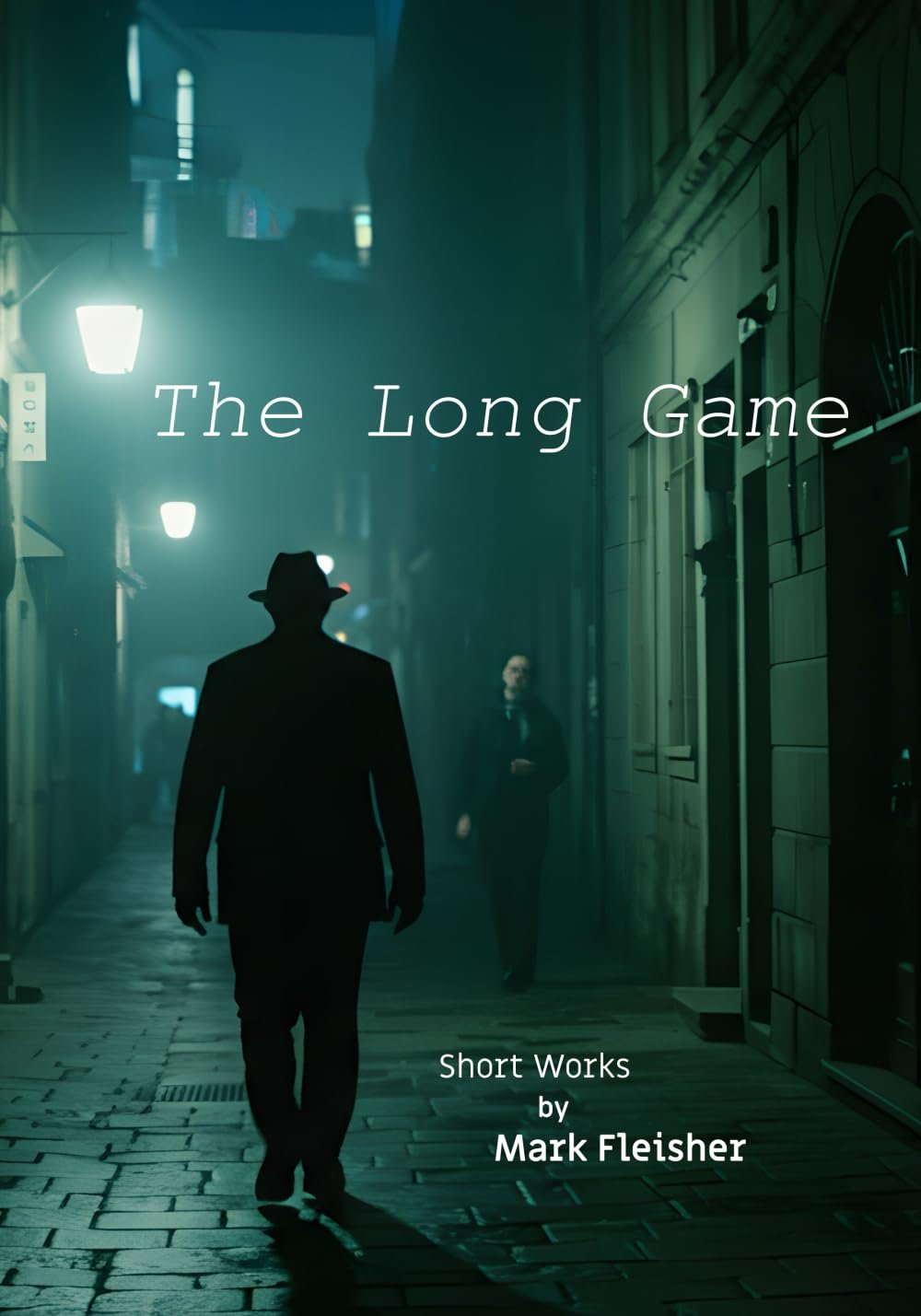
The Long Game by Mark Fleisher is made up of four short works ranging from 88 pages for “Second Chances” to 15 pages for “A Round Trip.”  The other two stories are 31 and 21 pages each. The Preface suggests the author was influenced by Mickey Spillane, and that is seen most clearly in “What’s Up, Doc” and “Dumpster Dilemma” with street slang and quick, short sentences.  The endings are left up to the reader’s imagination – happy endings or problems to come.

Second Chances: Vic Russell defends himself in a bar when he steps in to protect a woman being harassed, but his strong punch results in the death of the harasser.  He is assigned a public defender who has never handled a death case.  Vic is sent to jail for manslaughter and serves every day of the 8-year sentence.  When he is released, he gets a 2nd chance with help from friends.  He builds a good life and meets a girl raised in money who loves him. Ultimately, Vic is given the opportunity to work for the Corrections Department in a program called Second Chances, counseling newly released inmates.  The program has many professionals, but they want someone with experience serving time who then transitioned successfully to life outside prison.

What’s Up, Doc: Tucker Holliday is not a doctor, but his retired heart surgeon neighbor nicknames him Doc after the “Old West gambler, gunfighter, and one-time dentist.”  His friend Dorrie, a clinical psychologist, asks Doc to help her friend Andrea, who is sharing custody of her daughter with her ex.  Andrea wants sole custody of her daughter because her ex rarely spends time at home on his custody days.  Further, he has just fired his nanny, which seems suspicious.  Doc investigates and finds Andrea’s concerns are valid, although that takes some time and has some twists.

Dilemma in a Dumpster: A body is found in a dumpster, and it takes a good deal of detective work to solve the mystery.  It looks like a mob hit, and possible witnesses are afraid to tell what they know.  Lots of reality in how crimes are solved.  Too good to offer any spoilers

Round Trip: Why would an experienced teacher head for California and then return 14 months later?  Her writer friend has a friend who is a detective.  But is the story over?

Review by Nancy Kauffman
 

Author's Synopsis

In The Long Game Mark Fleisher serves up a quartet of stories involving murder, mayhem, courtroom drama, and old-fashioned detective work. His locations are diverse: Kentucky, New York City, Boston, and western Massachusetts. All are places he describes with pinpoint accuracy and replete with local flavor and local characters. His moments of serious dialogue crackle and sizzle. Yet Fleisher writes tenderly of relationships and sprinkles humor throughout the stories. The final paragraphs of each tale will keep the reader guessing where the main characters will next journey.

Format(s) for review: Paper Only
Review genre: Fiction—Mystery/Thriller/Crime
Pages/Word count: 175 / 46,000

Helm & Horizon: Daily Leadership Principles for the Motivated Sailor by Steven-Paul Lapid, USN (Ret.)

Click on cover image to purchase a copy

MWSA Review

Helm and Horizon targets junior sea service officers and petty officers who are motivated to learn proven leadership skills and who are eager to apply those skills to their own careers. The principles are expressed in the underlying images of guiding a ship at sea, but can be applied to aspiring practitioners in all walks of life.

The book is organized into 366 single-page entries designed to be read and considered at the start of each day and then applied throughout the aspirant’s daily routine.

Each daily lesson begins with a quotation drawn from the writings of a recognized authority in an applicable leadership discipline. These experts bring a range of ancient wisdom (Sun Tzu) and contemporary thought (Dale Carnegie, Steven Covey) to bear on the challenges of leading today’s warfighters (GEN James Mattis, ADM William McRaven).

The body of each entry pairs a fundamental leadership component with a discussion of its “real-life” implications and relevance. Examples of the heroism and/or daring of legendary naval figures (Admirals Farragut, Nimitz, Halsey, and Stockdale, to name a few) are often cited, adding interest and credibility.

Under the heading “Take the Helm,” a pair of recommended courses of action suggest how the student might apply to be followed. “Eyes on the Horizon” offers a closing thought for the day.

By merit of the breadth and depth of its research and the powerful messages it offers its readers, "Helm and Horizon" is much more than just another leadership development handbook. In the hands of a resolute and eager junior officer—commissioned or non-commissioned—this book can be a real game changer.

Review by Peter Adams Young


Author's Synopsis

Lead with purpose... even when time is short.

Every day is an opportunity to lead. Helm & Horizon: Daily Leadership Principles for the Motivated Sailor is a 365-day leadership guide built for busy leaders who still take growth seriously, delivering practical wisdom drawn from classic leadership works, naval history, and real-world experience. Each concise, focused entry is crafted for leaders whose time is limited but whose commitment to growth is not.

Helm & Horizon integrates leadership wisdom from best-selling authors like Jocko Willink (Extreme Ownership), Stephen Covey (The 7 Habits of Highly Effective People), Ryan Holiday (The Obstacle Is the Way), L. David Marquet (Turn the Ship Around!), and Sun Tzu (The Art of War), alongside real-world naval case studies from iconic figures like Admiral Chester W. Nimitz, Admiral Hyman G. Rickover, and Medal of Honor recipients like Chief Boatswain's Mate James E. Williams. From Viktor Frankl's exploration of finding meaning in suffering (Man’s Search for Meaning) to Angela Duckworth’s emphasis on grit (Grit: The Power of Passion and Perseverance), the book connects deeply personal growth lessons to universal leadership challenges.

Each of the 365 daily entries is designed to teach a leadership principle in a clear, concise manner, offering practical insights that can be immediately applied to everyday life. Read one page a day. Reflect on the principle. Take one concrete action. Over time, you’ll build the habits, character, and perspective of a leader people trust when it matters most. Helm & Horizon is a guide for anyone who wants to lead with purpose, vision, and discipline.

The leadership journey starts with you.

Lead with Purpose. Take the Helm. Keep Your Eyes on the Horizon.

Format(s) for review: Paper Only
Review genre: Nonfiction—How to/Business
Pages/Word count: 403 / 111,453

The Scout by Michael C. Dixon

Click on cover image to purchase a copy

MWSA Review

In The Scout, author Michael Dixon has given us a fast-moving thriller loaded with action. Elijah Cane, Dixon’s protagonist, is a decorated soldier with a lot of combat experience. Selected to put together a perfect fighting team, he draws from a list of experienced combat troops. Each brings a unique capability. Cane and his troops are immediately challenged by an unknown enemy. Set in an environment more like science fiction than today’s world, Cane’s team suffers death and injury battling drones and entities they can’t identify. Victories are short-lived as they find out they are not just the hunters; they are the prey. The author admits to drawing heavily on AI which I believe compounded some grammatical errors and may have cut short character development. Most fans of military combat novels, especially those that border on science fiction, should enjoy this book.

Review by Bob Doerr
 

Author's Synopsis

Staff Sergeant Elijah Kane has spent his career operating in the shadows of modern warfare, where missions are classified, failures are buried, and the truth is often the first casualty. When a covert operation in Eastern Europe goes catastrophically wrong, one of his men disappears—officially listed as killed in action, unofficially erased.

Years later, fragments of that mission begin to surface. Conflicting intelligence, altered records, and quiet warnings suggest that the truth surrounding the operation was deliberately obscured. As Kane is drawn back into the orbit of black-budget programs and deniable task forces, he is forced to confront the possibility that loyalty and obedience may have been weaponized against him.

The Scout follows Kane as he navigates a world where accountability no longer exists, alliances are provisional, and survival often depends on knowing when not to ask questions. The novel explores the psychological toll of command, the cost of moral compromise, and the enduring bonds between soldiers long after the fighting ends.

Grounded in realism and restraint, The Scout is a military thriller focused less on spectacle and more on consequence—examining what happens when duty collides with conscience, and when the truth refuses to stay buried.

Format(s) for review: Paper or Kindle
Review genre: Fiction—Mystery/Thriller/Crime
Pages/Word count: 319 / 55,387

Bulls Amongst Men by C.S. Quinn

Click on cover image to purchase a copy

MWSA Review

In Bulls Amongst Men, C.S. Quinn delivers a raw, visceral exploration of the veteran experience that is as harrowing as it is hopeful. The novella follows Michael, a decorated soldier returning to a civilian life that feels more treacherous than the front lines. Haunted by the suicide of a close friend, Michael and his former unit embark on a high-stakes tribute: participating in the running of the bulls in Pamplona.

Quinn’s prose is gritty and unflinching, masterfully paralleling the external chaos of the Spanish streets with the internal turmoil of PTSD and survivor’s guilt. The narrative shines in its portrayal of brotherhood, capturing the unique, jagged bond between those who have served. While the bull run provides a cinematic backdrop, the true heart of the story lies in Michael’s confrontation with his own identity. It is a poignant, fast-paced meditation on redemption and the grueling journey of finding a reason to keep moving forward.

Review by James Elsener


Author's Synopsis


Bulls Amongst Men is a literary novel that explores the quiet battles fought after war, following Michael, a former U.S. Army soldier struggling to adapt to civilian life after leaving the military. Though he survived combat, Michael finds himself overwhelmed by survivor’s guilt, fractured family relationships, and the persistent weight of memories he cannot escape.

When Michael learns that a fellow soldier from his unit has taken his own life, he reunites with his former brothers at the funeral. Bound by shared loss and unspoken pain, the men make a reckless decision to honor their fallen friend by traveling to Pamplona, Spain, to participate in the running of the bulls—an event as dangerous as it is symbolic. What begins as a tribute soon reveals itself as something more complex: a test of courage, masculinity, and the limits of endurance.

As Michael prepares for the journey, tensions with his father resurface, exposing generational misunderstandings about service, duty, and emotional restraint. In Pamplona, immersed in the chaos of the festival and the excess that surrounds it, Michael grapples with the moral implications of the event and his own motivations for running. A brief but meaningful connection with a woman forces him to confront the parts of himself he has numbed since the war.

The run itself becomes a crucible. As the bulls thunder through the narrow streets, Michael is pushed to confront whether his pursuit of danger is an act of remembrance, self-destruction, or a desperate attempt to feel alive again. His experience mirrors the life cycle of the Spanish fighting bull—revered, tested, and ultimately sacrificed—forcing him to reckon with what it truly means to survive.

Grounded in the realities of military service and veteran reintegration, Bulls Amongst Men examines grief, brotherhood, and the psychological cost of war long after the uniform is removed. It is a story about men who have learned how to endure violence but must relearn how to live with its aftermath.

Format(s) for review: Paper or Kindle
Review genre: Fiction—Literary Fiction
Pages/Word count: 135 / 45,000

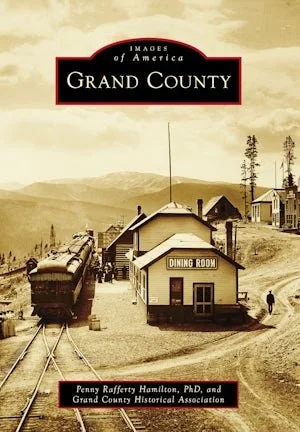
Images of America Grand County by Penny Rafferty Hamilton, Ph.D.

Click on cover image to purchase a copy

MWSA Review

Images of America: Grand County follows the format of the Images of America series, which uses historical photographs to present the history of a specific geographic area. The images in this book are high resolution and provide the reader with a literal picture of the past.

The author does an excellent job of describing each image and providing historical context. The pictures are organized chronologically and described in a way that gives the reader an understanding of how Grand County evolved. The wealth of historical facts woven throughout the book takes the reader back in time, allowing them to imagine what it was like to live in that time and place.

The book includes images and history related to the Native Americans who inhabited the area before the European settlers came in the mid-1800s. There are pictures of the initial homesteads and stories of the founding families who braved the challenging conditions in Colorado’s north-central Rocky Mountains to build the communities in Grand County. It shows the many engineering feats required to tame the Grand River, renamed the Colorado River, and to travel through the Rocky Mountains. Grand County became home to some of the first national parks and developed into a popular tourist destination with ski resorts, dude ranches, hunting, fishing, and even yachting.

I especially appreciated learning about the roles women played in Grand County history, including as homesteaders, teachers, a physician, a postmaster, and members of The Women’s Land Army.

This book is a great introduction to what sounds like a hidden gem located northwest of Denver. I definitely plan to check it out if I find myself in that neck of the woods.

Review by Eva Nevarez St John (January 2026)


Author's Synopsis


For thousands of years, Indigenous, nomadic tribes enjoyed natural hot springs and summer hunting. Spanish explorers, French fur trappers, and Mountain Men followed. In 1858, the gold rush brought rugged prospectors, creating towns named Coulter, Gaskill, Lulu City, and Teller.
Established in 1874, before Colorado became a state, Grand County is nestled in the north-central Rocky Mountains. Named for the Grand River (renamed the Colorado River), today Grand County encompasses 1,868 square miles, larger than Rhode Island. Homesteaders, loggers, merchants, and the Moffat Railroad built Arrow, Hideaway Park, Winter Park, Fraser, Tabernash, Granby, Grand Lake, Hot Sulphur Springs, Parshall, Kremmling, and Radium. Today, tourists flock to Rocky Mountain National Park, Arapaho National Forest, and award-winning dude ranches and resorts, to enjoy some of the world's most beautiful lakes, mountain ranges, and abundant wildlife. Written in an easy-to-read pictorial format with over 200 curated photographs, for readers interested in true stories of Western grit and courage.

Format(s) for review: Paper Only
Review genre: Nonfiction—History
Pages/Word count: 128 / 10,000
Welcome To The Jungle - A Sailor's Memoir of Service Aboard the USS Fresno (LST-1182) by H.J. Peterson II

Click on cover image to purchase a copy

MWSA Review

This memoir begins with the author explaining why he joined the Navy in high school. He gives a detailed description of every step in the enlistment process, as well as every day he spent in boot camp and apprentice training in San Diego. It was there that he first experienced his favorite part of being in the Navy: liberty.

After apprentice training and leaving home, the author flew to meet up with his ship, the USS Fresno. It was participating in WestPac 1988 in the Philippines. He continues to describe every day in detail, with an emphasis on his favorite time: liberty. In less than a week, the ship headed out to sea, where they found themselves in the middle of a typhoon. From there they went to Guam, Pearl Harbor, and then to Long Beach. The USS Fresno remained in Long Beach from December 1988 through December 1989.

In January 1990, the USS Fresno deployed for the six-month WestPac 1990, and the author resumes his daily descriptions. Over the next several months, they went back and forth between Japan and the Philippines. Then they went to Hong Kong and Singapore. On their way from Singapore to Thailand they crossed the equator and the author participated in the Shellback Initiation, which sounds like an intense fraternity hazing ritual. From there it was back to the Philippines, Hawaii, and Long Beach. The author’s last day in the Navy was the day the USS Fresno docked in Long Beach.

The rest of the book covers the author’s time in college and the Naval Reserves, including two weeks back on the USS Fresno in Long Beach and a nightmare trip for training in Chicago in January. He finally completed all his Naval service in August 1995. There are four Epilogues with minimal information about what happened in the author’s life from the time he left the Navy until he published this book.

I would have liked to learn more about the author’s life after he finished his Navy service, especially how he overcame his addiction to alcohol.

Review by Eva Nevarez St John


Author's Synopsis

A 17-year-old kid from Wyoming joins the Navy to earn money for college and ends up gaining an education he didn’t expect. Welcome To The Jungle is a no-holds-barred coming-of-age tale of how a boy became a man in the U.S. Navy. Follow the author from his decision to join the Navy through boot camp and out to the fleet aboard the USS Fresno (LST-1182) and his adventures in the Western Pacific, and finally into the Navy Reserves. Read the real-life stories of what the Navy was like for an enlisted kid in the late 80's and early 90's. This collection of stories, memories, and journal entries documents a boy's transition into manhood and beyond. If you've ever wondered what being in the Navy was REALLY like, this book holds the answers.

Format(s) for review: Paper or Kindle
Review genre: Nonfiction—Memoir/Biography
Pages/Word count: 600 / 284,230

Fatal Second Helen: A Modern Veteran's Iliad by Josh Cannon

Click on cover image to purchase a copy

MWSA Review

Mention The Iliad to people today, and the first thing that might come to mind to many is the 2004 movie Troy, while a few might say it was that boring book from high school. To Fatal Second Helen author and Marine veteran Josh Cannon, it was a way to square away many aspects of his service in Iraq during wartime by comparing and contrasting his experiences to the oldest war story and the oldest book in the history of Western Civilization.

Cannon, who served as an enlisted Arabic Cryptologic Linguist and deployed to Iraq twice (first with the invasion in 2003, and again in 2004), is eminently qualified to write this book. After his time with the Marines, he attended the University of Pittsburgh and then the University of Chicago, where he received his PhD, ultimately becoming the Director of Research, and an adjunct faculty member for the Classics Department and the Anthropology Department. He has also worked on numerous archaeological digs in Turkey, including ones that interacted with the location thought to be the site of Troy.

Despite the heady subject and academic credentials of the author, it is quite an enjoyable and very insightful read. The author deftly highlights how, at the level of the individual warrior, most of the physical, emotional, and psychological elements of war and its aftermath, can be found in The Iliad, including possibly the first documented “blue falcon” in the history of military service.

This fine book will be of interest to veterans, students of military history and ancient times, and anyone who is seeking to understand the effects of war on those who have served.

Review by Terry Lloyd (January 2026)

Author's Synopsis

In the tradition of Jonathan Shay’s 'Achilles in Vietnam' (1994), Josh Cannon’s 'Fatal Second Helen: A Modern Veteran’s Iliad' brings to the audience a discussion of Homer’s Iliad that allows the ancient text to teach us about modern war. Cannon’s work differentiates itself from Shay’s by discussing the Iliad holistically. His book seeks to demystify the Iliad through connecting it to his military service via a presentation of his personal stories.

By sharing his story, Cannon’s book shares a new angle on an old tale. He makes the Iliad accessible to any audience and helps unearth a lesson that, despite being millennia old, still has much to teach us.

Format(s) for review: Paper or Kindle
Review genre: Nonfiction—Memoir/Biography
Pages/Word count: 178 / 50,000

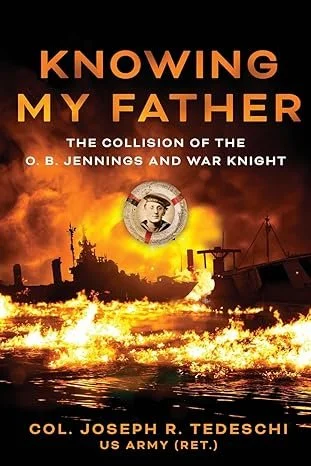
Knowing My Father: The Collision of the OB Jennings and War Knight by Col. Joseph R. Tedeschi, US Army (Ret)

Click on cover image to purchase a copy

MWSA Review

Knowing My Father is a voyage of discovery that works on two widely diverse levels. The author is a decorated U.S. Army veteran who was a teenager when his father died. In the months and years that followed this personal heartbreak, he came to realize that he really did not know much about his late father beyond the understanding that he was a good, loyal, and loving family man.

Eventually, the author’s haunting sense of loss compelled him to examine his father’s upbringing and early life through genealogical sources and public records, including his military records. While piecing together a more robust profile of his dad, he uncovered a pivotal incident in his father’s World War I service with the U.S. Navy Armed Guard. This discovery led him down a new path to explore a deadly collision at sea involving his father’s ship.

At the height of the war, Germany’s pursuit of unrestricted submarine warfare in the Atlantic Ocean and Mediterranean Sea was threatening the survival of the Allies, especially Great Britain. Convoys of merchant ships and tankers were eventually manned with U.S. Navy gun crews as additional protection against U-Boat attacks.

Much of the book focuses on a convoy of thirty-two merchant ships and their escorts, which sailed from Halifax, Nova Scotia, on March 18, 1918, bound for England. The author’s father was making his third Atlantic crossing as a Navy gunner aboard a U.S. civilian tanker, the O. B. Jennings. Five days later the convoy was in the English Channel, maneuvering to avoid U-Boats in the dark of night. Another ship in the convoy, the British freighter War Knight, rammed into the Jennings, igniting its cargo of volatile naphtha with tragic loss of life. Although his father was one of the survivors of the collision, he surmised that the deadly incident had a lasting effect on his dad.

The author conducted extensive research into the events and decisions leading up to the collision. During his research, he accessed multiple sources, including British Admiralty Court of Enquiry archives, to reconstruct the incident and its aftermath. Citations are documented in the text with extensive footnotes. While the bulk of the text deals with the deadly collision between two WWI merchant ships, the author’s father remains at the center of the story.

In the end, the author achieved his primary goal—essential understanding of his father’s developmental experiences as a young man. He states his assessment simply and eloquently: “Researching my father’s early life has been truly cathartic. I really feel that I got to know him better, especially by reliving his World War I experiences.”

In a broader sense, he later concludes: “… [W]riting this book allowed me to better know and understand my long-lost father and to pay tribute to all the brave men who risk their lives going down to the sea in ships during time of war.” The value to the greater reading public will come from its thorough and gripping account of a single tragic incident during WWI that typifies the cost of the German submarine war on Allied shipping during WWI.

Review by Peter Young


Author's Synopsis

Knowing My Father: The Collision of the O. B. Jennings and War Knight relates Joe's methodical search to know more about his long-lost father. In that search, Joe discovers the tragic story of the fiery collision of the US tanker O. B. Jennings and the British merchant ship War Knight during World War I as their convoy evaded German U-boats in the English Channel. A US Navy armed guard defending the O. B. Jennings, gunner's mate Michael Tedeschi was heroically rescued by the British Royal Navy escorts from the burning sea. Joe satisfies his search to know his father better and, at the same time, reveals and exposes one of the unfortunate naval disasters that occur in times of war. Knowing My Father serves as a companion to Joe Tedeschi's memoir, A Rock in the Clouds.

Format(s) for review: Paper or Kindle
Review genre: Nonfiction—Memoir/Biography
Pages/Word count: 128 / 28,160

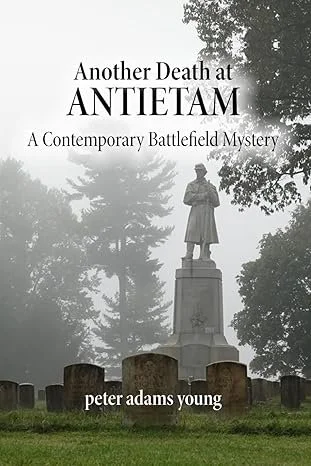
Another Death at Antietam by Peter Adams Young

Click on cover image to purchase a copy

MWSA Review

Peter Adams Young’s Another Death at Antietam weaves together four plotlines into a suspenseful tapestry of murder, human trafficking, illegal guns, and an unsanctioned militia. The blend of historical and well-researched facts with a modern-day “who-done-it” leads readers on a merry chase, wondering where they will end up.

Against the backdrop of one of America’s bloodiest battles at Antietam, Young draws the audience into its lingering echoes, its wounds still unhealed after more than a century. His band of characters is diverse, entertaining, well-developed, and credible.

The dialogue is especially well-crafted, sounding natural while revealing motivations, tensions, and personalities that deepen character development. The details of their exploits are vivid, and the language colorful.

Young presents a careful balance between history and mystery. Despite minor editing errors, the storyline is entertaining and thoughtful. Readers will glean tidbits and insights into a past that remains among the most painful in our nation’s history.

Review by Sandi Cathcart


Author's Synopsis

SEPTEMBER 1998

Compelling echoes of the Civil War resonate to the present day.

Five days before the 136th anniversary of the bloodiest day in American history, the body of a young man is found at the center of the Antietam National Cemetery. He is wearing the uniform of a Union Army private. Annie and Mike Davis are drawn into the leisurely official investigation into the mystery of the young man’s death, eventually encountering intertwined evidence of human trafficking, illegal arms smuggling, and a self-styled constitutional militia unit.

This is the second of the series of modern-day murder mysteries by award-winning author Peter Adams Young. The first of these, "Another Death at Gettysburg", is set in and around that historic battlefield.

Format(s) for review: Paper or Kindle
Review genre: Fiction—Mystery/Thriller/Crime
Pages/Word count: 434 / 119,158

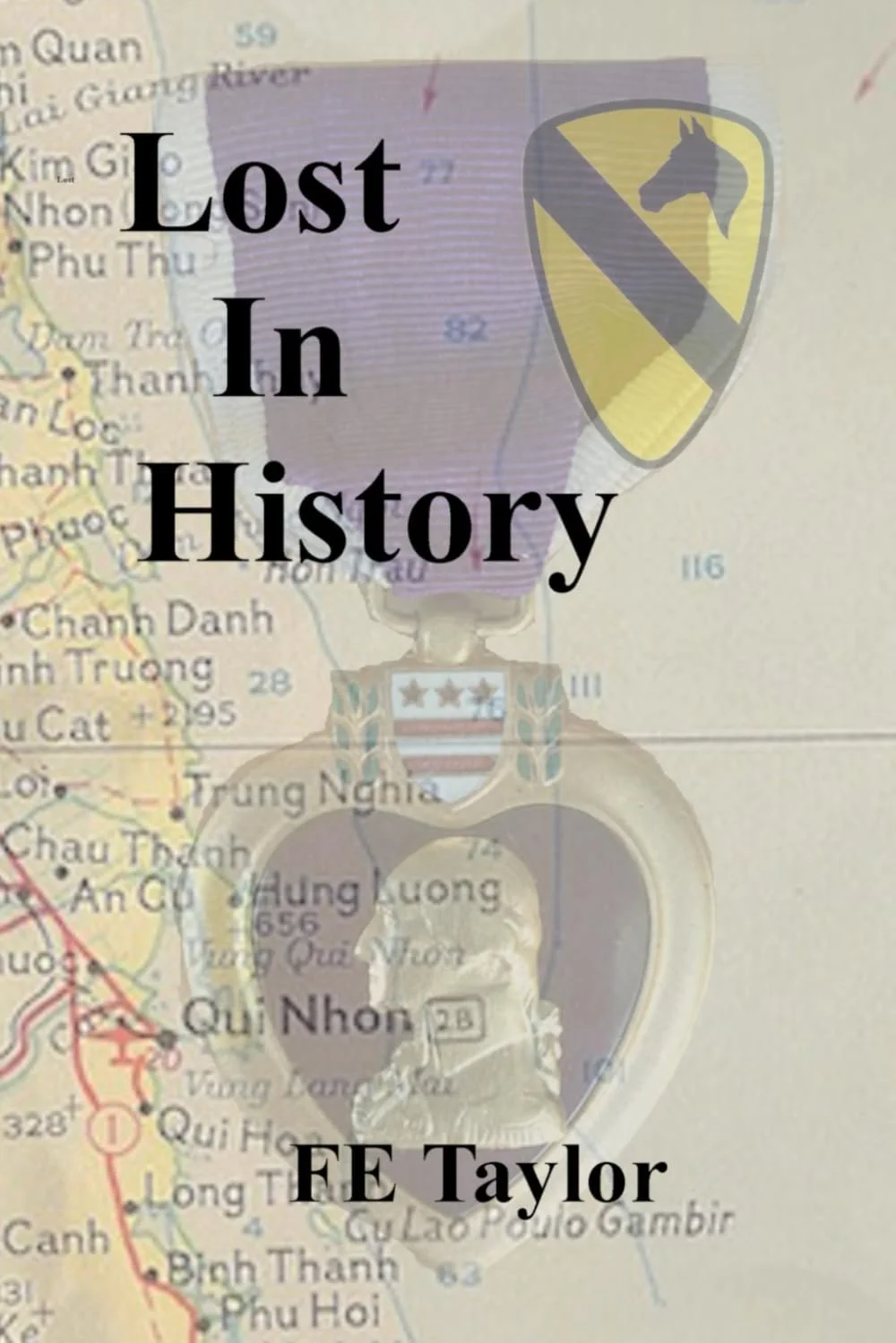
Lost in History by FE Taylor

Click on cover image to purchase a copy

MWSA Review

F. E. Taylor waited 50 years to write about his Purple Heart experience in South Vietnam, claiming that it was his grandson’s playing soccer in Hanoi, Vietnam —he “played against the grandchildren of men I once faced in combat”—that inspired him. But his memoir, Lost in History, shows he’d been composing these pages in his mind his entire life.

Throughout his unexceptional childhood in the small-town American South, Taylor was a shrewd observer, inclined by nature to be skeptical of convention. He did well in school, graduating with a degree in forestry from Clemson University, married his high school sweetheart, and foresaw a professional career doing what he loved. Drafted into the Army and becoming a combat infantry soldier, he mentally recorded his military life as a radical departure from the civilian path he had imagined. The book was being written all along.

Placing that personal experience into the context of U.S. and world history, however, took years of reading and reflection as he returned to join a “generation of forest managers [who] achieved remarkable success, quadrupling the productivity of the southeastern forests in the U.S. … producing more timber than is harvested.” His depiction of specific events at home and overseas takes readers into his world, from finding himself in the Army’s melting pot of race, culture, and economic class to discovering the mix of peoples and pasts in Southeast Asia. The physical and psychological demands of war led him to discover his own bedrock beliefs.

Taylor concludes that American leaders at home—and some military leaders in the field—made errors in judgment that led to tragic human costs for his country and others. Taylor also connects some of those mistakes to disparities of status in America’s past that continue today. At the same time, he commends his fellow soldiers, “dust-off” helicopter pilots, medical staff, and Red Cross volunteers.

One of his most telling conclusions should not be “lost in history,” especially at this time of national debate: “As I’ve mentioned before, what makes America truly exceptional is not that we always get it right the first time, but that we have the capacity to reflect, learn, and rectify past mistakes, such as the legacy of slavery.”

He writes for his generation. I hope others will read.

Review by Michael Lund


Author's Synopsis

In the grand sweep of history, this memoir may seem as small and insignificant as an atom in a vast universe. Yet, for the combat infantryman whose story it tells, these experiences form a monumental part of his life. Unwittingly shaped into a warrior through the trials of childhood and adolescence, he is unexpectedly drafted into the Vietnam War, an event that changes his world forever.

Format(s) for review: Paper or Kindle
Review genre: Nonfiction—Memoir/Biography
Pages/Word count: 277 / 64,794