2026

Waiting at the Red Gate by Weston Roudebush

Click on cover image to purchase a copy

MWSA Review

Waiting at the Red Gate is an intensely personal narrative of the author’s journey to maturity and the affirmation of his guardian role in the lives of his family and community. As his personal story progresses, he learns self-awareness through the examples of others and how to develop inner peace in the face of adversity. The image of a gate is a recurring symbol throughout, representing transition points in the author’s life and the challenges he faced at each juncture.

Individual chapters tell of his arrival at significant “gates” in his life and the trials each decision point presents. These tests range from confrontations as a security guard at a stateside US Air Force base to facing a crisis of conscience in deciding whether to report a heinous crime and risk his own family’s peace and safety. Each situation offers a learning experience for the author and, in turn, an opportunity for him to share with his readers guidance on how they might respond when faced with similar circumstances.

Chapters conclude with a set of “Quiet Questions” designed to lead his readers to reflect on their own life choices. Relevant quotations from Scripture add further guidance.

The author is a man of faith, and he is clear that his beliefs are a significant component in the underpinnings of his life, complementing his marriage, family, and community.

While relating his own journey, he offers suggestions for his readers as to how they can construct solid personal anchors that will enable them to withstand their inevitable life challenges.

Review by Peter Adams Young


Author's Synopsis

Some gates you cross change everything. Others you barely notice until you look back and realize how far you've traveled.
Standing at his red gate, waiting for his family to come home, Weston Roudebush reflects on the journey from a quiet kid who kept his head down to a father teaching his boys that the strongest hands are often the gentlest.
This isn't a book about dramatic moments or battlefield heroics. It's about the spaces in between where character is forged in kitchens and bedrooms, where steady hands learn to build instead of break, where quiet strength speaks louder than any war cry.
Through stories spanning military service, law enforcement, fatherhood, and faith, Weston maps the territory where boys become men not through violence, but through the courage to remain tender in a hard world. These foundations are built not with concrete and steel, but with patient presence and the willingness to stand watch at the gates that matter most.
For fathers raising boys into men. For veterans learning to live with what they've carried. For anyone who has discovered that the deepest strength often speaks in whispers.
This is a book about building something that lasts, one quiet choice at a time.

Format(s) for review: Paper or Kindle
Review genre: Nonfiction—Memoir/Biography
Pages/Word count: 225 / 56,158
The Four Stars of Leadership: Scientifically-Derived Principles from the Experiences of America's Highest-Ranking Leaders by Tom Collins, MD, MS

Click on cover image to purchase a copy

MWSA Review

The Four Stars of Leadership opens with a convincing argument about what sets this work apart from most leadership “how to” manuals on the market. While many books in this genre cite known and respected thought leaders in the field, this author chose to concentrate on the experiences of proven practitioners as the basis for his empirical research. His subjects are retired four-star generals and admirals representing every branch of the U.S. military.

The result is a thoroughly entertaining and enlightening work that will appeal to any reader seeking to better address the challenges of leading complex organizations. As a bonus, a number of top military leaders share their stories of facing critical decisions in their careers.

To establish the baseline for his research, the author conducted extensive interviews with fifty-one men and women who had achieved the highest level in their respective military services. All interviews were structured with a consistent set of questions. He then analyzed the lessons gleaned from the experiences of these leaders, representing more than 2,000 years of collective service, to arrive at an initial set of 115 leadership themes from his subjects’ testimonies. These themes were systematically grouped into subsets along several dimensions to arrive at a manageable suite of four core elements of effective leadership:

• Character
• Competence
• Caring
• Communication

Discussion of each of these four attributes forms the bulk of the work via three chapters treating in turn: (1) the essential components of the overarching principle, (2) discussion of its significance, and (3) cogent guidance on application. The personal reflections of four-stars included in the author’s study punctuate every chapter. Readers can discover how dozens of leaders were confronted by unique challenges and how they all found ways to overcome them.

The author has carefully and convincingly built solid scientific foundations for defining his four underlying leadership principles. These abstract concepts are powerfully augmented by the real-life experiences and conclusions of proven top-level military leaders. Although rooted in the experiences and lessons learned by high-ranking U.S. military leaders, the book’s conclusions are readily transferrable to other disciplines in the civilian world, including business, industry, academia, and social services. It would be a valuable addition to any leader’s bookshelf.

Review by Peter Adams Young


Author's Synopsis

The Four Stars of Leadership unveils the hard-won lessons of 51 of America’s most accomplished leaders—retired Four-Star Generals and Admirals—who led through crisis, commanded with integrity, and built teams that thrived under pressure. In an era of global uncertainty, rapid change, and deep societal division, great leadership is no longer a luxury—it’s a necessity.

Drawing from exclusive interviews and cutting-edge leadership research, Dr. Tom Collins distills their wisdom into four essential elements that form exceptional leadership: Character, Competence, Caring, and Communication. These principles transcend the battlefield, offering a proven system for leaders in any field—whether you’re guiding a hospital team, leading a business, or navigating the complexities of today’s rapidly changing world.

This book goes beyond theory, weaving together compelling personal stories from the highest levels of leadership with practical, science-backed strategies you can apply immediately. You’ll discover how to earn trust through unwavering integrity, sharpen your expertise to master your “battlespace,” cultivate genuine care for those you lead, and harness the power of clear, authentic communication.

The Four Stars of Leadership is an indispensable guide for leaders who strive not just to succeed—but to inspire, empower, and leave a lasting legacy of excellence.

Format(s) for review: Paper or Kindle
Review genre: Nonfiction—How to/Business
Pages/Word count: 306 / 80,000

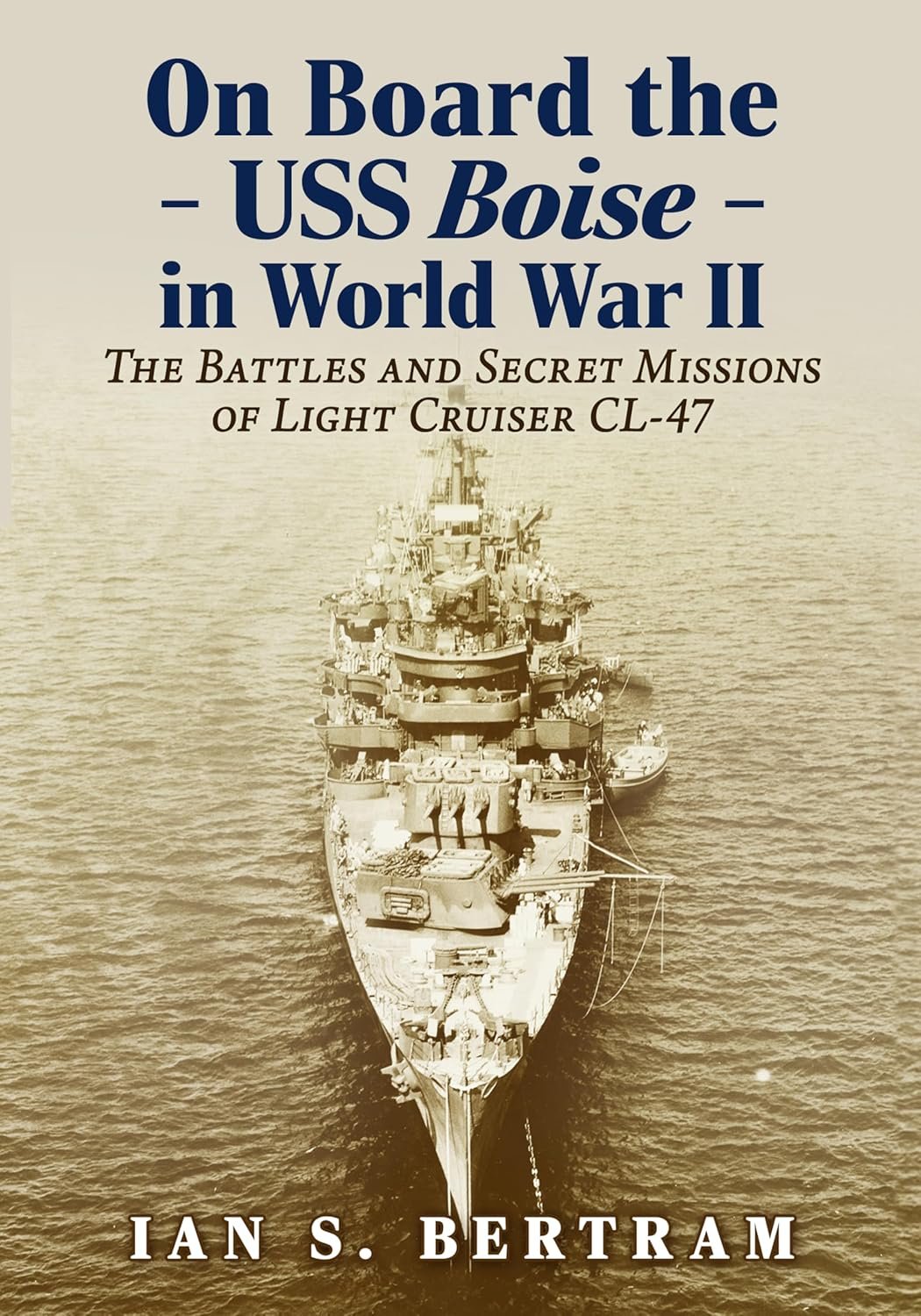
On Board the USS Boise in World War II: The Battles and Secret Missions of Light Cruiser CL-47 by Ian S. Bertram

Click on cover image to purchase a copy

MWSA Review

On Board the U.S.S. Boise in World War II takes readers from pre-war Pearl Harbor, Hawaii, through some of the most harrowing naval engagements of the early Pacific War. From there, the ship plays a vital role in the invasions of Sicily and Italy, providing critical naval gunfire to landing troops when distance and resources precluded effective airpower. Upon returning to the Pacific, supporting MacArthur’s army, the ship and its crew start the long road towards Tokyo, by way of Manila, to destroy the military forces of the Japanese Empire.

The author, a U.S. Air Force pilot with a graduate degree in history, uses the “log” of his wife’s grandfather, Donald “DB” Fitch, to thread through the story of the Boise. Using the wartime log of the enlisted sailor, the author is also able to pinpoint, in both place and time, other firsthand descriptions of the ship’s actions and exploits, along with detailed historical research. Through the story of Boise, a detailed account of many critical actions and campaigns emerges, and readers are given both the “big picture” and individual accounts, from pre-war to the end in 1945. Interspersed with the military action are glimpses of the life of an enlisted sailor, from exotic Pacific ports to scenes of the U.S. home front during wartime.

This book will be of interest to historians and fans of naval history, World War II history, and anyone who wishes to understand the hardships, bravery, and sacrifices on board a combat ship during war.

Review by Terry Lloyd


Author's Synopsis

The story of the USS Boise (CL-47) is one of fear, loss, endurance, fame, triumph, and pain. The light cruiser endured a remarkable career through the entirety of World War II, with a redemption arc that took its crew from the position of scapegoats to heroes, and ultimately to the vanguard of America's liberation forces.
One man, Donald "DB" Fitch, witnessed the entire conflict from his battle-station on the bridge. The ship conducted secret missions and fought at Guadalcanal, Sicily, New Guinea, and the Philippines. Through Fitch's eyes, this book relives the terrors and thrills of naval combat along with the pranks, shenanigans, and the rumors that were the lifeblood of a ship through four years of war. Fitch and his friends fought for each other and their country, and in the end, they left their mark on history.

Format(s) for review: Paper or Kindle
Review genre: Nonfiction—History
Pages/Word count: 235 / 100,000

Where There's Smoke: A Texas Love Story by Rees Walther

Click on cover image to purchase a copy

MWSA Review Pending


Author's Synopsis

WHEN HOME ISN'T WHAT YOU LEFT... BUT WHERE YOUR HEART STILL LIVES.

Mae Whitaker left her small Texas hometown years ago, trading rolling hills and slow-smoked barbecue for the fast pace of New York City. But when her mother’s illness calls her back to Twinsdale, she finds herself at a crossroads—one that forces her to rekindle lost connections and question everything she thought she wanted.

As Mae navigates grief, family, faith, and the uncertainty of her future, she crosses paths with Jim Carter—the boy she once knew, now a man who has built a quiet life in the heart of Texas. Mae's return was supposed to be temporary. But the more time she spends in Twinsdale, the harder it is to resist the pull of a place—and a man—that feels more like home than she ever expected.

With the unwavering support of her best friend Jenny, the quiet wisdom of her parents, and the warmth of a community that reminds her of what is really important, Mae must decide:

Will she return to the life she built in New York—or embrace the one waiting for her back home?

A slow-burn romance of second chances, healing, and the strength of love in the face of loss.
Where There’s Smoke is a soulful, small-town love story filled with heartfelt moments, vivid characters, and the tender ache of rediscovery. Set against the smoky backdrop of rural Texas, this contemporary Western romance explores how grief can shape us—but love is what ultimately defines us.

Perfect for readers who love:

The emotional depth of Virgin River and Pack Up the Moon
The lyrical romance of The Notebook and Before We Were Strangers
The warmth of Things We Never Got Over and The Secret Life of Bees

If you’ve ever grieved someone deeply, or felt pulled between two versions of yourself... this story will speak to you.
With evocative prose and emotionally grounded characters, Where There’s Smoke is a heartfelt journey through the spaces we lose and the homes we find again.

Format(s) for review: Paper or Kindle
Review genre: Fiction—Romance
Pages/Word count: 344 / 61,069

I Remember You: Between memory and silence, a voice remains. by Patrick J Hughes

Click on cover image to purchase a copy

MWSA Review

Patrick J. Hughes is a sharp, unsentimental observer of life at sea. Many of the poems are rooted in detachment cycles, storm evacuations, carrier politics, and the absurdities of military routine. Poems like “Storm Prep,” “Det Life,” “Generations of Fire,” and “Tiger Guide with No Tiger” capture the texture of Navy life with insider authenticity: mildew in the barracks, mystery meat, long hours, bad coffee, and leadership theatrics. There is dry humor, controlled frustration, and an unvarnished honesty that feels genuine. The darker poems, which explore depression, grief, and emotional isolation, reveal a different voice, one that is deeply personal. Many of these poems are filled with vivid fresh lines that will resonate across many situations. In "Sitting in the Dark," Hughes pens "Trying to drown out the pain with music / The music is helping / It's making it worse."

Hughes uses poetic forms, both narrative and rhyming, with great skill. However, if you are looking for poetry evocative of a recruiting poster, this is not that book. Hughes makes no attempt to romanticize service. Instead, this collection offers a no-holds-barred account of one sailor’s view of Navy life, its monotony, politics, quiet endurance, and personal cost. That honesty will resonate with many readers, particularly those who have served.

Review by John Cathcart
 

Author's Synopsis

From the psych ward to flight deck, from whispered goodbyes to quiet strength, I Remember You is a raw and unflinching book of poetry and prose by Navy veteran Patrick J. Hughes. Seamed from the unvarnished material of trauma, healing, fatherhood, friendship, and mental illness, these poems will find an echo within anyone who's ever stood in a doorway and wondered how to move forward.

With a raw honesty and with unexpected graciousness, Hughes charts life after conflict, the unseen scars of depression and PTSD, and the lifelines of salvation that bind us when we are breaking. This is a debut poetry collection as testament to survival—not a destination, but an everyday act of bravery.

Whether you’ve served, loved someone who has, or simply struggled in silence, these pages hold space for your story, too. If you’ve ever needed to feel less alone, this book remembers you.

Format(s) for review: Paper or Kindle
Review genre: Poetry—Poetry Book
Pages/Word count: 121 / 14,705

The Resurrected Pirate: The Life, Death, and Subsequent Career of the Notorious George Lowther by Craig S. Chapman

Click on cover image to purchase a copy

MWSA Review


The Resurrected Pirate: The Life, Death, and Subsequent Career of the Notorious George Lowther by Craig S. Chapman details the life and times of British Royal Navy seaman George Lowther from 1715 through his death as a lieutenant in the British Royal Navy in 1746. Lowther’s life ebbs and flows like the sea he committed his life to, with escapades including mutiny from the Royal African Company involved in slave trading to becoming a swashbuckling pirate across the high seas. The author’s well-researched work sheds light on Lowther’s reactions to his surroundings, perceived necessity for the mutiny to save his men, and his unlikely pardon and acceptance back into the naval service he abandoned.

The book is about far more than George Lowther; it is a treatise on piracy in the eighteenth century. Readers learn of the barbaric acts of pirates at the time including slicing off body parts, setting foes on fire, and the extreme fear pirates instilled in their prey. George Lowther is compared to other pirates of the time, some of whom he teamed up with to save himself and his crew in particular circumstances. Chapman describes the others as far more nefarious than Lowther and almost portrays him as a victim of his circumstances.

In the Prologue, the author explains the following: “This book preserves the vocabulary and jargon of British tars from the age of sail, not just for accuracy but also to establish the atmosphere of being on the deck of Lowther’s pirate sloop as he trolls the sea lanes and bears down on his prey.” The authenticity of the language set a tone and put the reader in the place and times of the setting. The illustrations throughout also played an active role in helping set the scene.

I would highly recommend this book for historians and fans of the real-life pirates of the Caribbean who want to read about an interesting time in history and a fascinating individual who committed heinous crimes and ended up being redeemed by his country in an unusual twist of fate.

Review by Valerie Ormond


Author's Synopsis

The Resurrected Pirate reveals the astonishing life story of George Lowther, the most singular buccaneer from piracy’s golden age. This book explores his motivations, mistakes, tactics, and leadership as he trolls for victims and chases down his prey. Based on meticulous research, Lowther’s years ravaging the Caribbean and North Atlantic provide insight into the sordid lives of sea bandits. The brutality of the age comes into focus as he and his partners inflict robberies, torment and sometimes murder, culminating in their own deaths by violence, hangings, and Lowther’s supposed suicide in 1723. A stunning revelation adds a whole new chapter to his story. Lowther later re-emerges from a contented civilian life to help Britain in time of war and thereby restore his reputation. Commissioned in the Royal Navy, Lieutenant Lowther throws himself into capturing part of Spain’s empire in a dramatic quest for redemption.

Format(s) for review: Paper Only
Review genre: Nonfiction—Memoir/Biography
Pages/Word count: 240 / 90,000

Hilo Dome by Jack Bartley

Click on cover image to purchase a copy

MWSA Review

Hilo Dome by Jack Bartley is a sci-fi novel for young adults. It takes place 200 years in the future after a global nuclear war has left survivors in isolated domes across the world. They no longer communicate, so survivors in the Hilo, Hawaii, dome have no way of knowing what, if anything, goes on outside the dome. For all they know, the air is still contaminated, and mutant beasts roam the forests and mountains.

Nathan is a 14-year-old teen who doesn’t fit in with his peers, since he was born without a larynx. He can hear, read, and use American Sign Language, which he and his parents found in an ancient book. He also was born with exceptional hearing and an ESP-like ability to hear others’ thoughts. When he overhears a plot by the mayor, he flees, chased by the mayor’s cronies. Surrounded, he jumps into the swiftly flowing river and is carried outside the dome. What he finds there is danger and plots by others who have survived and would like to take over the dome.

Bartley has crafted a post-apocalyptic world that is believable and a plot that is exciting and engaging. His characters ring true.

Review by Betsy Beard
 

Author's Synopsis

Two hundred years in the future, the isolated domed city of Hilo, Hawaiʻi, is one of the few cities to have survived the Great War, a global nuclear holocaust. Nathan Ohana, a teenager living in Hilo, is having trouble fitting in at his school. He doesn’t look like anyone else, and he is unable to speak. He does, however, possess a special sensory capability similar to ESP. A blessing and a curse, this ability enables him to discover a disturbing and possibly dangerous plan by the government of Hilo, one that would threaten the existence of the Ferals, the people who survived the radiation and are living outside the dome. When it becomes evident to others that he knows something that he should not, Nathan is pursued by the Hilo police and is accidentally swept into an alien and frightening existence outside the dome.

Kayli Pahinui, a Feral, rescues Nathan—as he is being attacked by a large wild boar—and brings him home with her to the village of Honoliʻi. Puzzled by what he sees at first, Nathan comes to find he belongs in this very different world. However, a peaceful existence in a beautiful village was not to be. A new threat arises from the leeward side of the island that could mean the downfall of both Hilo and Honoliʻi. Nathan, Kayli, and Kayli’s father, Sam, face incredible dangers and challenges as they try to warn the citizens of Hilo and unite with the people who shunned them so many years ago before the war. By working together, it just may be possible to overcome this new and deadly threat.

Format(s) for review: Paper or Kindle
Review genre: Children & Young Adult—Young Adult (fiction or non-fiction)
Pages/Word count: 175 / 65,000

The Mapmaker: A Novel of World War II by Tom Young

Click on cover image to purchase a copy

MWSA Review

The Mapmaker: A Novel of World War II by Tom Young, is well written fiction based on real events and real people in 1943 and 1944. The story follows the difficult and treacherous happenings of the French Resistance as well as the efforts of the British pilots who assist them. There are various groups of resistance fighters with different missions: damage the railroads, delay convoys, gather intelligence on the location and size of troops. Among the many problems they face are that radio operators who contact England in code are targeted by the Germans, neighbors cannot be trusted, and captured resistance fighters are tortured for information about other members of the resistance and their plans. The Germans are very effective at torture.

Charlotte is half French and half American with map making and observational skills critical to the British bombers, but she must get her maps out of France. Phillippe is a French pilot who joined the British Royal Air Force after the French pilots were decommissioned by the Vichy government. One of his missions is to find Charlotte and bring her and her maps to England regardless of the cost to her colleagues, many of whom die so that Charlotte can escape the Germans. Charlotte has critical targeting information for the Allies on railroads. As D-Day nears, Phillippe takes timely aerial photos which Charlotte analyzes for the Allies. As Author Young says, “The Mapmaker demonstrates how individual courage and sacrifice set the stage for victory.”

Review by Nancy Kauffman
Author's Synopsis

Resistance operative Charlotte Denneau has critical targeting information for the Allies, and the Gestapo knows it. On the run across occupied France, she must prioritize her mission over the lives of the agents and civilians she needs to help her escape. Germans are taking down Resistance networks with disastrous results. Agents are being arrested, tortured, questioned, and turned. Charlotte never knows whom to trust. She communicates in coded radio calls to London, with the enemy always listening. More than anything, she needs a flight out—before the Nazis drag her to an interrogation chamber.

Philippe Gerard, a French pilot who joined the British Royal Air Force after the fall of France, faces an impossible mission: He must find Charlotte, land by moonlight to pick her up in a farmer’s field, and evade Luftwaffe fighters on the way back to England. But where is she? If he gets an all-clear signal over a dark pasture, is she really there? Or does the signal lure him into a trap?

In the critical weeks before D-Day, every contribution counts: A well-drawn map, a timely aerial photo, or a daring landing in a muddy field might make the difference between triumph and defeat. Inspired by real-life events from World War II, The Mapmaker demonstrates how individual courage and sacrifice can set the stage for victory.

Format(s) for review: Paper or Kindle
Review genre: Fiction—Historical Fiction
Pages/Word count: 296 / 86,000

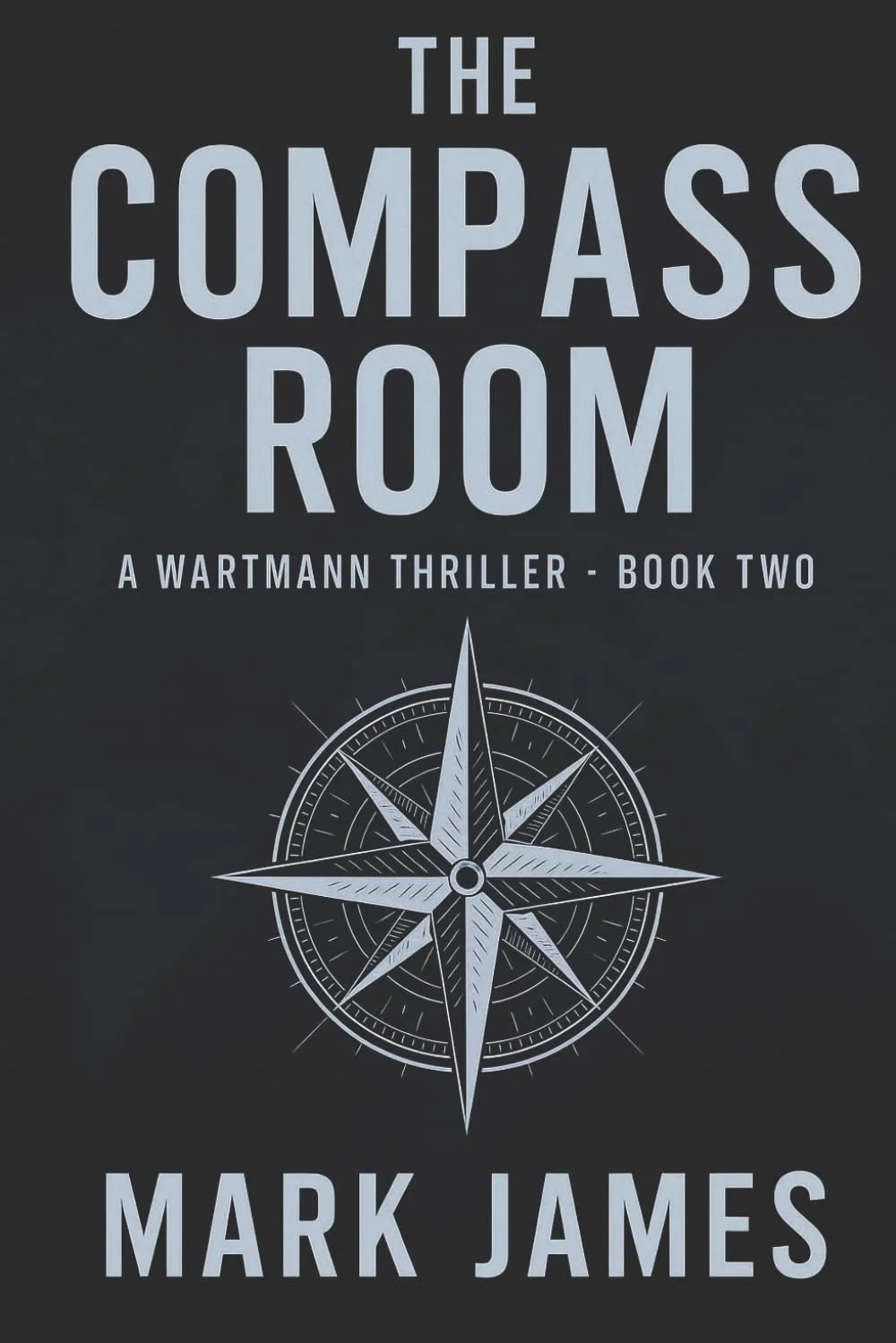
The Compass Room by Mark James

Click on cover image to purchase a copy

MWSA Review

In The Compass Room, Mark James delivers a high-octane geopolitical thriller that explores a world on the brink of collapse. The narrative follows Vice President George "Daddy Longlegs" Wartmann as he navigates the fallout of a catastrophic naval disaster that has left the United States vulnerable and its allies indecisive.

The story blends technical military strategy with the morally gray side of high-stakes diplomacy. Operating from his private study—the titular "Compass Room"—Wartmann emerges as a tenacious protagonist willing to cross ethical lines to protect a fractured nation.

Intellectually engaging and relentlessly paced, this novel is for fans of political and military fiction. It offers suspense and provides a sobering reflection on the architecture of the modern global order. The Compass Room is the gripping sequel to the Friendship Games — a Wartmann thriller that stands on its own.

Review by James Elsener


Author's Synopsis

The gripping sequel to the Kirkus-starred Friendship Games — The Compass Room is a Wartmann Thriller that stands powerfully on its own.

The war was over before it even started.

In the aftermath of disaster, more than 200,000 Americans are stranded in hostile territory, and Washington reels from a conflict it never imagined losing. Across Europe, unrest spreads while America's allies falter, divided and indecisive — much like its own President. In contrast, Turkey moves boldly to expand its reach, while Russia and China seize the moment to press their advantage.

Vice President George "Daddy Longlegs" Wartmann now faces his greatest test: holding a fractured nation together as political polarization deepens, impeachment looms, unrest grows at home, markets crash, and enemies maneuver abroad. Every choice carries peril, and survival may depend on finding direction in a world turned upside down.

The war might have been over before it started… but one man refuses to accept defeat, and he knows the story is only beginning.

Format(s) for review: Paper or Kindle
Review genre: Fiction—Mystery/Thriller/Crime
Pages/Word count: 353 / 71,564

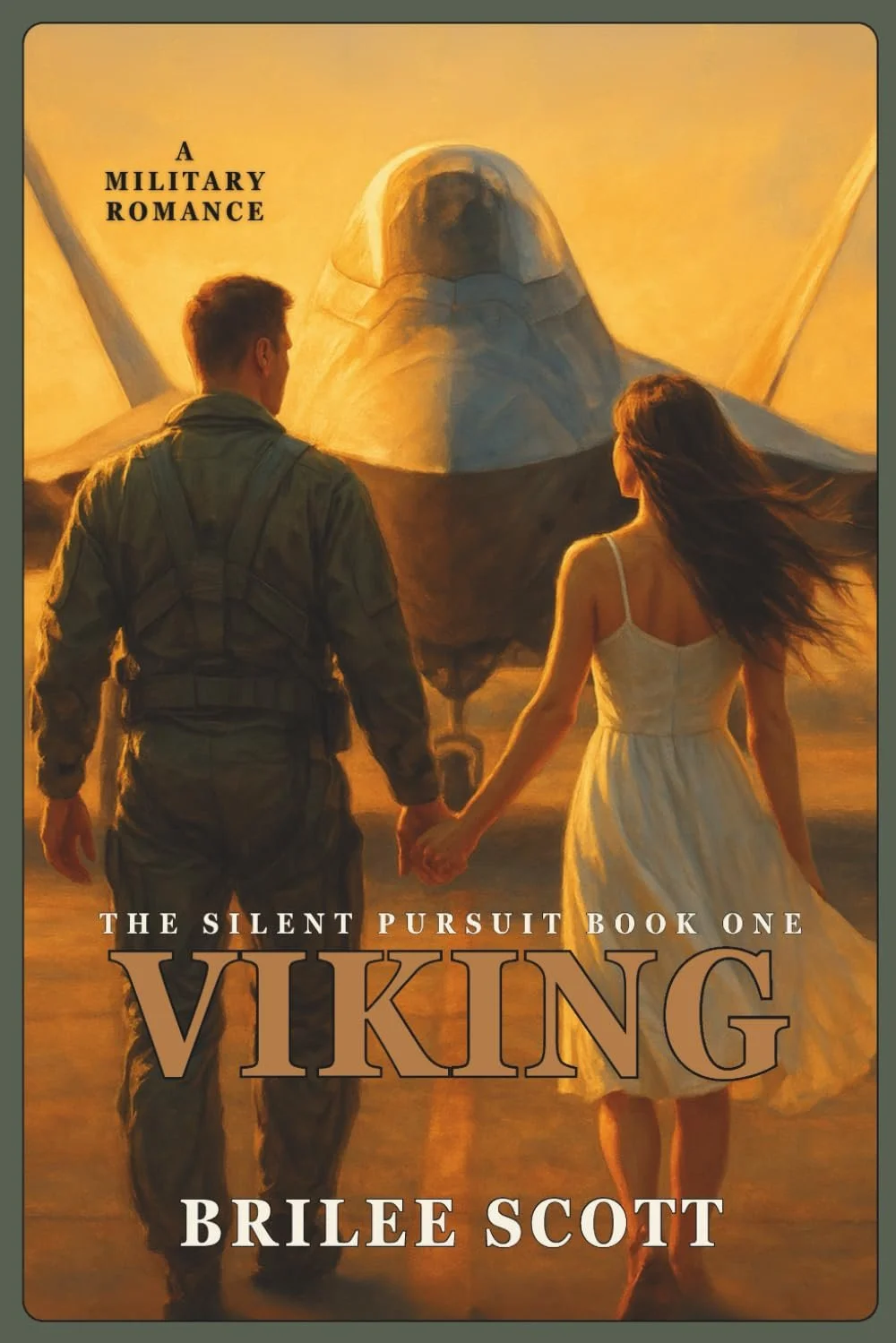
Viking by Brilee Scott

Click on cover image to purchase a copy

MWSA Review Pending


Author's Synopsis

HE’S HER REFUGE. SHE’S HIS WAR.

Fifteen years ago, I entered the United States Air Force Academy and never looked back. Becoming a fighter pilot, protecting my country, pushing limits—this was the only future I saw for myself. Until one mission changed everything. A split-second decision turned the sky from a place of freedom into a battlefield I can’t escape.
Lila was supposed to be a memory, but she never faded. And now she’s back—embedded in my squadron, my jet, and my head. Wanting her isn’t just reckless. It’s dangerous. But I’m not sure I have the strength to stay away.

I know what it means to lose someone to the call of duty. The missing man flyover. The folded flag. The silence that follows. It broke me once—and I promised myself I’d never risk that kind of pain again.
I thought I’d made my peace with Vegas. With that night. With him. But Logan was never meant to be forgotten. Now, every look, every word, and every moment pulls me closer, even when I know better.
Because the truth is simple—Loving him could destroy me.
But losing him again? That might ruin me completely.

Format(s) for review: Paper or Kindle
Review genre: Fiction—Romance
Pages/Word count: 374 / 100,000

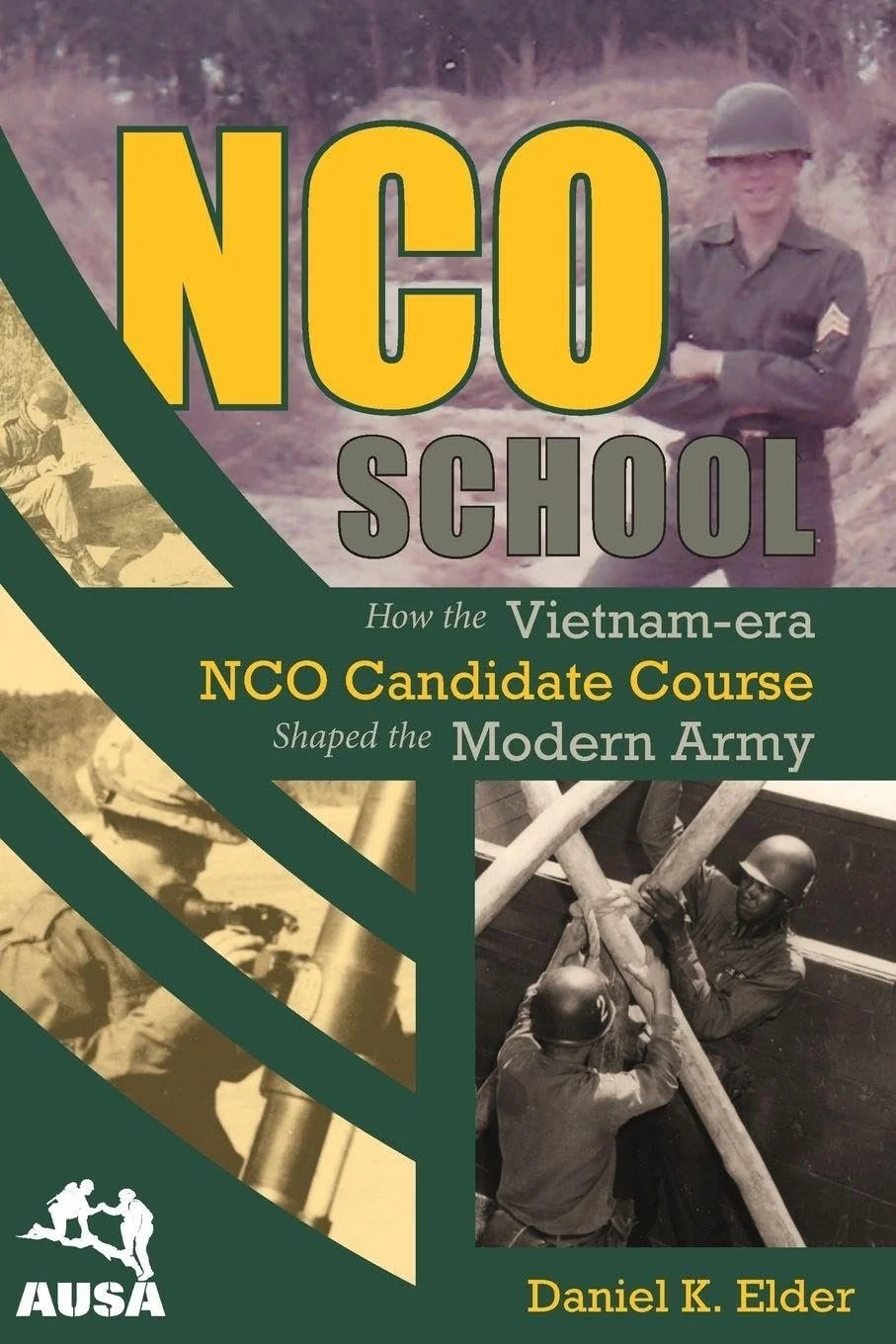
NCO School by Daniel K. Elder

Click on cover image to purchase a copy

MWSA Review

NCO School by Daniel K. Elder contains a wealth of information that is interesting and important for students of military history as well as current and future military policy makers, especially those involved in training and career development for noncommissioned officers. Thorough and detailed research builds a picture of the context, both inside and outside the U.S. Army, which led to creation of NCO schools during the Vietnam War.

The second year of the Vietnam War saw a critical shortage of NCOs, the sergeants who led squads and platoons in combat. This book describes how the U.S. Army met this need by creating, for the first time in its history (other than a few unit-specific iterations) a formal course of instruction to develop noncommissioned officers from among promising enlisted personnel. The author describes how novel this was and how controversial among some in the rank and file. But the concept worked and provides a template for the military should a similar need arise again.

NCO School is the only definitive history of a program that served the Army and the nation well in a time of need. As such, it is an important resource for military trainers, planners, and senior leaders now and into an uncertain future.

Review by Jamie Thompson 

Author's Synopsis

This is the undertold story of the U.S. Army Noncommissioned Officer Candidate Course (NCOCC), a transformative yet overlooked chapter in military history. NCO School: How the Vietnam-era NCO Candidate Course Shaped the Modern Army unveils the rigorous training and complex legacy of a program designed to rapidly produce combat-ready leaders during the Vietnam War. Often dismissed as "Shake 'n Bake" NCOs, these men faced harsh scrutiny and intense pressure despite their vital role in military operations. This meticulously researched book challenges the myths and stereotypes surrounding NCOs and their training, highlighting the program's impact on the NCO Corps' evolution and its enduring lessons for military leadership. Drawing from firsthand accounts, historical records, and personal reflections, author Daniel K. Elder offers a comprehensive narrative that not only honors those who served but also provides critical insights for today's military scholars and practitioners. A must-read for anyone interested in military studies, leadership development, and the hidden stories of those who led from the frontlines.

Format(s) for review: Paper Only
Review genre: Nonfiction—History
Pages/Word count: 278 / 70,381

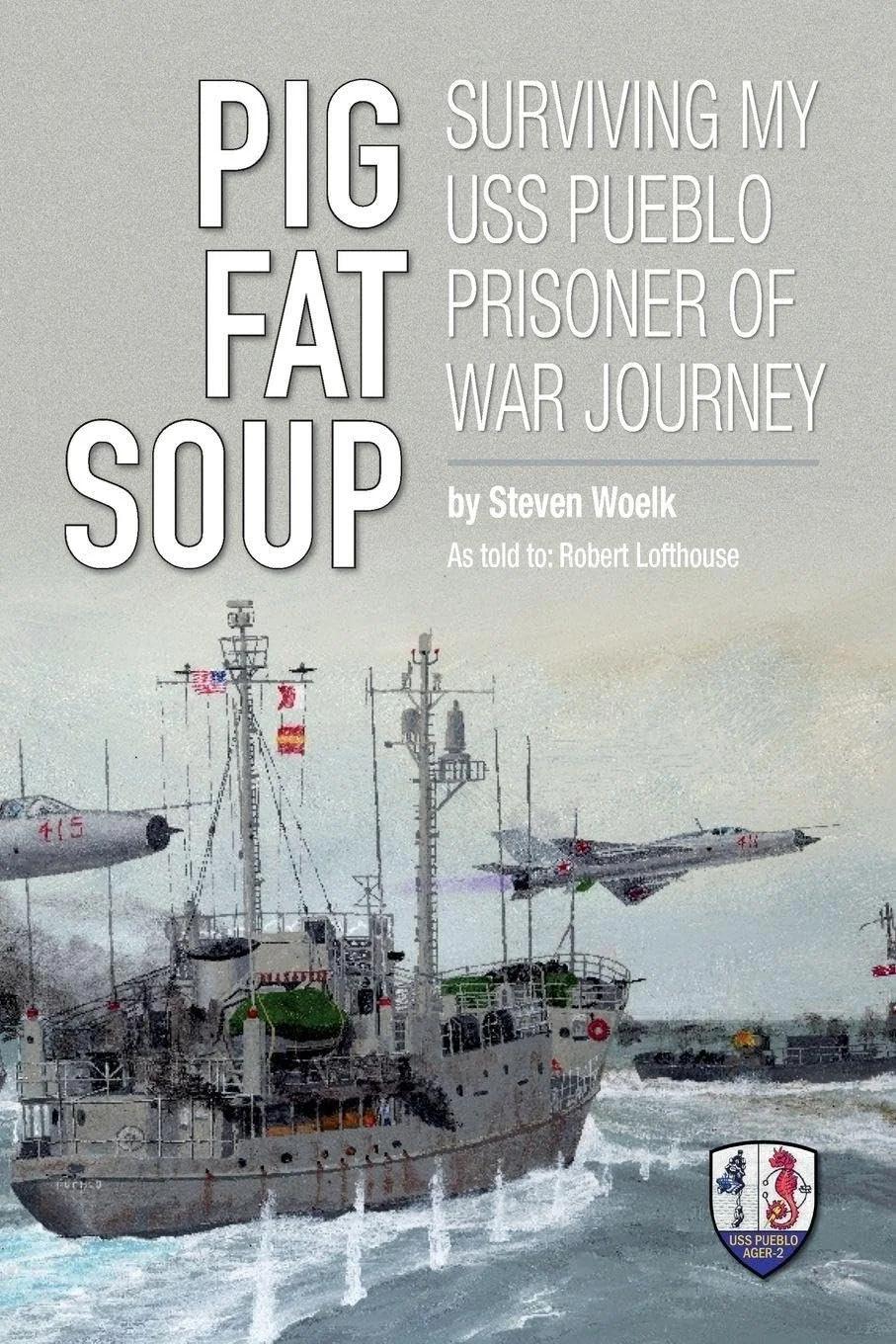
Pig Fat Soup: How I Survived My USS Pueblo Prisoner of War Journey by Steven Woelk, Robert Lofthouse

Click on cover image to purchase a copy

MWSA Review

Pig Fat Soup, the memoir of Steven Woelk, follows a young sailor aboard the USS Pueblo as he experiences capture and endures 11 months as a POW in the Hermit Kingdom of North Korea. How "Pig Fat Soup" became the title is revealed as the story of captivity unfolds. The book was well written as it takes the reader along with the author back to 1968 during the events of the attack on the Pueblo, the injuries sustained in the attack, and the horrid conditions that the crew endures at the hands of the North Koreans. The author recounts the brutal medical procedures, harsh treatment, forced confessions, and the constant propaganda that he and his fellow POWs lived through. The final resolution discusses the negotiation and release of the US POWs and their re-entry back into US society.

The author also reveals insights into the state of the U.S. military as well as the decision-making processes of the upper echelons of military power, some of the shortsighted decisions that led directly to the North Koreans gathering technology and intelligence from the capture of the USS Pueblo and passing it along to the USSR and other nations.

Overall, the book is insightful and allows the reader to get a small picture of the sacrifice that some of our military members experience in service to our country on our behalf.

Review by Randy Beard


Author's Synopsis

First-Hand Account Brings USS Pueblo Story to Life

It was one of the darkest days in United States military history, as the US Navy failed to protect the USS Pueblo in international waters off the coast of North Korea in January 1968. Pueblo was captured by the North Korean Navy shortly following the Blue House Incident and her crew was subjected to 11 months of captivity, torture and medical treatment with no anesthesia.

Steven Woelk was one of the 83 crewmen aboard Pueblo when it was captured. One sailor was killed in the capture, while the other 82 endured hardships that barely can be understood by rational people. Steven was severely injured, and this is his story.

Nearly 60 years later, Woelk has assembled his thoughts and memories into a captivating book: PIG FAT SOUP: Surviving My USS Pueblo Prisoner of War Journey. His story blends history, context and personal experience into a manuscript you won’t be able to put down.

Woelk describes the tranquility Pueblo’s crew felt in the days and weeks prior to the surprise attack by the North Koreans. Even though the US Navy did not equip Pueblo with the necessary weaponry to defend, they believed the safety of international waters would eliminate any antagonistic efforts by the enemy.

Woelk saw his best friend, Duane Hodges, die in the effort to destroy TOP-SECRET documents. Woelk was the most severely wounded of the remaining 82 crewmen. He underwent multiple surgeries in primitive conditions, without anesthesia. He then went through months of separation from the rest of the crew as he recovered. Upon his return to the rest of the captives, his fellow crewmen were suspicious that Woelk had been brainwashed by the North Koreans and placed in their midst to US Navy secrets.

Readers will be privy to the inmost thoughts of isolation, confusion, anxiety and anger that permeate the mind of a prisoner of war, during and after captivity. PTSD is common among most military veterans who have served in combat yet is unique in its manifestation to each one.

Upon its release, Pig Fat Soup earned Amazon best seller status at number 35.

Format(s) for review: Paper or Kindle
Review genre: Nonfiction—Memoir/Biography
Pages/Word count: 187 / 47,200

Seasons of New Mexico: A Natural High by John J. Candelaria and Wanda Jerome: Poetry; Jasmine Tritten and Rick Speed: Photography

Click on cover image to purchase a copy

MWSA Review

Seasons of New Mexico: A Natural High, is a collation of poems by John J. Candelaria and Wanda W. Jerome, with photographs by Jasmine Tritten (with some contributed by Rick Speed and John Candelaria) that portray the New Mexico landscape and culture. The book is divided into four sections named for the seasons, each section introduced by a dramatic full-page photograph that highlights the season, either with a close-up of a flower or a more distant landscape. Poems are presented in alternating fashion by poet, most accompanied by a small photographic image or a graphic of animal tracks or chili peppers.

The photographs are quite appealing. The colorful landscapes—the fiery sunrise and sunset skies, the misty mountain ridges, the bold pink roses against the dark mountains, a gold autumn tree against the bright blue sky—are stunningly rendered. However, most are too small to have the dramatic impact they deserve, and there are many that are similar, also cutting down on their impact. There are a few other photographs of people, animals, and historical and cultural objects,

The poetry, like the photography, has some appealing qualities. Wanda Jerome's poems muse quietly on the desert landscape and wind and clouds and creatures; John Candelaria's poems describe his memories of particular places such as El Malpais National Monument, the Museum of Natural History, and Los Alamos National Laboratory, adding interesting facts to his descriptions. 

I did find that simply picking up the book and flipping through to look at a photo and read the paired poem was often enjoyable, and I expect this is what other readers will also find.

Review by Nancy Arbuthnot
 

Author's Synopsis

A poetic picture of the many ways New Mexico calls people to love her land - the flora and fauna - the diverse cultures that make her The Land of Enchantment. This tapestry of poetry and photography captures both ancient and new places with words, colors and vistas - her glorious sunrises and blue skies - the TRUE essence of the homeplace known as New Mexico.

Format(s) for review: Paper Only
Review genre: Poetry—Poetry Book
Pages/Word count: 141 / 16,420

George Eaton's Odd Granny (Rode a Pig Home Yesterday) by Nancy Panko

Click on cover image to purchase a copy

MWSA Review

George Eaton’s Odd Granny (Rode a Pig Home Yesterday) is a lively and engaging picture book that immediately captures a child’s attention through its colorful illustrations and whimsical sense of humor. The artwork is filled with bold colors and exaggerated motion that invites young readers to explore each page. The illustrations do more than decorate the story; they actively enhance it, helping children follow the action and emotions.

The characters are quirky and memorable, especially Granny herself, whose larger-than-life antics provide both comedy and heart. George’s reactions—ranging from embarrassment to eventual confidence—are relatable for children facing school challenges, while Granny’s unconventional approach adds warmth and fun without overshadowing the child’s perspective.

The book offers value for young readers by blending humor with learning. The story introduces problem-solving and memory techniques in a way that encourages creativity. I’ll bet readers will try to remember the title whenever they come across the word geography from now on. With its strong appeal, engaging visuals, and positive message, this book is well-suited for home reading, classrooms, and library collections alike.

Review by John Cathcart


Author's Synopsis

George Eaton and his sister, Tilly, are doing their homework after school. George is struggling with spelling. He's stuck on one word.
The kids hear the sound of a motorcycle pulling into the driveway. George and Tilly run outside to greet their granny, an odd woman with bright red pigtails that flap in the wind when she rides her cycle. Granny tells George she can help with his problem.
Read about Granny’s crazy caper that makes headlines in the daily paper, and helps George with his spelling.
Award-winning author Nancy Panko has written another delightfully illustrated story that makes learning fun, using a tool called a mnemonic. Following the story is a list of commonly used mnemonics for school-aged children, as well as an activity to do in the kitchen with a grown-up.

Format(s) for review: Paper Only
Review genre: Children & Young Adult—Picture Book
Pages/Word count: 34 / ~1200

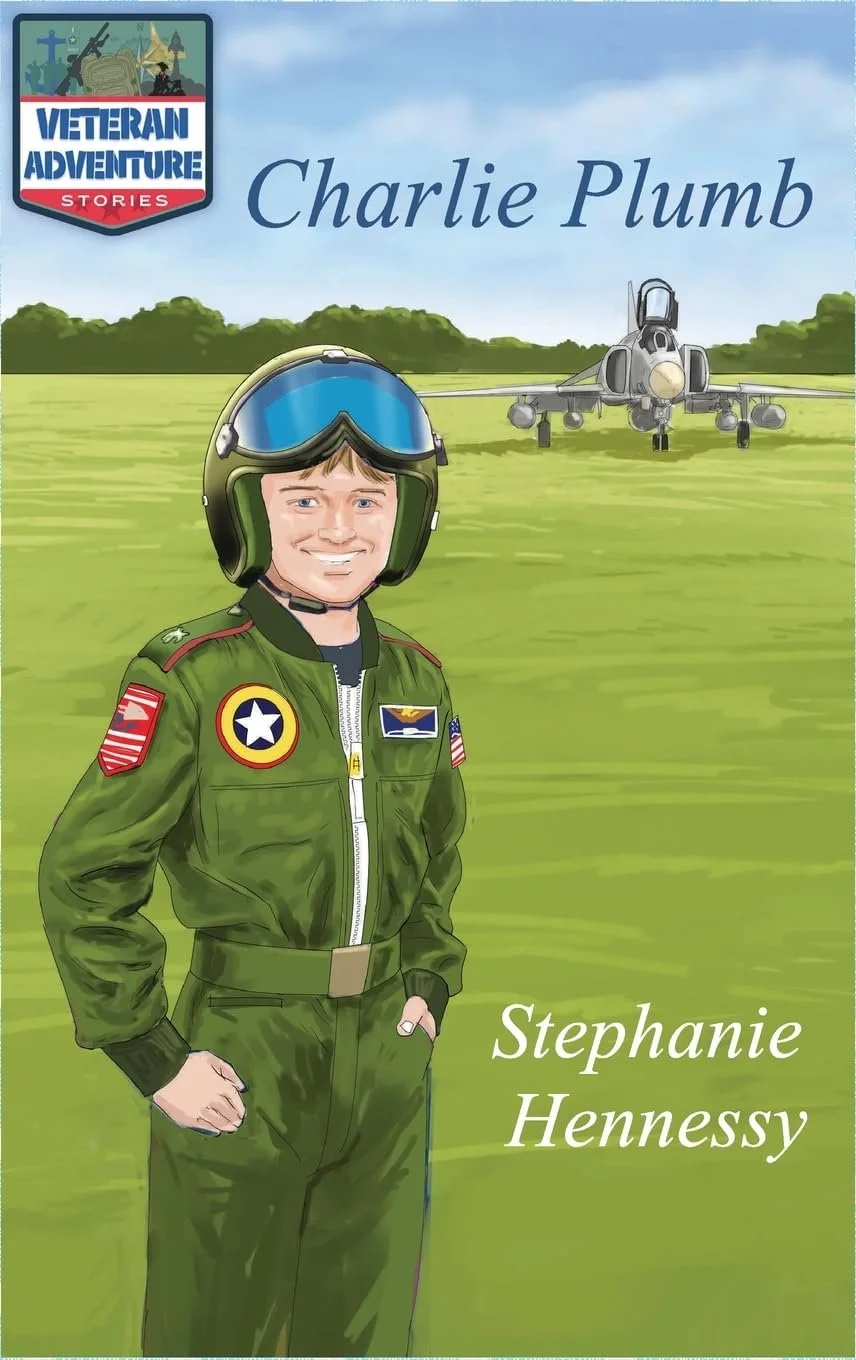
Veteran Adventure Stories: Charlie Plumb by Stephanie Hennessy

Click on cover image to purchase a copy

MWSA Review

Geared toward 6- to 9-year-olds, the story of Charlie Plumb handles difficult life situations with sensitivity and warmth. Charlie’s story starts as a baby and shows him growing up and learning lessons that he will take with him his whole life. The book provides an excellent example of an ordinary kid who learns to overcome great difficulty. There are enough examples of childhood learning to appeal to young readers. His situation as a prisoner of war is depicted with compassion. His homecoming and subsequent post traumatic stress are important themes as well.

The final pages offer some great ways for adults to help children interact with the book's material, while providing fun activities as well as a glossary. The pages about the cow pond will likely delight readers of all ages. Somber themes are handled delicately without whitewashing and without horror.

The illustrations are stellar. Characters look realistic, and facial expressions are meaningful. I was especially taken with the illustration of Charlie’s mother when she receives the news that he will be going to Vietnam. I recommend this book to parents who want their children to understand the sacrifices of military service. Charlie is a great role model.

Review by Betsy Beard
 

Author's Synopsis

Told from the perspective of the veteran, this powerful illustrated book shares the true story of Navy pilot Charlie Plumb—shot down during the Vietnam War and held as a prisoner for nearly six years. The story unfolds with honesty, warmth, and courage, connecting young readers to Charlie's life before and after his POW experience. The story invites young readers into a journey of survival, strength, and resilience.

Perfect for ages 6-9, this book gently introduces themes of perseverance, family, and hope in the face of loss. Includes author's note, updates of Captain Plumb's life now, and four educational pages.

Format(s) for review: Paper Only
Review genre: Children —Picture Book
Pages/Word count: 32 / 1,239

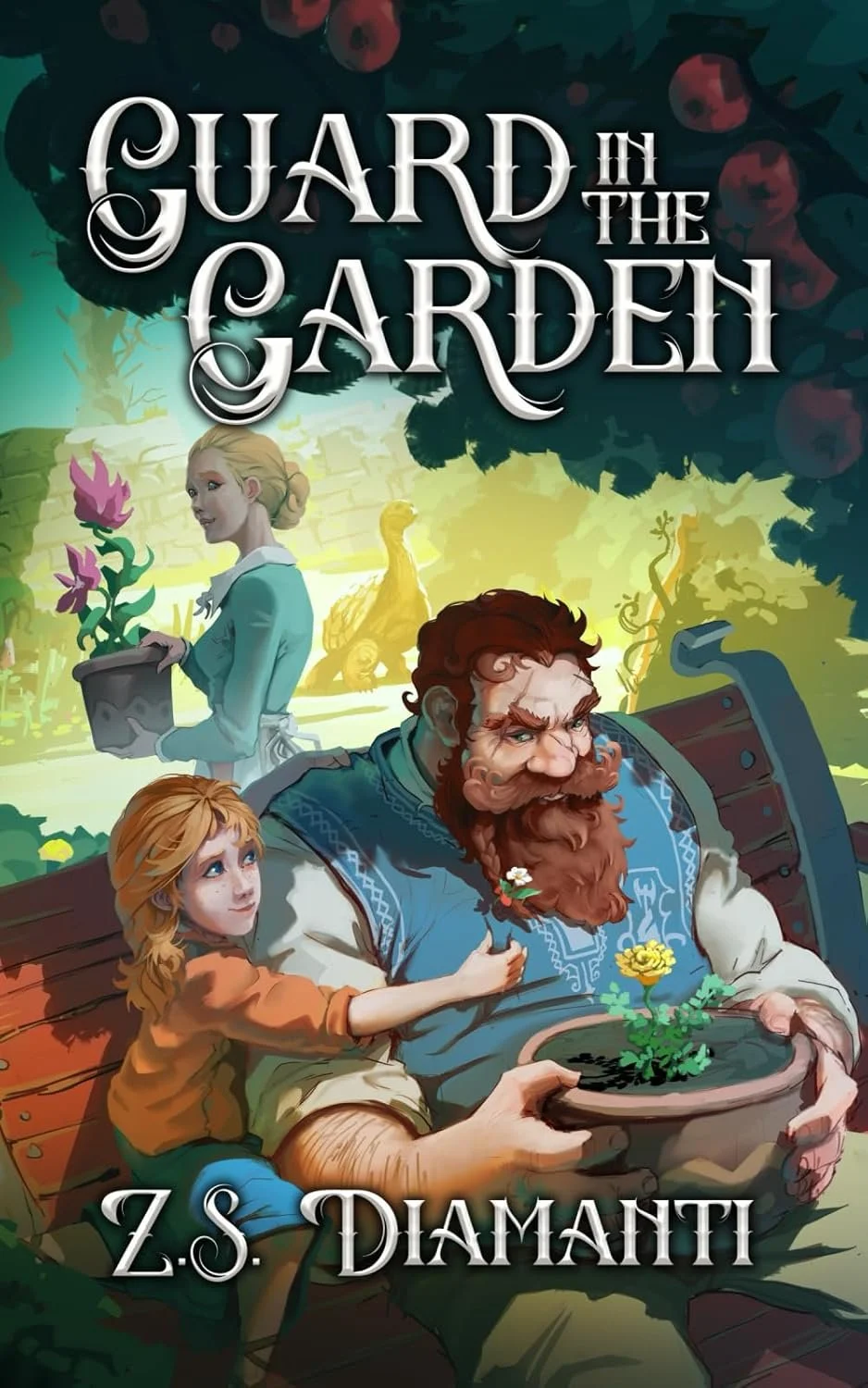
Guard in the Garden by Z.S. Diamanti

Click on cover image to purchase a copy

MWSA Review

Author D. S. Diamanti has provided us with an enjoyable read with his book Guard in the Garden. This fantasy's protagonist, Felton Holdum, is a dwarf, a warrior by profession who is nearly killed in battle at the beginning of the book. A severely injured leg has made it impossible for him to return to his unit. Even walking seems to be impossible without the support of a cane. To compound his problems he begins to have nightmares and feelings of worthlessness since he can no longer do the job he was trained to do, suffering from what we would call PTSD.

Not being able to return to the military, he joins the city guard, a job that results in his meeting a number of city folk to include the Marigold women as he likes to refer to them. The mother, a widow whose husband died years earlier, and her precocious daughter.

This is a delightful story that shows how love and friendship have healing powers that most individuals who need them are slow to realize. I recommend this book.

Review by Bob Doerr


Author's Synopsis

From dragon fire to garden flowers …

Felton Holdum spent his entire life training to become one of Galium’s elite dwarven warriors. When a bloody battle leaves him injured, he has no choice but to move into his eccentric twin aunts’ quaint home in the town’s quiet Garome District.

With his life of military service seemingly over, the captain of the city guard gives Felton his only chance at a fresh start in the new life he never wanted.

But when a human woman barges through his front door, the grumpy dwarf starts to wonder if there is more to life than war. The sunshine woman invites him to visit her garden, where Felton gains a new nemesis and a new purpose in life.

Embark on a wholesome journey of healing and self-discovery. A cozy fantasy tale of forging new friendships and overcoming fears. A quiet quest of family bonds and budding romance.

Take a walk through the garden and see what magic awaits.

“Virgin River meets The Hobbit” in this heartwarming, feel-good fantasy.

Format(s) for review: Paper or Kindle
Review genre: Fiction—Horror/Fantasy/Sci-Fi
Pages/Word count: 267 / 67,000

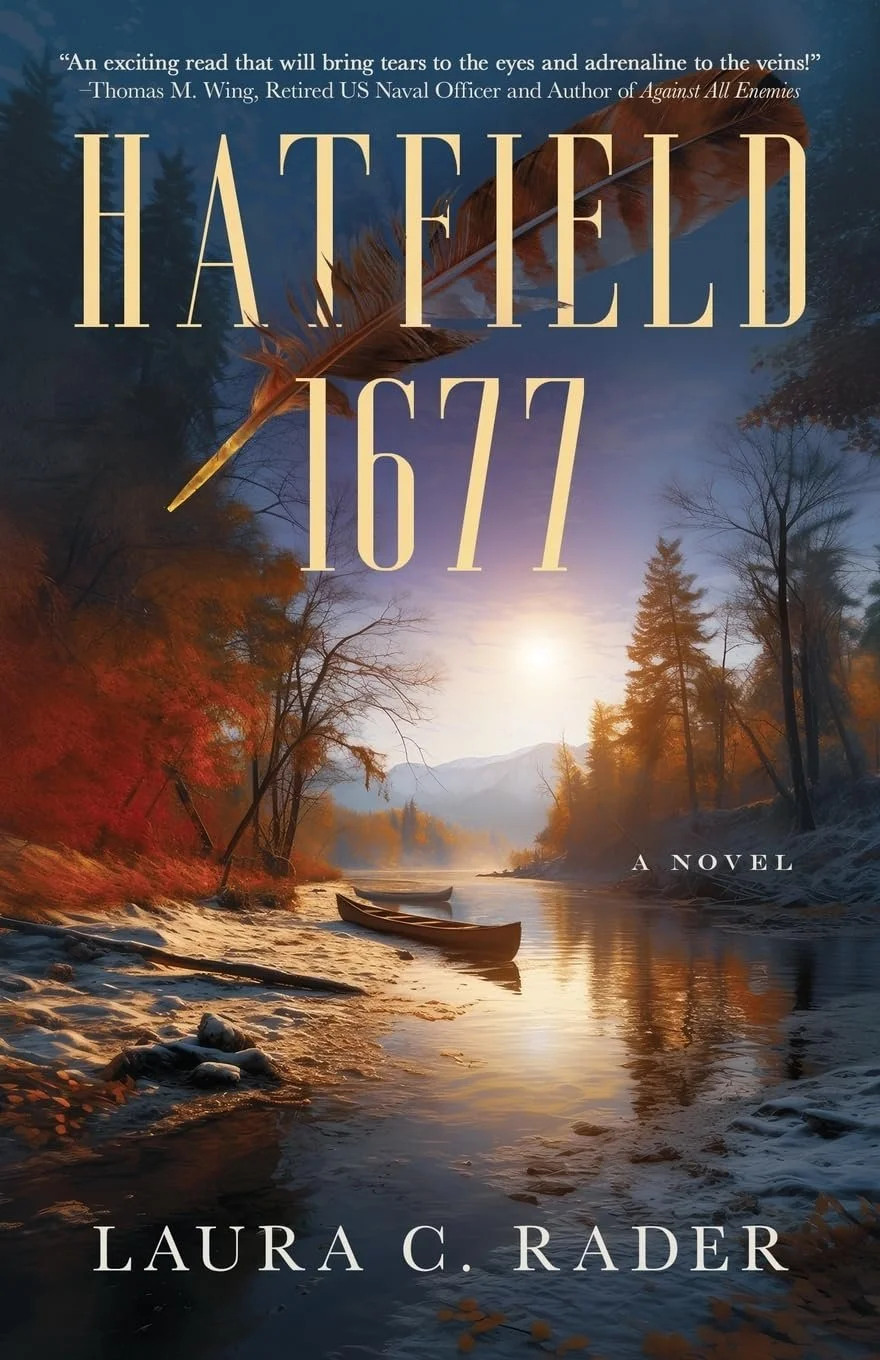
Hatfield 1677 by Laura C. Rader

Click on cover image to purchase a copy

MWSA Review

Laura C. Rader’s Hatfield 1677 is a love story set against a backdrop of colonial conflict. This is not traditional military fiction. Frontier violence and survival are central to the story, but the heart of the narrative is a family’s faith in and love for each other. Readers who like relationship- and character-driven stories and survival epics will likely enjoy this book.

Readers seeking a treatise on North American colonial warfare must find it elsewhere. While there is little discussion of campaigning, Rader succeeds in exposing the horrors of war. Examining battlefield dynamics is not the novel’s primary aim. Rader paints a convincing portrait of colonial life, and her world-building feels authentic. She clearly devoted significant time and effort to researching colonial Massachusetts.

Hatfield 1677 is recommended to readers seeking historical fiction grounded in family connections. Rader offers a moving portrayal of perseverance and connection in trying times, leaving a strong impression on those who value the human side of history.

Review by Ben Powers
 

Author's Synopsis

Inspired by a true story of love, courage, and survival in seventeenth-century New England.

Benjamin Waite, devoted husband and father, is the volunteer military scout for the colonial Massachusetts town of Hatfield during King Philip’s War. He protests a planned attack against a Native American camp but reluctantly guides the army on their ill-advised mission.

The Algonquian sachem Ashpelon and his tribe retaliate, laying waste to Hatfield and taking seventeen colonists captive, including Benjamin’s wife Martha and their three young daughters. Then, Ashpelon heads north to Canada with his hostages in a desperate bid for freedom.

While Martha courageously strives to endure captivity and protect her children, Ben and his friend Stephen Jennings defy bureaucracy and brave the wilderness to find and rescue their loved ones.

Based on the lives of the author’s ninth great-grandparents, this riveting novel of love and war in colonial America, told through three different perspectives, is one you will not forget.

Format(s) for review: Paper or Kindle
Review genre: Fiction—Historical Fiction
Pages/Word count: 396 / 99,000

Fugitive Son by Aramis Calderon

Click on cover image to purchase a copy

MWSA Review

This memoir begins with the author and his family visiting his father in a Louisiana prison when he was eleven years old. After his father escapes, the family packs what they can and heads for Florida, where they reunite with his father and begin their lives as fugitives. The author takes the reader along with him and his three siblings as they endure the trauma of life on the run with two drug addict parents trying to stay one step ahead of the law. He does a great job describing the range of experiences they go through and the variety of living situations they find themselves in. We get to know the personalities of his family members, but most of the focus is on his relationship with his father. The father converted to Islam while in prison and forced his son to read the Quran, pray, and learn Arabic. He alternates between berating and psychologically abusing his son and telling him he loves him.

Eventually, the nightmare ends when his father is recaptured. In the rest of the book, the author shares information he learned later about what was going on that he wasn’t aware of at the time. The epilogue wraps up the story for the author and his parents, but not his siblings.

This is a heartbreaking, but inspirational book. The author clearly has done a lot of soul searching and healing. I highly recommend it for anyone who has experienced a traumatic childhood. They may learn from the author’s story and how he came to find healing and forgiveness.

Review by Eva Nevarez St John (January 2026)


Author's Synopsis

Aramís Calderón was eleven in 1992 when federal marshals conducted a nighttime raid at the Baton Rouge apartment where he lived with his mother and four siblings. They were searching for Aramís’s father, who had escaped from a nearby federal prison. Once satisfied with the answers from Aramís’s mother, the marshals departed. At daybreak, so did Aramís’s family—and drove toward a rendezvous with his father, who had fled to South Florida. Thus began an eight-month ordeal of constant moves, family aliases, and drug deals.

As Calderón shares, Fugitive Son is not a love letter to his father, whom he sees even after his death as an unethical, toxic, and incredibly complex man. Rather, Calderón’s memoir explores how his father’s undeniable love for his family despite drug addiction, lawlessness, and toxic masculinity informed Aramís’s rebellious decision to join the Marines, and how all this shaped his determination to become the father he wished his own had been.

Format(s) for review: Paper or Kindle
Review genre: Nonfiction—Memoir/Biography
Pages/Word count: 214 / 64,000

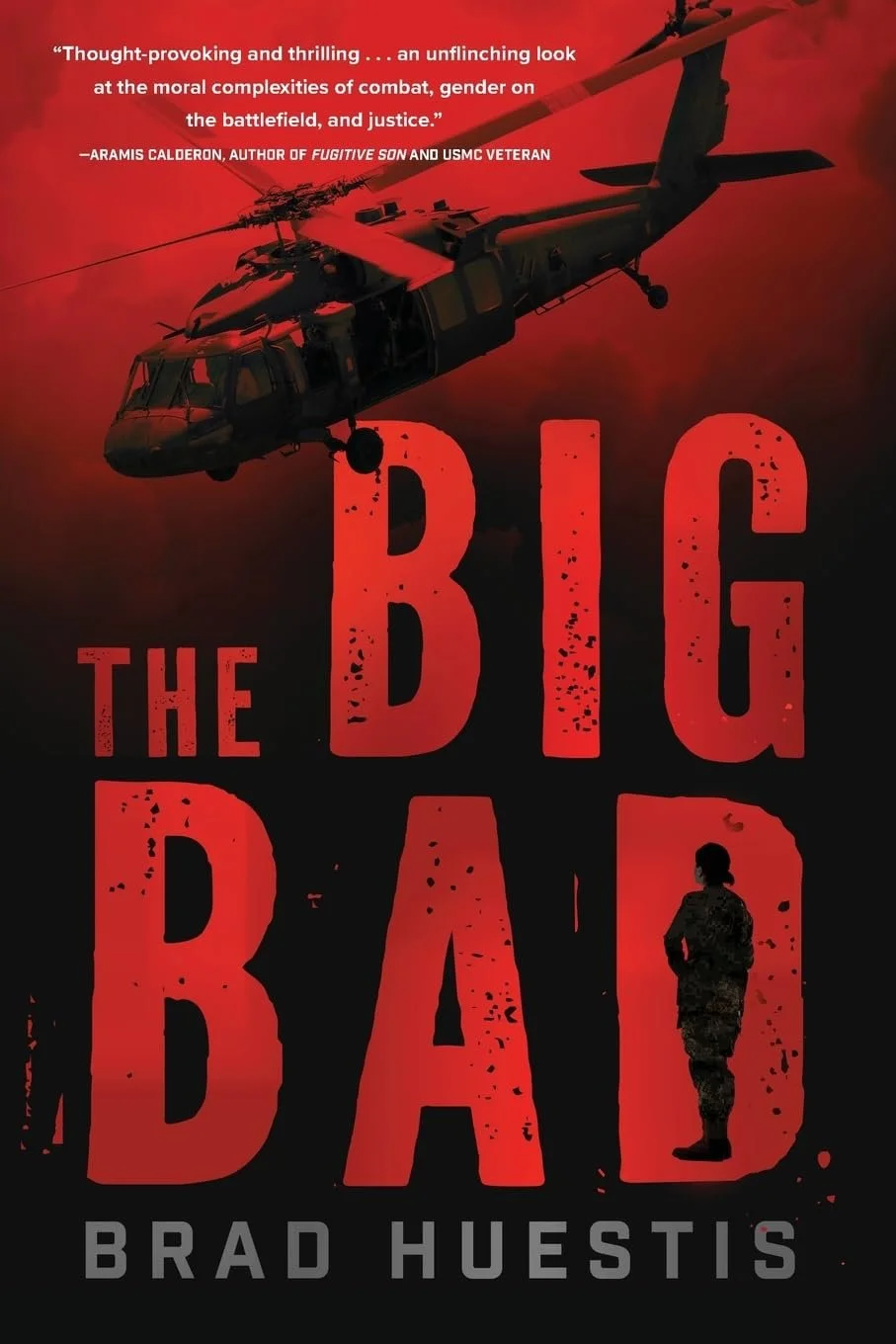
The Big Bad by Brad Huestis

Click on cover image to purchase a copy

MWSA Review

The Big Bad charges out of the starting gate introducing three of the main characters and hinting at the challenges they will face. Major Jess Gilbert’s inner dialogue reveals her reasons for choosing the field of law and her unlikely decision to join the Army. Her desires to deploy and make an impact beyond rear echelon work are realized when her three-star general boss informs her and her female mentor JAG officer colonel that they are soon to be leaving for Iraq.

Readers soon meet the villain, Colonel Mike “the Big Bad” Wolfe who is instantly easy to dislike. He’s arrogant, plays favorites, and bullies troops based on them not meeting his self-created standards. He, too, feels that he’s received a gift when he receives the orders to deploy his Brigade Combat Team to Iraq. Within weeks of training, Wolfe has fired his executive officer with a torrent of expletives and for no good reasons. The Big Bad clearly likes to flex his muscle in a show of force to intimidate his team into submission.

In a good versus evil story, Jess the JAG must investigate allegations against Wolfe once they are both in Iraq. She finds Wolfe’s men unusually dedicated to him and uncovers deep discrepancies in their stories, which elevates the case to a multiple-murder investigation. Jess juggles with the intricacies of military law, the warrior ethos, and the heartache of young enlisted men taking the blame while those who gave the orders escape the brunt of the law. While Wolfe is the quintessential villain, the Army’s justice system presents itself as an antagonistic force as well.

Author Brad Huestis penned a realistic and page-turning book revealing difficulties in applying the rule of law and inexact rules of engagement in asymmetric warfare. Highly recommended for thriller readers and those interested in what could happen behind the scenes in modern warfare.

Review by Valerie Ormond


Author's Synopsis

When Jessica Gilbert, a US Army JAG Corps major, deploys to Iraq in early 2006, she is excited to help rebuild the rule of law. But soon the disturbing allegation that an infamous Army colonel cut the ears from dead Iraqi fighters as bloody war trophies captures her focus. Her investigation quickly morphs into a murder inquiry when she uncovers gruesome photographs revealing that the fighters were brutally executed on the battlefield. In her quest to uncover the truth of what happened and why, she wrestles with the disparity in treatment of decision-makers versus trigger-pullers. Besides figuring out who committed this atrocity and their motives, she must fight to make sure everyone involved-from the top down-is held responsible.

Format(s) for review: Paper or Kindle
Review genre: Fiction—Mystery/Thriller/Crime
Pages/Word count: 240 / 66,679

The Long Game by Mark Fleisher

Click on cover image to purchase a copy

MWSA Review

The Long Game by Mark Fleisher is made up of four short works ranging from 88 pages for “Second Chances” to 15 pages for “A Round Trip.”  The other two stories are 31 and 21 pages each. The Preface suggests the author was influenced by Mickey Spillane, and that is seen most clearly in “What’s Up, Doc” and “Dumpster Dilemma” with street slang and quick, short sentences.  The endings are left up to the reader’s imagination – happy endings or problems to come.

Second Chances: Vic Russell defends himself in a bar when he steps in to protect a woman being harassed, but his strong punch results in the death of the harasser.  He is assigned a public defender who has never handled a death case.  Vic is sent to jail for manslaughter and serves every day of the 8-year sentence.  When he is released, he gets a 2nd chance with help from friends.  He builds a good life and meets a girl raised in money who loves him. Ultimately, Vic is given the opportunity to work for the Corrections Department in a program called Second Chances, counseling newly released inmates.  The program has many professionals, but they want someone with experience serving time who then transitioned successfully to life outside prison.

What’s Up, Doc: Tucker Holliday is not a doctor, but his retired heart surgeon neighbor nicknames him Doc after the “Old West gambler, gunfighter, and one-time dentist.”  His friend Dorrie, a clinical psychologist, asks Doc to help her friend Andrea, who is sharing custody of her daughter with her ex.  Andrea wants sole custody of her daughter because her ex rarely spends time at home on his custody days.  Further, he has just fired his nanny, which seems suspicious.  Doc investigates and finds Andrea’s concerns are valid, although that takes some time and has some twists.

Dilemma in a Dumpster: A body is found in a dumpster, and it takes a good deal of detective work to solve the mystery.  It looks like a mob hit, and possible witnesses are afraid to tell what they know.  Lots of reality in how crimes are solved.  Too good to offer any spoilers

Round Trip: Why would an experienced teacher head for California and then return 14 months later?  Her writer friend has a friend who is a detective.  But is the story over?

Review by Nancy Kauffman
 

Author's Synopsis

In The Long Game Mark Fleisher serves up a quartet of stories involving murder, mayhem, courtroom drama, and old-fashioned detective work. His locations are diverse: Kentucky, New York City, Boston, and western Massachusetts. All are places he describes with pinpoint accuracy and replete with local flavor and local characters. His moments of serious dialogue crackle and sizzle. Yet Fleisher writes tenderly of relationships and sprinkles humor throughout the stories. The final paragraphs of each tale will keep the reader guessing where the main characters will next journey.

Format(s) for review: Paper Only
Review genre: Fiction—Mystery/Thriller/Crime
Pages/Word count: 175 / 46,000