Click on cover image to purchase a copy
MWSA Review
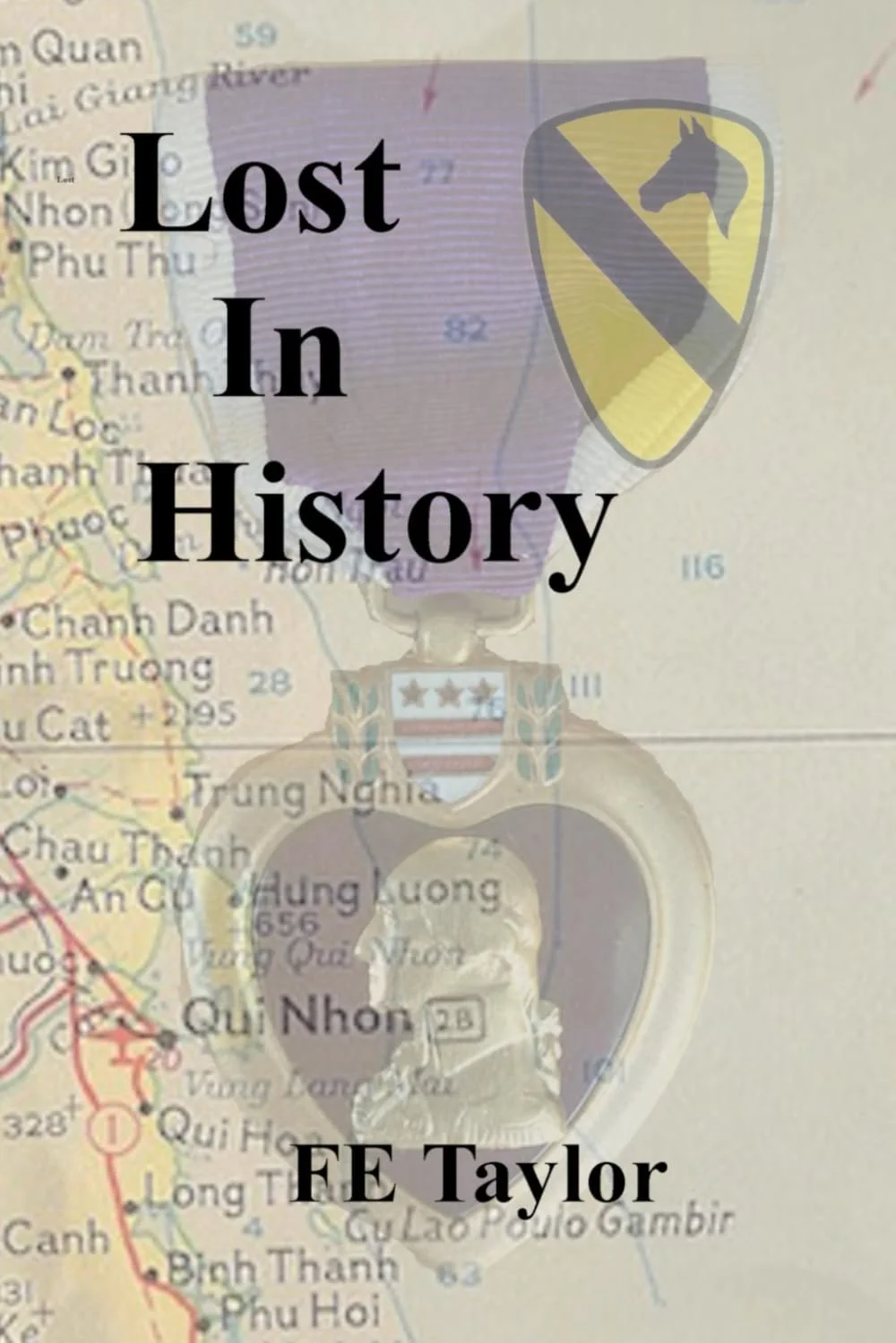
F. E. Taylor waited 50 years to write about his Purple Heart experience in South Vietnam, claiming that it was his grandson’s playing soccer in Hanoi, Vietnam —he “played against the grandchildren of men I once faced in combat”—that inspired him. But his memoir, Lost in History, shows he’d been composing these pages in his mind his entire life.
Throughout his unexceptional childhood in the small-town American South, Taylor was a shrewd observer, inclined by nature to be skeptical of convention. He did well in school, graduating with a degree in forestry from Clemson University, married his high school sweetheart, and foresaw a professional career doing what he loved. Drafted into the Army and becoming a combat infantry soldier, he mentally recorded his military life as a radical departure from the civilian path he had imagined. The book was being written all along.
Placing that personal experience into the context of U.S. and world history, however, took years of reading and reflection as he returned to join a “generation of forest managers [who] achieved remarkable success, quadrupling the productivity of the southeastern forests in the U.S. … producing more timber than is harvested.” His depiction of specific events at home and overseas takes readers into his world, from finding himself in the Army’s melting pot of race, culture, and economic class to discovering the mix of peoples and pasts in Southeast Asia. The physical and psychological demands of war led him to discover his own bedrock beliefs.
Taylor concludes that American leaders at home—and some military leaders in the field—made errors in judgment that led to tragic human costs for his country and others. Taylor also connects some of those mistakes to disparities of status in America’s past that continue today. At the same time, he commends his fellow soldiers, “dust-off” helicopter pilots, medical staff, and Red Cross volunteers.
One of his most telling conclusions should not be “lost in history,” especially at this time of national debate: “As I’ve mentioned before, what makes America truly exceptional is not that we always get it right the first time, but that we have the capacity to reflect, learn, and rectify past mistakes, such as the legacy of slavery.”
He writes for his generation. I hope others will read.
Review by Michael Lund
Author's Synopsis
In the grand sweep of history, this memoir may seem as small and insignificant as an atom in a vast universe. Yet, for the combat infantryman whose story it tells, these experiences form a monumental part of his life. Unwittingly shaped into a warrior through the trials of childhood and adolescence, he is unexpectedly drafted into the Vietnam War, an event that changes his world forever.
Format(s) for review: Paper or Kindle
Review genre: Nonfiction—Memoir/Biography
Pages/Word count: 277 / 64,794