
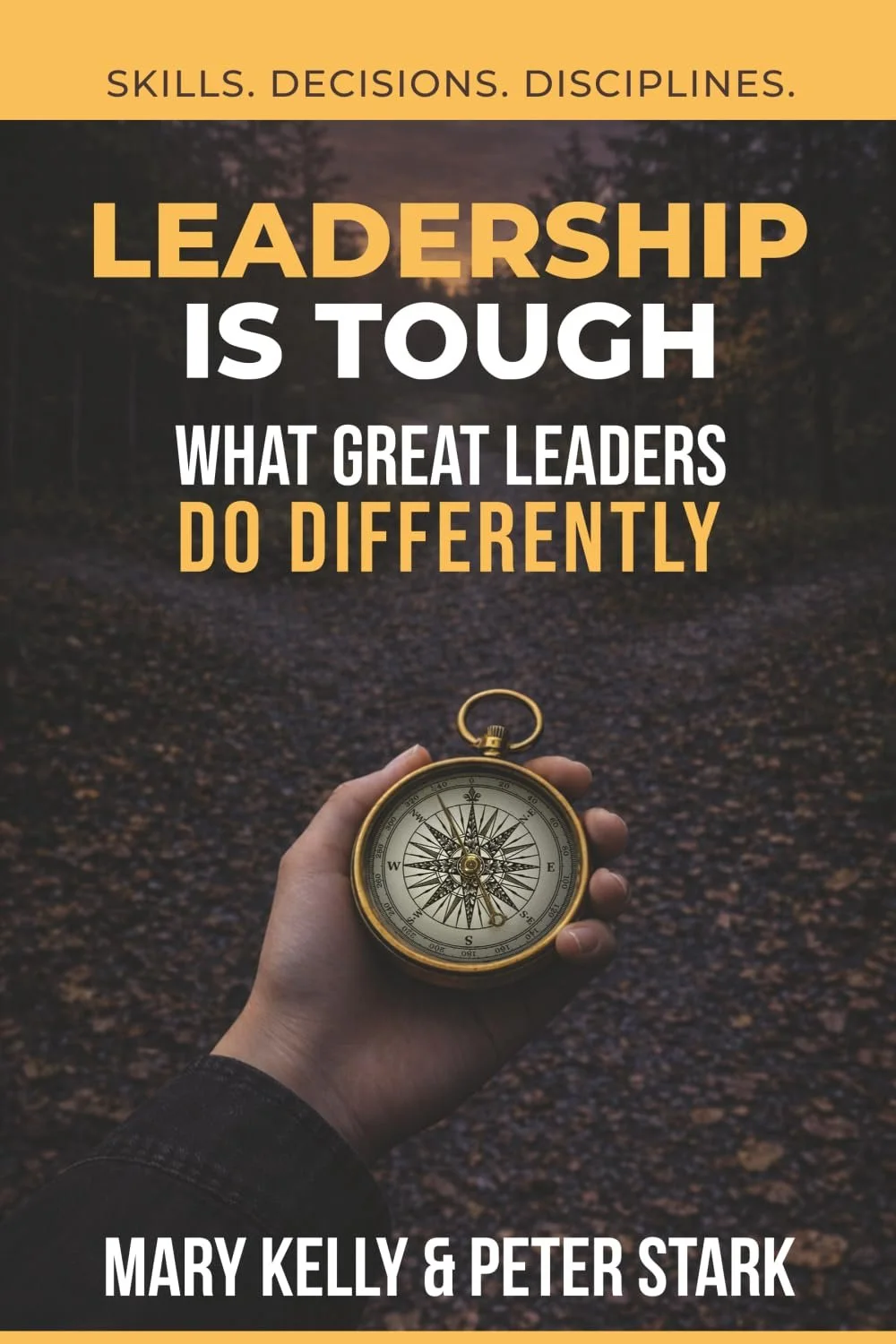
Click on cover image to purchase a copy
MWSA Review
I have been an avid consumer of business management books, courses, and seminars/webinars since the late 1980s, and this is by far one of the best leadership books I have come across.
The title is the main premise of the book. It gives in-depth discussion, guidance, and perspectives on the whole spectrum of leadership, including the really tough topics, like requiring accountability and building trust, that most other authors shy away from.
The book is comprehensive, and each chapter has key points highlighted throughout, with an extensive listing of “Key Takeaways” and “Reflection Questions” at the end of each chapter. Most chapters are "stand alone" and this would be a good reference book to refer back to as particular situations arise.
Of note is the discussion on the challenges posed by hybrid and remote work in the post-COVID workplace across various topics. The impacts of AI, as they relate in the current day, are also covered. The topic of the ever-constant and ever-accelerating “pressure cooker” change environment is extremely well covered, including from the perspectives of management, employees, and peers.
Finally, some great advice and insight is offered for individuals facing, as managers, competing priorities, demands from stakeholders, and the pervasive volatility of today’s business world.
This book will be of great interest to anyone in management functions, and especially anyone entering into a leadership or supervisory role. It is equally applicable across general business, military, and nonprofit environments
Review by Terry Lloyd
Author's Synopsis
Leadership has never been more difficult than it is today. Leaders are navigating economic uncertainty, workforce shortages, artificial intelligence, political division, rapid technological change, customer demands, shrinking attention spans, burnout, and constant disruption—all while being expected to produce better results with fewer resources. The pressure is relentless. The pace is exhausting. And the margin for error has never been smaller.
In Leadership is Tough: What Great Leaders Do Differently, Mary Kelly and Peter Stark reveal why leadership has become so challenging—and, more importantly, what exceptional leaders do to thrive despite the pressure.
Drawing from decades of real-world leadership experience in military commands, global organizations, executive coaching, economics, and business strategy, this practical and highly actionable book delivers the tools leaders need to make better decisions, build stronger teams, and lead effectively during times of uncertainty and change.
Unlike theoretical leadership books filled with vague inspiration, Leadership is Tough focuses on the real-world decisions leaders face every day:
How do you make difficult decisions when there is no perfect answer?
How do you build trust in a skeptical workplace?
How do you retain talented people who are burned out or disengaged?
How do you maintain accountability without destroying morale?
How do you lead multiple generations with different expectations and communication styles?
How do you stay focused when everything feels urgent?
How do you prepare your organization for the future while managing today’s chaos?
The authors argue that leadership is not becoming easier—it is becoming more complex. Great leaders understand that leadership is no longer about authority, titles, or control. It is about clarity, discipline, relationships, adaptability, and decision-making under pressure.
At the heart of the book is the idea that leadership is a skill set, not a personality trait. Great leaders are not born with magical abilities. They develop habits, systems, and behaviors that allow them to lead consistently, even during difficult times. The book provides practical frameworks and tools leaders can immediately apply to improve communication, productivity, strategic thinking, accountability, and team performance.
One of the central themes of Leadership is Tough is that leaders must learn to operate effectively in uncertainty. The economic environment, labor market, customer expectations, and technology landscape are changing too quickly for leaders to rely on outdated management approaches. The authors explain how successful leaders stay agile, assess risk, communicate clearly, and make confident decisions even when information is incomplete.
The book also explores the growing leadership crisis facing organizations today. As experienced leaders retire in record numbers, many organizations lack the bench strength and succession planning necessary to sustain long-term success. The authors provide practical guidance for developing future leaders, mentoring high-potential employees, and creating cultures that encourage growth and accountability.
Another major focus of the book is trust. In an era of skepticism and constant distraction, trust has become one of the most valuable—and fragile—assets a leader can possess. The authors explain how trust is built through consistency, transparency, communication, and behavior rather than slogans or motivational speeches. Readers will learn how to strengthen workplace relationships, create healthier cultures, and foster stronger collaboration across teams.
The book also addresses productivity and personal leadership. Leaders today are overwhelmed by competing priorities, nonstop communication, and constant interruptions. Leadership is Tough offers practical methods to improve focus, reduce procrastination, prioritize effectively, and lead with greater intentionality. The authors emphasize that leaders who cannot manage themselves effectively struggle to lead others effectively.
Throughout the book, the authors blend compelling stories, economic insights, military leadership lessons, executive coaching experiences, and practical business examples to illustrate what works—and what fails—in leadership. Readers gain both strategic perspective and tactical tools they can implement immediately.
The tone of the book is direct, practical, encouraging, and realistic. The authors do not pretend leadership is easy. In fact, they argue the opposite: leadership is difficult because people, organizations, and circumstances are complicated. However, they also believe that leadership can be learned, improved, and strengthened through discipline, self-awareness, preparation, and action.
Ultimately, Leadership is Tough: What Great Leaders Do Differently is a roadmap for leaders who want to become more effective in a rapidly changing world. Whether leading a corporation, small business, nonprofit organization, government agency, military unit, or team, readers will discover practical strategies to:
lead with greater confidence,
communicate more effectively,
strengthen trust and accountability,
navigate change and uncertainty,
develop future leaders,
improve team performance,
and make better decisions under pressure.
This book is for leaders who understand that leadership is not about power—it is about responsibility. It is for leaders who want to build stronger organizations, develop better people, and create meaningful results during challenging times.
Because leadership is tough. But great leaders rise to the challenge.
Format(s) for review: Paper or Kindle
Review genre: Nonfiction—How to/Business
Pages/Word count: 322 / 89,699