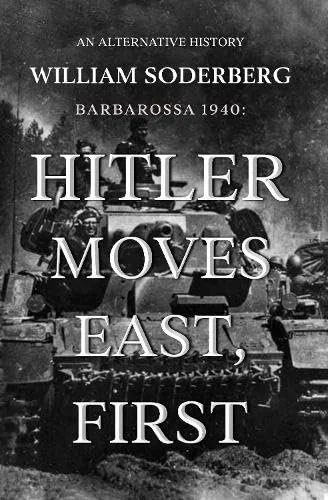
Click on cover image to purchase a copy
MWSA Review
William Soderberg’s Barbarossa 1940: Hitler Moves East First is best described as a fictional history book instead of a historical fiction. This hefty 336-page narrative explores the alternate what-if scenario of Hitler invading the Soviet Union in 1940 instead of attacking France and the Lowland Countries. The omniscient observer point of view examines the decisions and actions of the Germans, Soviets, and neutral countries.
Soderberg uses the first half of the story to examine the invasion of Poland without a British and French declaration of war. The Germans then plan to attack east in 1940. The change in war focus results in different production priorities. Soderberg envisions bold amphibious and airborne elements to a reimagined Operation Barbarossa. The tempo picks up when the Germans launch their invasion, carrying them to the gates of Moscow and creating a completely new global balance of power for 1941.
Review by Galen D. Peterson
Author's Synopsis
William Soderberg’s Barbarossa 1940: Hitler Moves East, First offers a riveting exploration of a possible alteration in World War II history. Through detailed maps, strategic analyses and gripping narratives, this book delves into the German and Soviet invasions of Poland in 1939 and the subsequent battles following the surprise German invasion of Russia in 1940 that might have reshaped the global balance of power. From the tactical genius of German commanders to the industrial might of the Soviet Union, the book examines the clashing strategies and resources that defined this brutal conflict. With vivid depictions of military maneuvers—such as Army Group South’s drive to Maikop and the Siege of Leningrad—alongside geopolitical insights into Soviet expansionism and Axis ambitions, Barbarossa 1940 brings the chaos of war to life. A must-read for history enthusiasts, this comprehensive volume uncovers the plans, failures, and enduring consequences of one of the war’s most consequential campaigns.
Format(s) for review: Paper or Kindle
Review genre: Fiction—Historical Fiction
Pages/Word count: 336 / 116,000